
Understanding the Safety Perception Gap in Malaysia
Walking alone after dark can be a daunting experience for many. The feeling of unease that comes with every shadow and every sound is a common concern, especially in urban areas. This sense of vulnerability highlights how safety is perceived differently by individuals, particularly when it comes to gender.
Malaysia has been identified as one of the least safe countries in Southeast Asia for women walking alone at night. However, what stands out even more is the significant disparity between how men and women view their own safety. According to the Global Safety Report titled “A Safer World in Unsafe Times?” by Gallup, only 58% of Malaysians feel safe walking alone at night. This places the country at 100th out of 150 nations surveyed.

Within the Association of Southeast Asian Nations (ASEAN), Malaysia ranks second lowest, just ahead of Myanmar, where only 41% of respondents reported feeling safe. This ranking underscores the challenges faced by the population in terms of public safety.
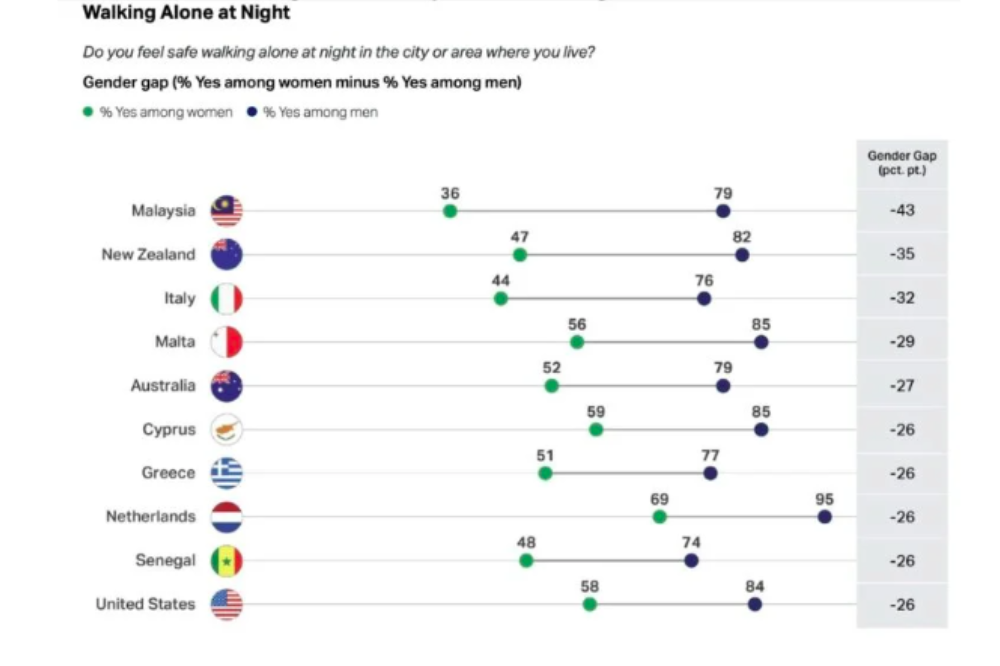
A Significant Gender Gap in Perceptions of Safety
The report revealed a striking insight: Malaysia recorded the largest gender gap in the world regarding perceptions of safety after dark. An impressive 79% of Malaysian men said they feel safe walking alone at night, compared to only 36% of women. This results in a 43-point gap, which surpasses other countries such as New Zealand (35 points), Italy (32 points), and Australia (27–29 points).
This disparity indicates a deeper issue related to gendered experiences in public safety. While the study did not explore the exact reasons behind this divide, the findings align with ongoing concerns raised by women’s advocacy groups about harassment, inadequate lighting, and limited police presence in public areas during nighttime hours.
Global and Regional Comparisons
Globally, Singapore emerged as the safest country to walk alone at night, with 98% of respondents reporting a sense of security. In the ASEAN region, Vietnam ranked second with 88%, followed by Indonesia (83%), Thailand (70%), and the Philippines (64%). These figures highlight the varying levels of safety across different regions and the need for targeted improvements.
The Gallup survey was conducted across 144 countries and territories in 2024. It involved nationally representative samples of 1,000 adults aged 15 and above through phone or face-to-face interviews. This extensive research provides valuable insights into global safety perceptions.
Addressing the Challenges
Malaysia’s position on the safety scale reflects the need for stronger safety measures and increased public confidence. However, the data also presents an opportunity for policymakers and local communities to address gender disparities and build safer, more inclusive cities. By focusing on these issues, it is possible to create environments where everyone, regardless of gender, can walk without fear after dark.
- Improving public lighting in high-risk areas
- Increasing police presence in neighborhoods
- Implementing community-based safety initiatives
- Promoting awareness and education on personal safety
These steps can help bridge the gap in safety perceptions and foster a more secure environment for all.