


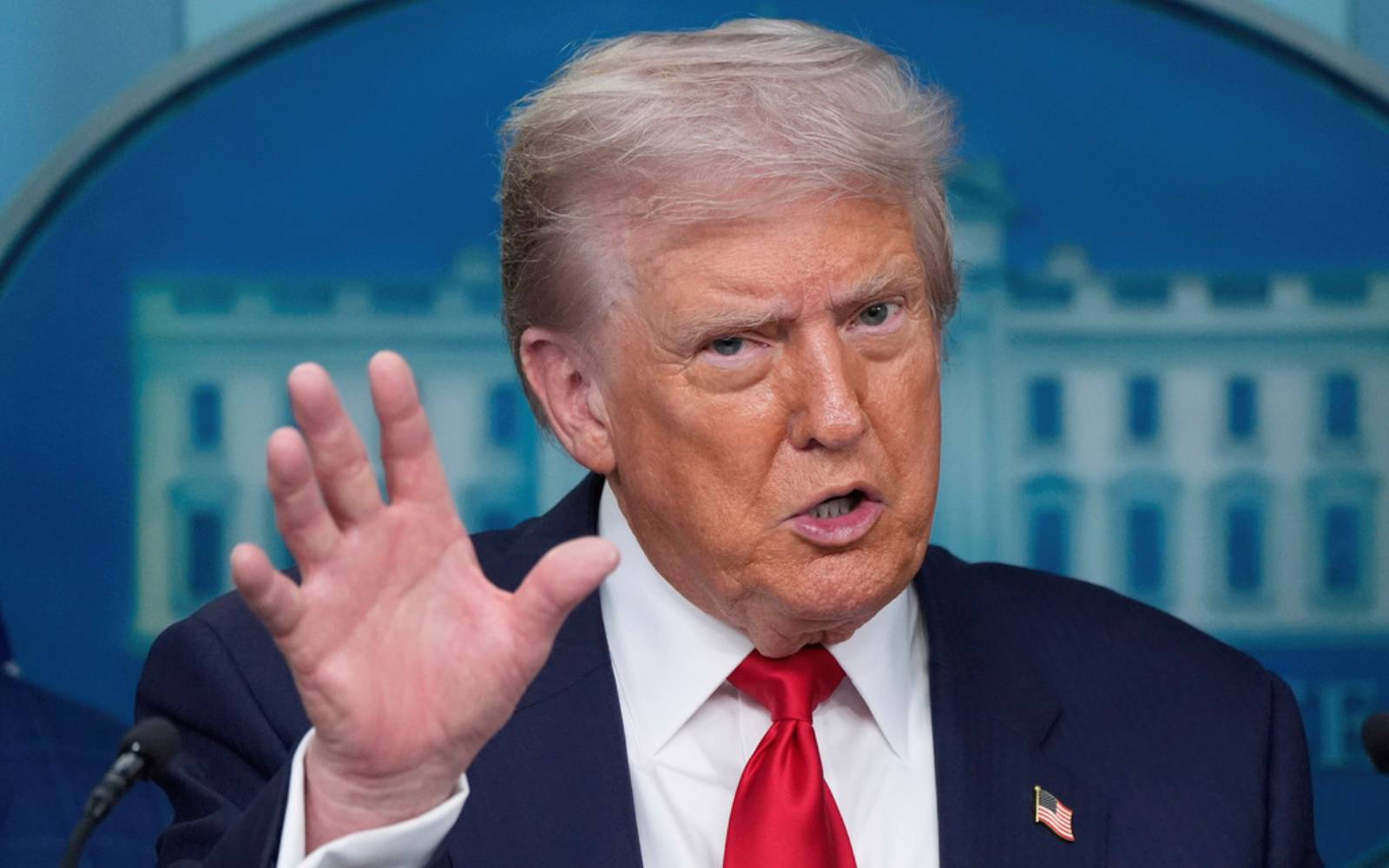

Trump’s Strong Words Against Chicago and Illinois Leaders
In a dramatic move, US President Donald Trump has called for the imprisonment of the mayor of Chicago and the governor of Illinois. This statement marks an intensification of his usual attacks on political opponents. Trump expressed his frustration through social media, stating, “Chicago Mayor should be in jail for failing to protect Ice Officers! Governor Pritzker also!” His comments highlight the growing tensions between the administration and Democratic leaders in Illinois.
Trump’s criticism is directed at the Democratic officials who are opposing his directive for immigration and customs enforcement (ICE) agents to conduct aggressive raids in Chicago. These raids have become a focal point of his administration’s efforts to enforce immigration policies. The actions taken by ICE agents often involve masked, plainclothes personnel, creating a sense of fear and uncertainty among local communities.

This crackdown aligns with one of Trump’s key promises during his election campaign last year, where he portrayed the United States as under siege from waves of foreign “criminals.” His administration’s approach includes not only ICE operations but also a parallel anti-crime campaign involving military presence in several cities, including Chicago, Los Angeles, and Washington, DC.
Critics argue that these measures are an attempt by Trump to consolidate authoritarian power and create chaos by provoking reactions from local authorities. In Chicago, which is a strong Democratic stronghold, there has been significant resistance to these federal actions. The city recently received 200 national guard soldiers from Texas, despite the objections of local leaders.
Mayor Brandon Johnson has declared “ICE-free zones” within city-owned properties, effectively making them off-limits to federal authorities. He has accused Republicans of wanting “a rematch of the Civil War,” emphasizing the deepening divide between the parties. Illinois Governor JB Pritzker, who is seen as a potential candidate for the 2028 presidential election, has emerged as one of Trump’s most vocal critics. Pritzker has called for prosecutors to investigate the legality of ICE activities in Chicago and claims that Trump’s actions are motivated by a desire to “punish his political enemies.”
Trump has encountered other challenges as well. A federal judge in Oregon recently blocked his attempt to deploy troops in Portland, ruling that his claims of an emergency were false. The judge emphasized that the United States is a “nation of Constitutional law, not martial law.” Despite these setbacks, Trump has indicated that he could invoke the rarely used Insurrection Act to deploy troops across the country if courts or local officials hinder his efforts.
The situation underscores the ongoing conflict between the federal government and local authorities, highlighting the broader implications of Trump’s policies on immigration and law enforcement. As the political landscape continues to evolve, the actions of both the administration and local leaders will play a crucial role in shaping the future of these issues.

