
The Interim Government and the Challenges of Engaging Gen Z
Kathmandu, Oct. 12 — The interim government is grappling with a complex challenge in addressing the diverse and often conflicting voices of Generation Z in Nepal. This generation is split into multiple groups, each with its own agenda and perspective, making it difficult for the government to establish a unified approach.
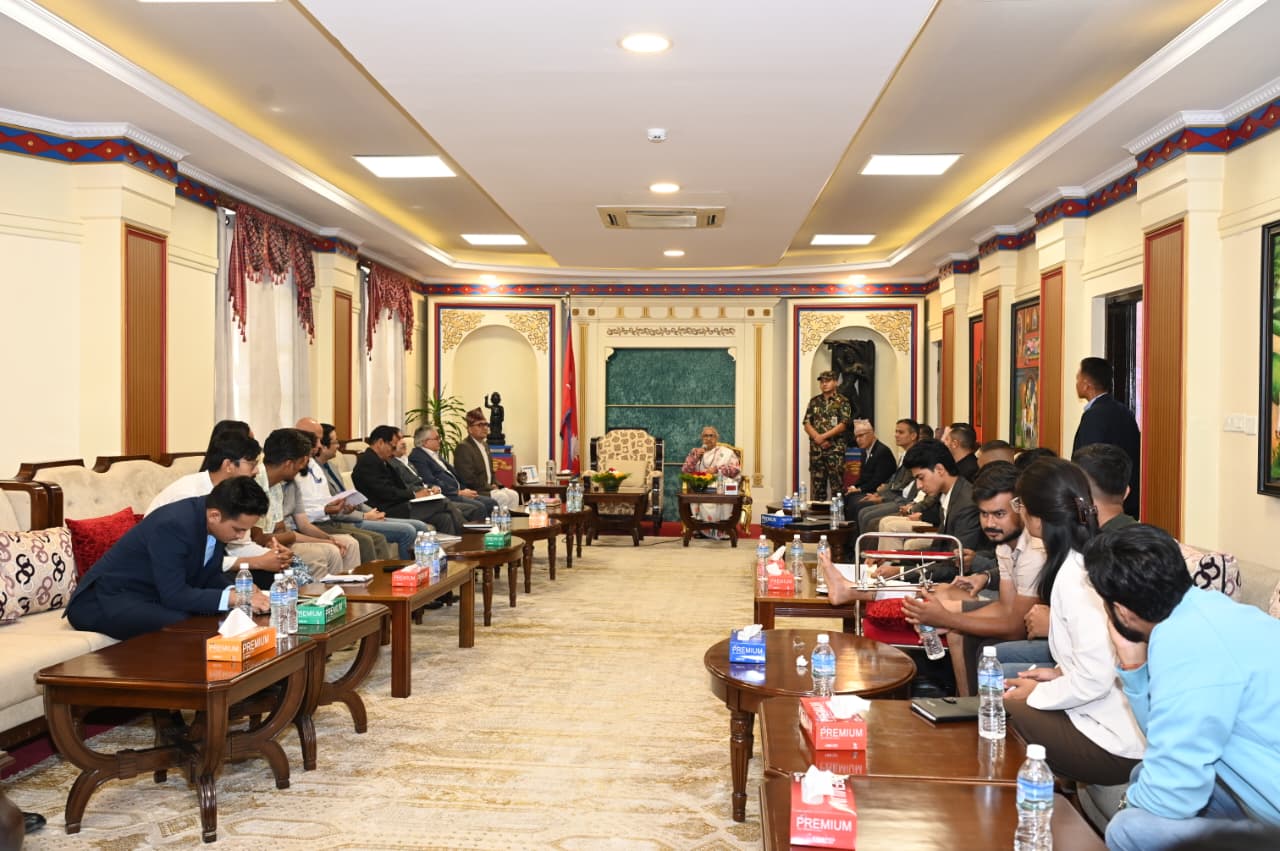
A significant division emerged on Saturday when President Ramchandra Paudel invited a group representing Gen Z for discussions at his office. While one group led by Sudan Gurung attended the meeting at Sheetal Niwas alongside Prime Minister Sushila Karki, another faction of Gen Z protesters gathered outside the presidential office, accusing Gurung and his team of being “foreign agents” and “anti-national.”

Due to illness, President Paudel did not engage directly with the group of 20 Gen Z leaders and representatives. Instead, he asked Karki to hold the discussions. However, those who were unable to attend the meeting at the presidential office took to the streets to express their frustration.
On Friday, Paudel had met with political party leaders and urged them to focus on the upcoming elections scheduled for March 5. The growing divide among Gen Z groups has raised concerns about the movement’s direction and representation.
Former Prime Minister Baburam Bhattarai expressed his thoughts on social media, stating that the outcome of the Gen Z uprising remains unclear. He emphasized the need for clarity on who truly represents the movement and the roles different individuals and groups have played.
Prime Minister Karki faced similar challenges at the President’s Office on Saturday. During four hours of intense discussions, several Gen Z representatives criticized the government for failing to address the movement’s mandates and the demands of the youth. One Gen Z leader even called for Karki’s resignation and left the meeting abruptly, according to an aide.
Gen Z groups have presented varying demands to the government, with some threatening to take to the streets if their concerns are not addressed. On Saturday, some campaigners questioned whether Karki was chosen by “foreign powers,” while she clarified that her government was formed through the spirit of the September 8-9 Gen Z movement and not by foreign entities or NGOs.
Outside the President’s Office, a protesting group claimed that “foreign agents” posing as Gen Z leaders were engaging with the government while sidelining genuine activists. In response, Bhattarai advised the interim government to clearly define the roles of different groups within the movement.
He suggested that those who initiated the movement should be recognized as main representatives, while later supporters should be acknowledged accordingly. He also warned against those who infiltrated the movement and engaged in inappropriate actions.
Karki denied accusations against her government, reaffirming her commitment to upholding the spirit of the Gen Z movement and ensuring good governance and timely elections. Sudan Gurung, seen as a key leader of the movement, attempted to ease tensions among various Gen Z representatives during the meeting.
In a Facebook post, Gurung expressed frustration over the lack of unity among Gen Z groups, stating that they had spent a month trying to bring them together without success. He emphasized that from now on, their focus would be on what benefits the country, rather than seeking to please any particular group.
Karki encouraged mutual understanding between the government and protesters, emphasizing that both sides are essential to finding a solution. Miraj Dhungana, a leading Gen Z campaigner, noted that the elections could lead to the emergence of a new political force.
He urged the prime minister to include individuals who played a significant role in the movement’s success in her cabinet. After meeting with Karki, another Gen Z representative, Rakshya Bam, called on all stakeholders to participate in the elections.
Bam highlighted the importance of institutionalizing the truth of the uprising, urging political parties to regain people’s trust or risk being forgotten in history. Those left outside the presidential office voiced their outrage, questioning how someone like Gurung, who only distributed water to protesters, could become a leader.
Some youths criticized the selection process of the 20 representatives chosen to dialogue with the President, noting that many came from the American Embassy Youth Council Nepal and NGOs rather than genuine Gen Z activists. Purushottam Yadav, a member of the negotiation team, boycotted the talks, highlighting the presence of dissatisfied factions within the movement.
As the movement becomes increasingly fragmented, some Gen Z leaders suggested that the government may need to engage in discussions in phases. Dissatisfied members of Gurung’s group also criticized him for not including them in the talks, as he selected seven representatives from each province.
During the meeting, most Gen Z representatives reminded Karki of the core agendas of corruption control and action against those responsible for suppressing the movement. Some demanded the arrest of former Prime Minister KP Sharma Oli and his home minister, Ramesh Lekhak, for their role in the killing of 19 youths on September 8.
Finance Minister Rameshore Khanal assured the Gen Z leaders that the government would adopt a zero-tolerance policy for corruption and was taking action based on received complaints.
Another group of Gen Z representatives issued a public appeal, highlighting their demand for the restoration of monarchy, which they claimed had been ignored. Sanatan Rijal, spokesperson for the Gen Z Alliance for Monarchy, warned against giving prominence to those attempting to hijack the movement.