
The Rise of Overnight Sleeping at Singapore Changi Airport
Overnight sleeping at airports is not officially prohibited, but it comes with its own set of challenges. For many travelers, especially during peak travel seasons, the cost of accommodation can be prohibitive. This was the case for a couple from the United States who chose to spend the night at Singapore Changi Airport during the Formula One race weekend, citing high hotel prices as the main reason.
The couple, using the handle @sheridan.tate8, shared their experience on October 5. They mentioned that hotels near the airport were charging up to US$400 per night, which was significantly higher than the usual weekend rate of less than US$200. Their decision to stay at the airport was driven by necessity rather than preference.

A Night at the Airport
Initially, the couple struggled to find a suitable place to rest. Eventually, they found Terminal 1’s Arrival Garden, where they discovered “at least 30 other people” sleeping in what they called “the sleeper village.” They laid out their blankets on the garden floor and used inflatable neck cushions for comfort. Despite the lack of proper beds, they managed to get some rest, keeping their luggage close by for safety.
The woman admitted that she only managed to sleep for four to five hours, while her husband woke up every hour. Although the night was not ideal, they were satisfied with their decision, as it saved them the cost of a hotel room.
Public Reaction and Criticism
Their experience did not go unnoticed. Some locals criticized the couple for tarnishing the airport’s image, suggesting that Changi Airport might lose its reputation as the best in the world if more people treated it like a bedroom. One commenter noted, “Soon Changi Airport will not be No 1 any more because there are many people treating it like their bedroom.”
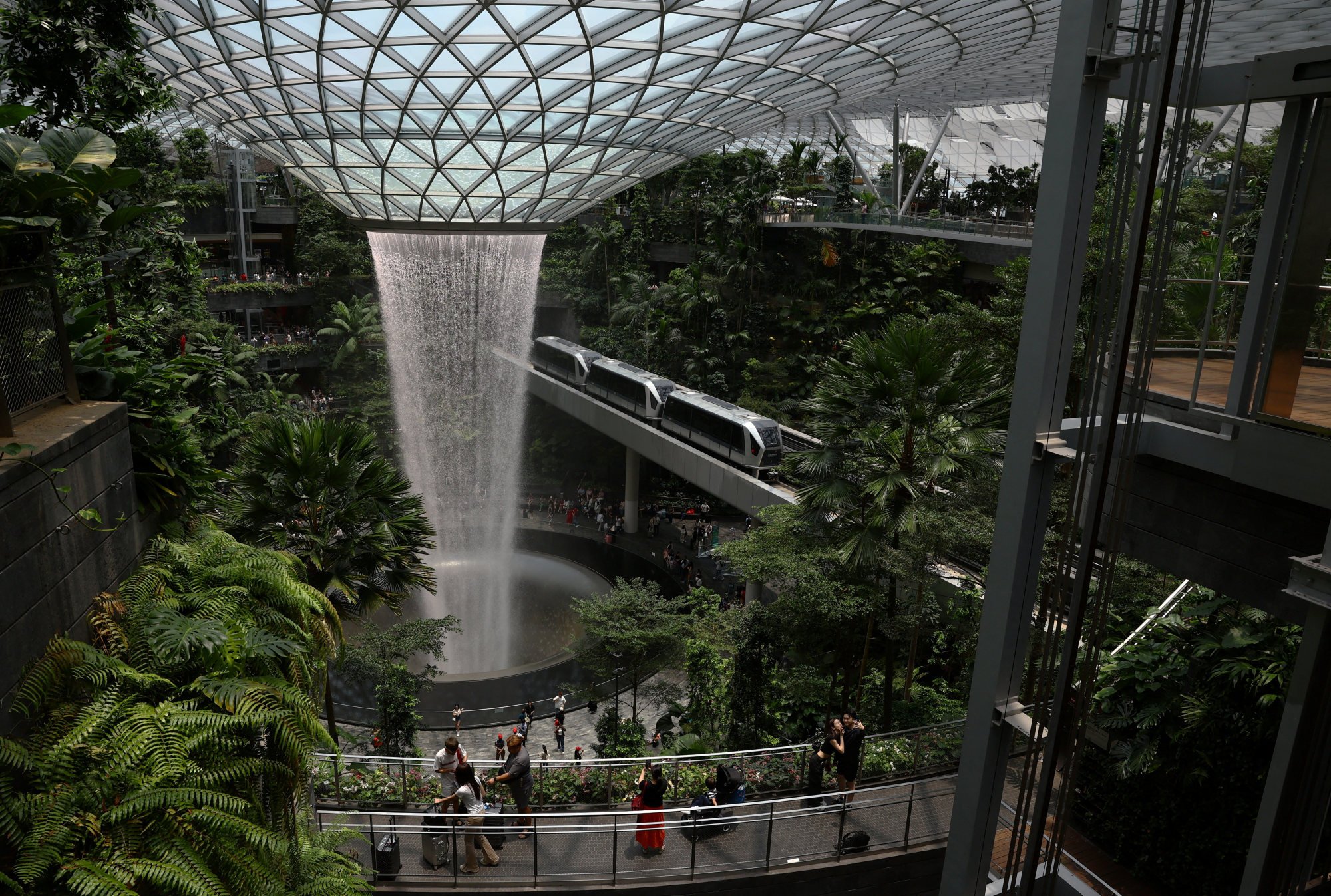
Changi Airport has held the title of the best airport for 13 consecutive years according to Skytrax. It is known for its unique facilities, including an extensive shopping mall, two cinemas, and an indoor rock-climbing wall. However, the recent trend of overnight sleeping has raised concerns among locals about the airport’s cleanliness and overall ambiance.
Tips and Recommendations
Some locals suggested that the couple should have gone to Terminal 3, which has quieter spots for resting. Others recommended using the airport’s free napping lounges instead of the Arrival Garden. While the airport does not explicitly ban overnight sleeping, some travelers reported that security might wake them up unless they have a flight ticket.
Social media platforms are filled with tips on how to spend the night at various airports. In China, budget travel has become increasingly popular among young people, leading to a rise in posts about overnight stays at airports. Some even claim that Changi Airport is the best in the world for sleeping.
A New Trend?
A Chinese student in Singapore humorously suggested that she could live at Changi Airport for two years by just buying a sleeping bag and a pillow. While this may seem extreme, it highlights the growing trend of using airports as temporary accommodations.
Despite the controversy, the practice of overnight sleeping at airports is likely to continue, especially during high-demand periods when hotel prices soar. Travelers are becoming more creative in finding ways to save money while still enjoying their trips.

Conclusion
The incident at Changi Airport has sparked a broader conversation about the balance between convenience and public space. While the airport remains a top destination for travelers, the increasing number of overnight sleepers raises questions about the future of such spaces. As the demand for affordable travel options continues to grow, airports may need to adapt to accommodate these changing needs.