
A Fire at COP30 Disrupts Critical Climate Talks
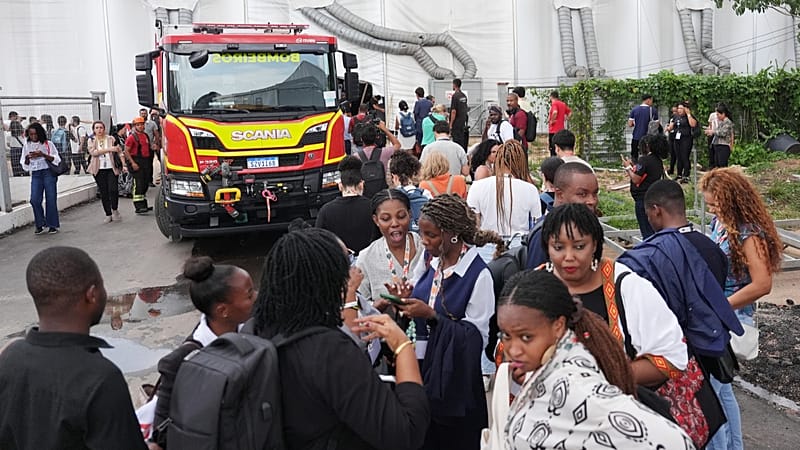
A fire broke out at the COP30 climate summit in Belém, Brazil, causing significant disruption to the United Nations climate negotiations. The incident occurred in the Blue Zone’s pavilion space, where side events are held during the official talks. Although the fire was quickly brought under control and all individuals were evacuated safely, the site was temporarily closed for safety checks.
The Brazilian Government and the UNFCCC jointly decided to close the Blue Zone as a precaution while the fire department conducted a comprehensive safety assessment. This decision came after the fire, which was believed to have been caused by an electrical device, likely a microwave, led to 13 people being treated on-site for smoke inhalation.

Despite the setback, the Blue Zone was reopened late on Thursday, according to a statement from the Brazilian presidency. However, the fire disrupted the already slow progress of negotiations, which were scheduled to conclude on Friday. The summit had already missed a self-imposed deadline on Wednesday to reach an agreement on key issues such as climate finance and the phaseout of fossil fuels.
Impact on Negotiations
The fire added further complications to an already challenging process. Teresa Anderson, climate justice lead at ActionAid, noted that there was “a lot to do with very little time” and that the existing gaps in the negotiations would not be easily bridged.
Some negotiators expressed concerns that the delay might lead to additional compromises. Alden Meyer, a veteran observer of climate negotiations from the European think-tank E3G, said, “People tend to feel a little closer during an emergency like this, but there are pretty deep fundamental interests at play. You could get something that’s so weak that no one wants it.”
Just hours before the fire, UN Secretary-General António Guterres urged countries to show willingness and flexibility to deliver results. He emphasized that achieving an agreement would require compromise and common ground. Despite the challenges, Guterres remained confident that an agreement could still be reached on contentious issues.
Urgency and Pressure
Guterres highlighted the urgency of the situation, stating that not adopting the strongest measures would be a failure. He stressed that the world was watching the proceedings in Belém, particularly communities on the frontlines of climate change.
“Communities on the frontlines are watching too […] They have heard enough excuses. They demand results,” he said.
The summit has faced criticism for its slow progress, especially regarding how to increase climate finance for developing countries and the transition away from fossil fuels. With only a short time left, negotiators are under immense pressure to find common ground and deliver a meaningful outcome.
Key Issues at Stake
Some of the critical issues that remain unresolved include:
- Climate Finance: Ensuring that developed countries provide sufficient financial support to help developing nations combat climate change.
- Fossil Fuel Phaseout: Deciding on a timeline and strategy for reducing and eventually eliminating the use of fossil fuels.
- Global Cooperation: Strengthening international collaboration to meet the goals set out in the Paris Agreement.
As the negotiations continue, the focus will be on finding solutions that balance the needs of different nations while addressing the urgent threat of climate change. The fire at COP30 serves as a reminder of the high stakes involved and the importance of reaching a strong and effective agreement.