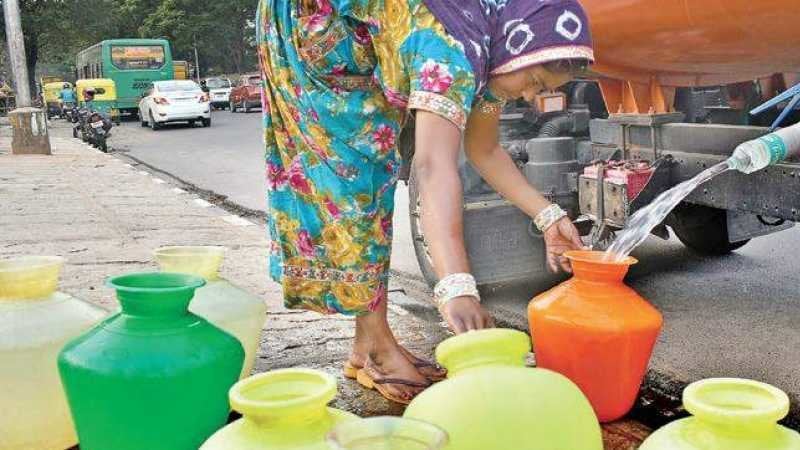

Water Authority Issues Stern Warning Against Illegal Water Abstraction Amidst Growing Scarcity
The Water Resources Authority (WRA) in Kenya has sounded a grave alarm regarding the escalating number of illegal water abstraction cases nationwide. Officials have vowed to pursue stringent legal action against all individuals and entities found to be flouting water usage regulations.
During a press briefing on December 10th, WRA Chairman Donald Murgor and CEO Mohamed Shurie highlighted that a significant number of perpetrators have either failed to secure the necessary water use permits or are not adhering to the conditions stipulated within their existing permits.

“This government is resolute in its commitment to ensuring that every Kenyan has access to clean water, and this is precisely our mandate as the Water Resources Authority,” stated Murgor, imploring the public to embrace regulatory compliance. He cautioned that widespread non-compliance could severely jeopardize the availability of this vital commodity for a substantial portion of the population, particularly given Kenya’s inherent water scarcity.
Kenya faces a critical water deficit, characterized by one of the lowest freshwater replenishment rates globally, standing at just 647 cubic meters per capita. This figure falls significantly below the international benchmark of 1,000 cubic meters per capita. The consequences are far-reaching, leading to a diminished supply for both domestic and productive needs, exacerbated by increasingly severe weather patterns and the depletion of natural resources.
Compounding these challenges is the inadequacy of water infrastructure, including wells, boreholes, and treatment facilities. This deficit creates substantial hurdles in accessing clean and safe drinking water, with rural communities bearing the brunt of this disparity.
The Constitution of Kenya 2010 unequivocally recognizes the availability of safe drinking water as a fundamental human right. Despite this constitutional guarantee, a concerning 32 percent of the Kenyan population continues to grapple with accessing reliable sources of safe drinking water. The global Sustainable Development Goals, specifically Goal 6.1, targets the achievement of universal and equitable access to safe and affordable drinking water for all by 2030. This global imperative underscores the urgent need to prioritize initiatives aimed at promoting widespread access to safe water.
The primary sources of drinking water for Kenyans include piped water systems, boreholes equipped with pumps, protected springs, protected wells, rainwater harvesting, and bottled water.
Murgor elaborated on the WRA’s observations, noting a disturbing trend of non-compliance with existing water legislation. He pointed out that some individuals appear to expect access to water without fulfilling their legal obligations. “We urge everyone to comply with the regulations. We have a well-established permitting system in place. It is crucial to remember that water resources in this country are scarce. They are not abundant, and indeed, across the globe, if we do not diligently conserve the resources we possess, we risk facing severe consequences,” Murgor emphasized.
The Water Act of 2016 stipulates clear penalties for offenders. The Act states that any person committing an offense, for which no specific penalty is prescribed, is liable to a fine not exceeding one million Kenyan shillings, imprisonment for a term not exceeding two years, or both.
CEO Mohamed Shurie expressed the authority’s deep concern over instances where political figures have allegedly influenced or encouraged individuals and groups to disregard regulatory compliance. “The assertion that we are vandalizing equipment is entirely false. A recent incident in Kieni, Nyeri County, involved individuals being incited to defy WRA directives, thereby undermining legitimate water management efforts,” Shurie stated.
He issued a stern warning that the leadership of private entities whose permit applications are found to be in violation of regulations will be held accountable and prosecuted. “In the case of government institutions, it will be the leaders, including managing directors, who will face apprehension in the event of a violation of the Water Regulations, 2016,” Shurie declared.
He reiterated that any form of non-compliance with the Water Act of 2016 and its accompanying regulations constitutes an offense and will trigger enforcement actions as mandated by law. “Such violations not only jeopardize the sustainability of our water resources but also compromise the fairness and efficiency of water allocation, ultimately causing harm to communities, ecosystems, and future generations,” he added.
Shurie clarified that the WRA communicates directly with all abstractors, who are the registered permit holders. He appealed to the public to regularize their water abstraction activities if they hold permits. For those operating without a valid permit, he advised them to visit designated WRA offices for guidance or to submit an application through the e-permitting system. He also urged individuals with expired permits to promptly apply for renewal.
The WRA remains steadfast in its commitment to safeguarding Kenya’s precious water resources for the benefit of both current and future generations.
The Legal Framework for Water Management in Kenya
The Water Act of 2016 serves as the foundational legislation for the regulation, management, and development of water resources, as well as water and sewerage services throughout Kenya. This Act acknowledges the shared responsibility for water-related functions between the national and county governments.
Key institutions established under the Act include:
- The Water Resources Authority (WRA): This body is tasked with the crucial responsibility of regulating the management, protection, conservation, and judicious use of the nation’s water resources. A cornerstone of its mandate is ensuring the equitable distribution of available water resources among all legitimate users. This equitable allocation is achieved through a data-driven, science-based approach, with the water use permitting system acting as a vital instrument for fostering transparency, accountability, and sustainable water management practices.
- The Water Services Regulatory Board: This board oversees the regulation of water services.
National Water Master Plan 2030: A Vision for Sustainable Water Future
Kenya’s National Water Master Plan 2030 outlines a comprehensive strategy for the sustainable management of the country’s water resources. The plan places a strong emphasis on acquiring accurate data concerning water availability, quality, and vulnerability, while also factoring in the projected impacts of climate change.
Key strategies proposed within the plan include:
- Promoting the adoption of water-saving technologies across various sectors.
- Launching extensive public awareness campaigns to foster a culture of water conservation.
- Implementing efficient water pricing mechanisms that incentivize responsible usage.