


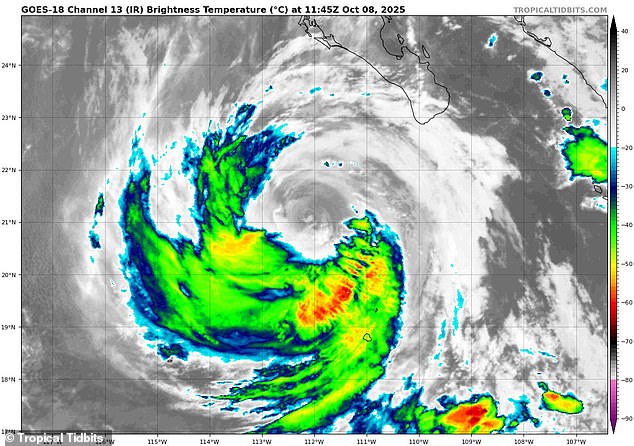

Storm Priscilla’s Path and Impact on the Southwest
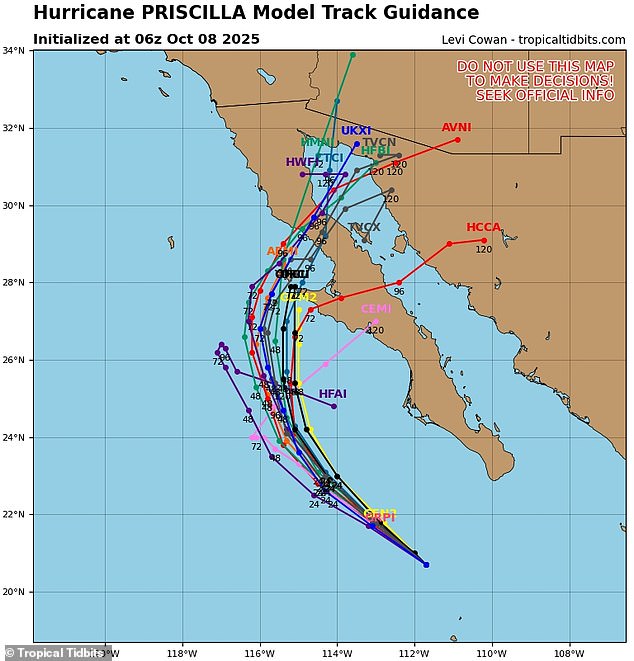
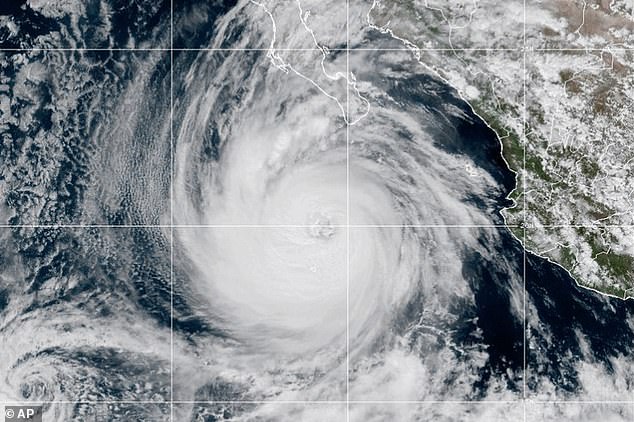
Hurricane Priscilla has taken a dramatic turn in its path through the Pacific, with forecasters warning that several southwestern states could experience severe weather within hours. The National Hurricane Center uses a ‘cone of uncertainty’ to illustrate the potential path of hurricanes like Priscilla, with the cone expanding over time to show areas where the storm might travel in the next three to five days.
The latest cone of uncertainty indicates that the Category 2 storm is expected to shift northward, heading towards land on Thursday. Spaghetti models suggest that Priscilla will likely pass over Mexico and move as far inland as Southern California and Arizona before it begins to dissipate.

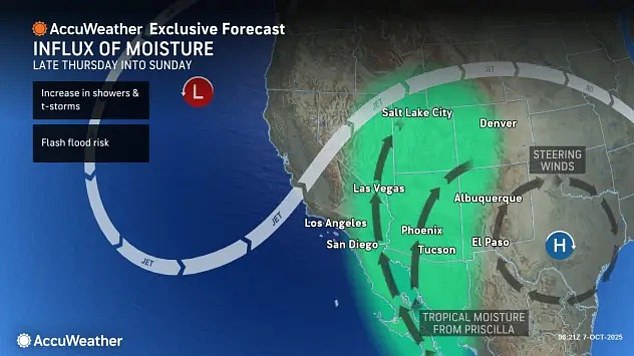
Several other states in the Southwest, including New Mexico, Colorado, Utah, and Nevada, have been advised to prepare for thunderstorms and flash floods due to the moisture being drawn inland from Priscilla starting tomorrow and continuing through Sunday.
Parts of Arizona, New Mexico, Colorado, and Utah could receive up to four inches of rain between Thursday afternoon and Saturday night. AccuWeather lead hurricane expert Alex DaSilva highlighted that Arizona may face particularly severe conditions on Thursday night, with heavy rain and flooding expected throughout the state. The intense downpours could potentially double the average October rainfall of 1.5 inches in places like Flagstaff, Arizona.
Meteorologists have also noted that another tropical system is likely to form behind Priscilla, which could lead to even more dangerous weather along the West Coast extending into next week. National Hurricane Center forecasters have indicated an 80 percent chance of a tropical wave near the southern tip of Mexico developing into the next Pacific storm, named Raymond.
AccuWeather explained that a dip in the natural jet stream, which flows over the US, has been steering Priscilla in a northeastern direction, moving the hurricane from the Pacific to the Southwest. This same pattern is expected to affect Raymond as it forms and moves up the Mexican coast.
Dan Pydynowski, a senior meteorologist at AccuWeather, stated: “The next storm that may develop behind Priscilla, and some of Priscilla’s moisture, is likely to result in several days of locally heavy showers and thunderstorms.”
Priscilla has already caused significant damage in parts of Mexico with strong winds and heavy downpours along the country’s west coast. Areas closer to the US have issued a tropical storm watch as the storm approaches. This includes the major tourist destination Cabo San Lucas, which welcomes over three million US tourists annually.
With two months remaining in the Pacific hurricane season, Priscilla is the 16th named storm and the ninth to become a hurricane, surpassing predictions by the National Oceanic and Atmospheric Administration (NOAA).
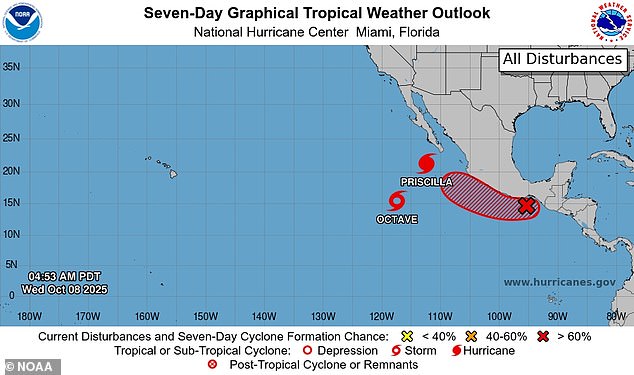
Earlier this year, NOAA predicted a ‘below-normal season’ for the eastern Pacific, expecting 12 to 18 named storms, five to 10 hurricanes, and up to five major hurricanes. However, the current situation shows otherwise.
The storms are arriving just as the Southwest is emerging from its annual monsoon season, which runs from June to September. Local forecasters noted that parts of New Mexico, such as Albuquerque, and northern Arizona experienced wetter-than-average conditions, with record flash flood warnings issued.
The monsoon season in the Southwest is a period when the region receives a significant portion of its yearly rainfall in short, intense bursts. This is driven by the land heating up in summer, creating low-pressure areas in the region. Winds shift and pull in moist air from the Gulf of America (formerly the Gulf of Mexico) and the Pacific Ocean.
This moist air collides with the hot, desert air, leading to thunderstorms that can dump massive amounts of rain in less than two hours. DaSilva warned, “Flash floods happen very quickly. Since the Southwest doesn’t typically get as much rain, it can take only a small amount of rain to cause a flash flood.”
This October downpour from Priscilla is a rare event in the Southwest, but it may benefit some areas suffering from severe droughts this year. This includes parts of southern Arizona, eastern Utah, and central Colorado.

