


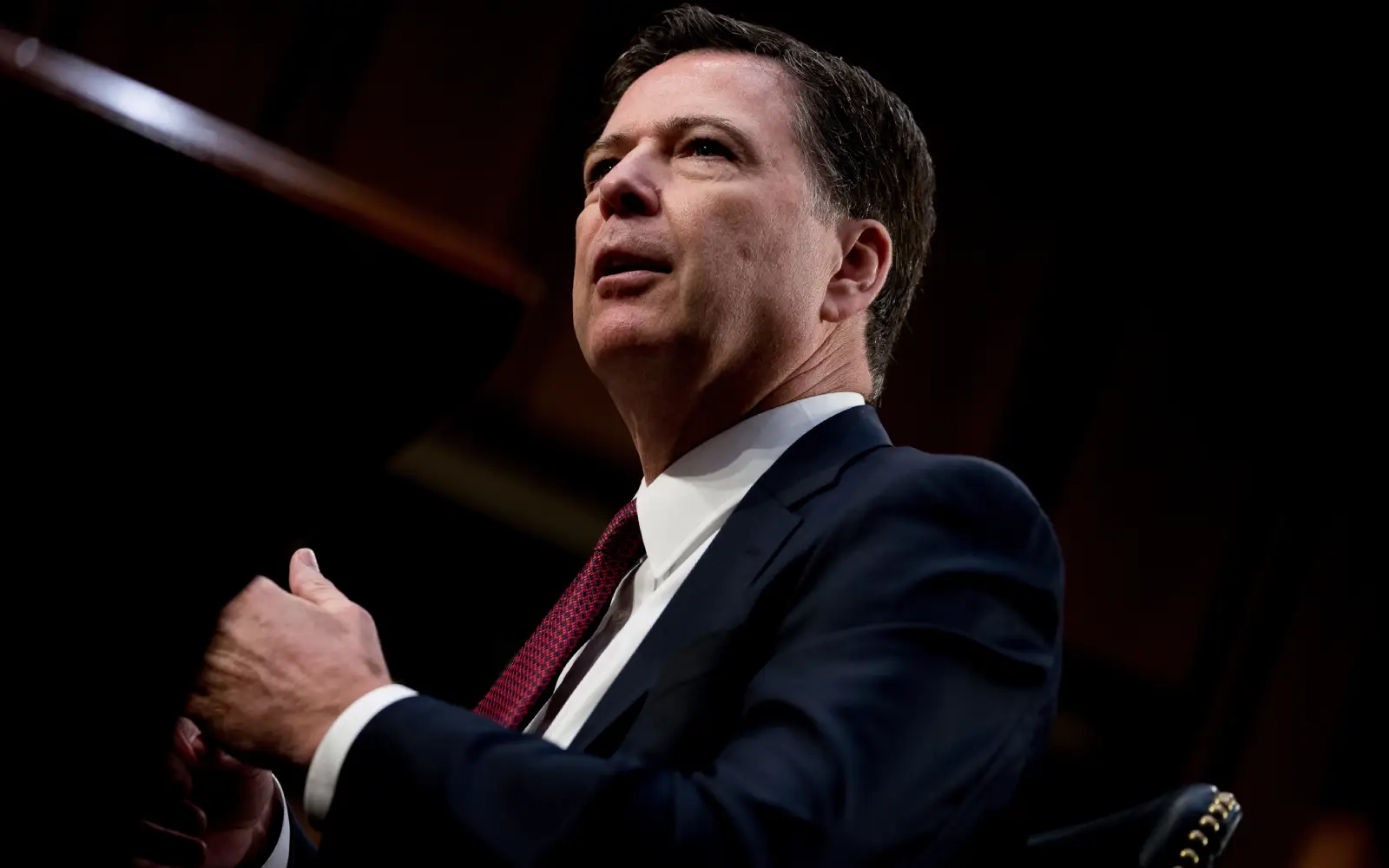

Legal Battle Intensifies: James Comey Faces Felony Charges
In a significant development, former FBI director James Comey has pleaded not guilty to felony charges in a case that many view as a direct response from President Donald Trump against political adversaries. The charges, which include making false statements to Congress and obstructing a congressional proceeding, were brought by a grand jury last month. This marks a notable escalation in the ongoing tensions between Trump and those who have criticized his administration.
Comey, 64, made his plea before district judge Michael Nachmanoff during an arraignment at a federal courthouse in Alexandria, Virginia. His lawyer, Patrick Fitzgerald, entered the plea on his behalf. The judge has scheduled the trial for January 5, setting the stage for a high-profile legal battle.

Outside the court, a few protestors gathered, with one individual holding a sign that read “Show Trial.” This demonstration highlighted the public’s interest in the case and the broader implications it holds for the relationship between the executive branch and the judiciary.
The indictment against Comey stems from his sworn testimony before the Senate Judiciary Committee in 2020. He is accused of falsely claiming that he had not authorized another FBI employee to serve as an anonymous source in news reports. If convicted, Comey could face up to five years in prison.
A History of Conflict
Comey was appointed as the FBI director by President Barack Obama in 2013 and was later fired by Trump in 2017 amid investigations into potential collusion between the Trump campaign and Moscow during the 2016 election. This firing sparked widespread debate about the independence of the FBI and the role of the president in its operations.
The charges against Comey came shortly after Trump publicly encouraged Attorney General Pam Bondi to take action against him and others he considers enemies. This move represents a significant shift from the traditional principle that the Justice Department should remain free from White House influence.
Trump, who is the first convicted felon to hold the presidency, praised the indictment, calling Comey “one of the worst human beings this country has ever been exposed to.” This statement underscores the deep-seated animosity between the two figures and highlights the political climate in which these charges have emerged.
The Cost of Standing Up to Trump
Since taking office, Trump has implemented various measures against perceived enemies, including removing government officials deemed disloyal, targeting law firms involved in past cases against him, and cutting federal funding from universities. These actions reflect a pattern of retribution that has raised concerns among legal experts and civil liberties advocates.
The indictment of Comey followed the resignation of the US attorney for the Eastern District of Virginia, Erik Siebert, who reportedly believed there was insufficient evidence to charge Comey. Trump replaced Siebert with Lindsey Halligan, one of his former personal lawyers, who then secured the indictment.
Comey has consistently maintained his innocence, stating that “my family and I have known for years that there are costs to standing up to Donald Trump.” This sentiment is echoed by his daughter, Maurene, who was recently fired as a prosecutor in Manhattan and has filed a lawsuit against the Justice Department over her dismissal.
Ongoing Investigations and Legal Challenges
After leaving the White House in 2021, Trump became the target of several investigations. The FBI raided his Mar-a-Lago home in 2022 as part of an inquiry into the mishandling of classified documents, which he kept in unsecured locations even after leaving the presidency.
Additionally, Trump was charged by special counsel Jack Smith with plotting to overturn the results of the 2020 election, culminating in the January 6, 2021 assault on Congress by his supporters. However, neither case reached trial, and Smith, following a justice department policy of not prosecuting a sitting president, dropped them both after Trump won the November 2024 vote.
This complex web of legal challenges and political maneuvering continues to shape the landscape of American politics, reflecting the ongoing tensions between the executive branch and the judicial system.

