



Sabah’s Development Plan Under Scrutiny as Voters Weigh Promises Against Performance
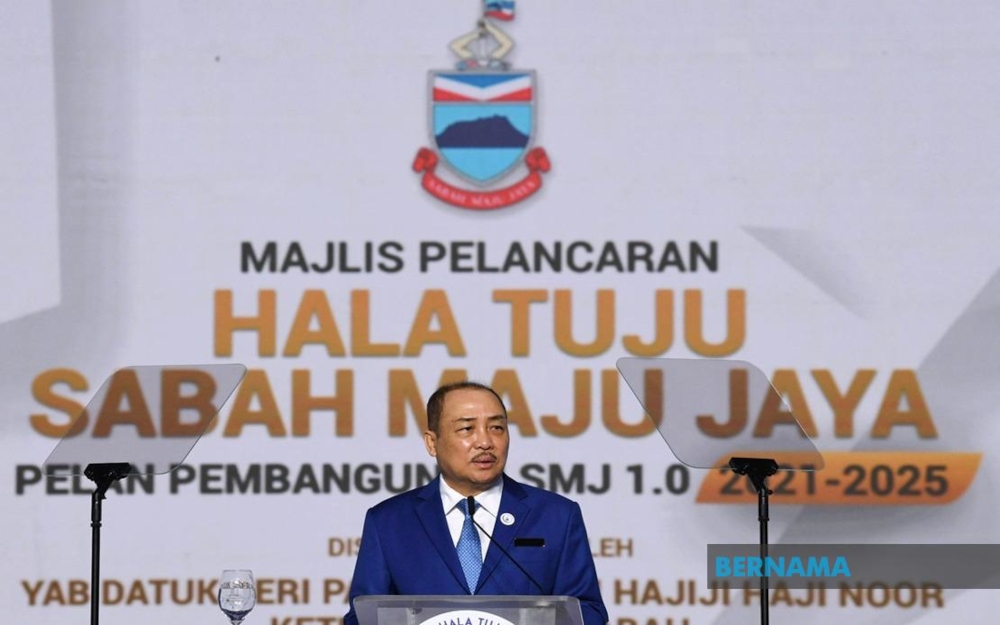
As caretaker Chief Minister Datuk Seri Hajiji Noor seeks a renewed mandate under the Sabah Maju Jaya (SMJ) banner, the five-year-old development plan that has been touted as his administration’s blueprint for transformation will face intense scrutiny from voters evaluating promises against actual achievements.
Unveiled in 2021, the SMJ Development Plan is structured around four key pillars: agriculture, industry and tourism; human capital and people’s welfare; and infrastructure and sustainability. It has served as the central narrative of progress for the state government.

Pro-government officials credit the plan with helping Sabah navigate post-pandemic recovery, boosting investment, and restoring economic confidence. However, the administration has also faced numerous challenges and criticisms, with some accusing the plan of being little more than empty rhetoric.
Here is a look at some of the highs and lows of Hajiji’s five years in power.
Economic and Social Milestones
Under the SMJ plan, the state government reported what it described as “historic” revenue levels of approximately RM7 billion in a recent year. Investment inflows have positioned Sabah among the top-tier states in terms of attracting new ventures.
The administration has also expanded welfare and education aid. Scholarship allocations have increased significantly, rising from RM55 million in 2022 to RM128 million in 2025. New initiatives such as student flight subsidies, low-income housing, and assistance for the hardcore poor have been introduced to alleviate cost-of-living pressures.
In terms of welfare, education, and social aid spending, there have been notable increases. Assistance schemes like Bantuan Tunai SMJ, Rumah Mesra SMJ, and flight subsidies for students have been rolled out to support vulnerable groups.
Infrastructure efforts include ongoing maintenance plans, dam projects in Papar and Tawau to address water shortages, and moves to corporatise the Sabah Water Department to reduce leakages and losses.
Political Stability
Hajiji’s supporters highlight his ability to maintain a coalition government through a full term — a rare feat in Sabah’s politically volatile history. He has also managed to maintain a working relationship with the federal administration, securing new funding and gradual devolution of powers under the Malaysia Agreement 1963 (MA63).
Currently, Hajiji is Sabah’s longest-serving assemblyman. He maintained a relatively low profile during his eight terms until the 2020 state elections, where the Gabungan Rakyat Sabah coalition (comprising Perikatan Nasional, Barisan Nasional, and Parti Bersatu Sabah) ousted the Warisan-Pakatan Harapan state government by a narrow margin.
After some deliberations, Hajiji became Sabah’s 16th chief minister, although this was not without concerns from Sabah Barisan chairman Datuk Seri Bung Moktar Radin.
The relationship between Hajiji and Bung was strained from the beginning, as Bung threatened to withdraw support when he was not given the Works Ministry portfolio as agreed upon. The first crisis was averted when Hajiji gave in, but tensions between the two persisted throughout the next few years as the fledgling government struggled through the rest of the COVID-19 lockdown.
In November 2022, Hajiji led most of its Sabah Bersatu leaders out of Perikatan Nasional and formed the local-based Parti Gagasan Rakyat Sabah, which aligns with the Pakatan Harapan/Barisan Nasional federal government led by Prime Minister Datuk Seri Anwar Ibrahim.
Shortly after, in January 2023, Sabah BN withdrew support for the GRS government in an attempt to topple Hajiji, known as the Kinabalu Move. However, Pakatan Harapan and a handful of defecting assemblymen from Umno and Pakatan Harapan kept Hajiji in power with a simple majority.
Since then, defecting assemblymen have given Hajiji a comfortable two-thirds majority, earning him clout with the federal government and securing development funds, infrastructure allocations, and devolved powers under MA63.
Persistent Infrastructure Grievances
Despite the political maneuvering, the GRS government faces sharp criticism over unresolved or slow-moving issues, particularly regarding water supply disruptions. Despite numerous announcements about new dams, water treatment plants, and projects to improve supply, including Papar’s Kogopon II and Tawau’s dam, many residents continue to report unreliable water pressure and frequent outages.
Non-revenue water losses remain as high as 57 to 60 per cent. Delayed or poorly managed projects have drawn complaints, with critics arguing that progress has not matched the scale of official announcements.
Critics say that while the state touts macroeconomic growth and policy reforms, public frustration remains rooted in daily hardships — such as “sick” public projects, unreliable utilities, incomplete roads, or uneven access to basic amenities.
Major residential areas, shopping malls, and even five-star hotels in the city centre face water supply issues regularly, while power blackouts are more intermittent. Many complain about the daily cost of living and the lack of understanding from the political elite.
In rural districts, the Sabah Maju Jaya slogan is sometimes dismissed as more rhetoric than reality. Opposition parties have capitalized on these sentiments, arguing that the benefits of state development are unevenly distributed and that corruption scandals undermine public trust.
Even so, there is acknowledgment of progress in certain areas — especially education aid, housing assistance, and renewed investor interest — suggesting that Hajiji’s administration has delivered tangible, if uneven, gains.
Corruption Allegations
The ongoing Malaysian Anti-Corruption Commission (MACC) probe into alleged bribe-taking by several assemblymen has also tarnished the administration’s image, raising questions about accountability and transparency.
Videos were leaked showing almost all of the GRS administration’s leaders, including deputy chief ministers, the finance minister, the State Assembly Speaker, and party leaders, with most denying wrongdoing. Two have been charged with receiving bribes.
Even without convictions, the damage may have already been done in the court of public opinion.
Heading into the polls, the government’s challenge lies in convincing voters that announced projects and funding will translate into real improvements in daily life. — and that its push for stability, economic growth, and local empowerment remains credible amid persistent gaps in basic services.
Whether voters view Sabah Maju Jaya as a genuine roadmap or just another slogan could determine the outcome of the polls.

