


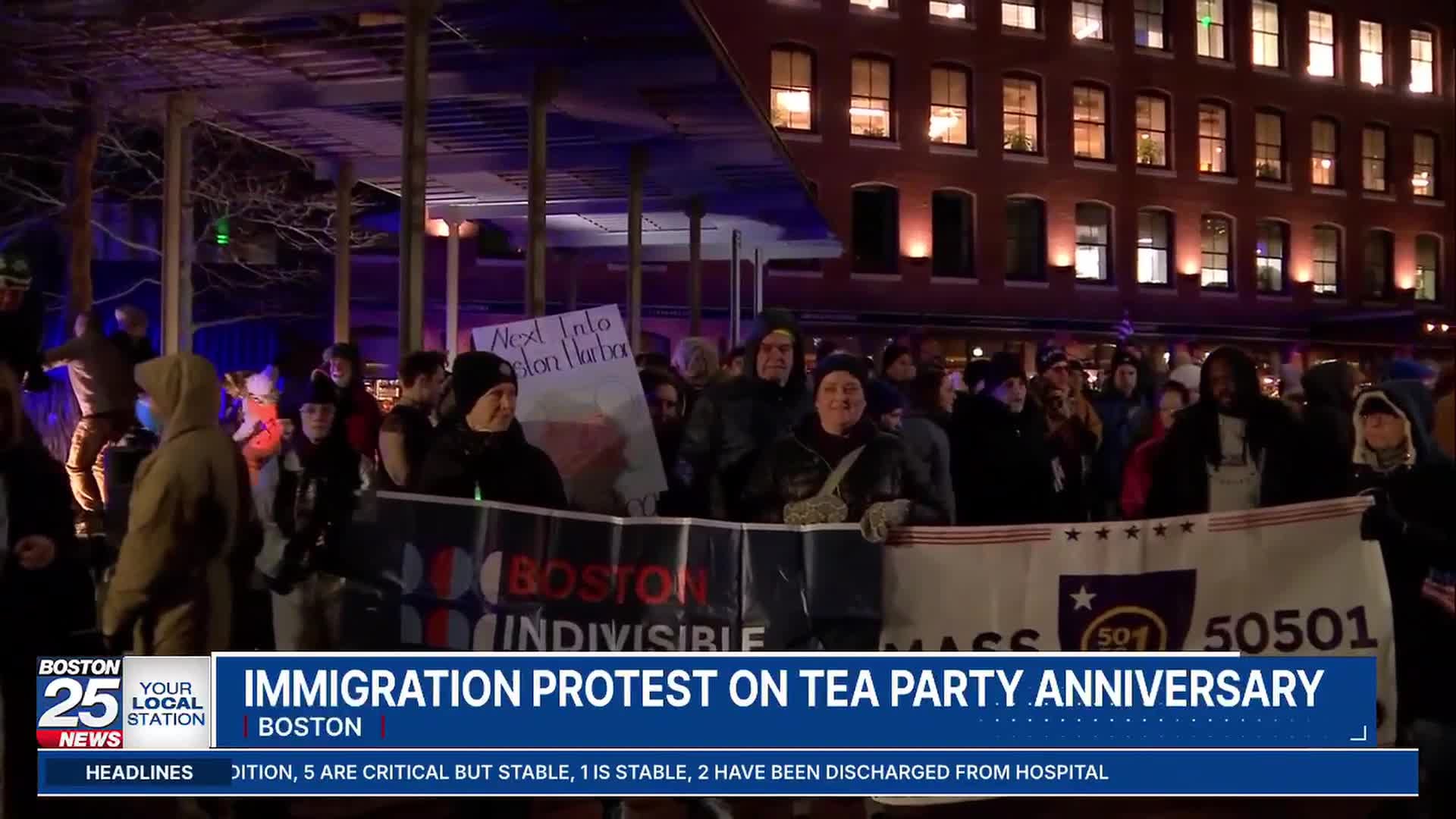

A modern twist on a historic act of defiance unfolded in Boston Harbor recently, as demonstrators reimagined the Boston Tea Party for today’s political landscape. Instead of tea, participants tossed blocks of ice into the frigid waters, drawing a direct line from colonial resistance to contemporary issues.
Organizers from Boston Indivisible estimated that approximately 1,000 people gathered for the evening event, which marked the 252nd anniversary of the original Boston Tea Party. The demonstration aimed to connect the spirit of colonial resistance to the ongoing national debate surrounding immigration.

Echoes of the Past in Modern Protest
The core of the protest centered on drawing parallels between the colonists’ cry of “taxation without representation” in 1773 and what attendees described as government overreach by the Trump administration. This comparison highlighted a perceived infringement on freedoms and a lack of responsiveness from those in power, mirroring the grievances that fueled the American Revolution.
Martha Laposata, a representative from Boston Indivisible, emphasized the unifying nature of the cause. “This is not left or right. This is not progressive or conservative. It’s being American,” she stated, underscoring the belief that standing up against perceived injustices is a fundamental aspect of national identity, transcending political divides.
Environmental Considerations in a Symbolic Act
A practical consideration for the modern-day protest was the environmental impact of their actions. Organizers were careful to note that they had brought “clean ice,” which had been approved by the Massachusetts Department of Environmental Protection. This detail underscored a commitment to ensuring that the symbolic act did not come at the expense of the local ecosystem.
The demonstration served as a commemoration of the historic day when colonists, disguised as Native Americans, famously dumped chests of tea into Boston Harbor to protest the Tea Act and the policies of King George III. By substituting ice for tea, the protesters invoked the spirit of that rebellion while adapting it to a new context.
A Call to Action for Contemporary Citizens
The sentiment of civic duty was palpable among attendees. Mary Sweeney of Lynn expressed the urgency felt by many: “Anybody who understands the nature of our country should be doing something. This is not the time to sit home and watch TV.” Her words reflected a broader feeling that passive observation is insufficient when significant societal issues are at stake.
Organizers believe that Boston has a long-standing tradition of refusing to yield to oppressive forces and has historically served as a voice for the nation. They saw the strong turnout for this event as a reaffirmation of that reputation and expressed hope that it would inspire other communities and individuals to find their voices and speak out on issues they deem important. The act of dumping ice, a tangible and visible protest, was intended to be a powerful statement, encouraging engagement and dialogue in an era facing its own unique set of challenges. The reimagined Boston Tea Party served as a potent reminder that the principles of liberty and representation continue to resonate, prompting citizens to actively participate in the ongoing narrative of their nation.

