
The Crisis of Confidence in Nepal Police
Nepal’s law enforcement, particularly the Nepal Police, is currently facing a crisis of confidence following the recent violent Gen Z protests. These demonstrations, which took place in September, have left a lasting impact on the police force, raising concerns about their ability to maintain order as the country prepares for the March 5 parliamentary elections.
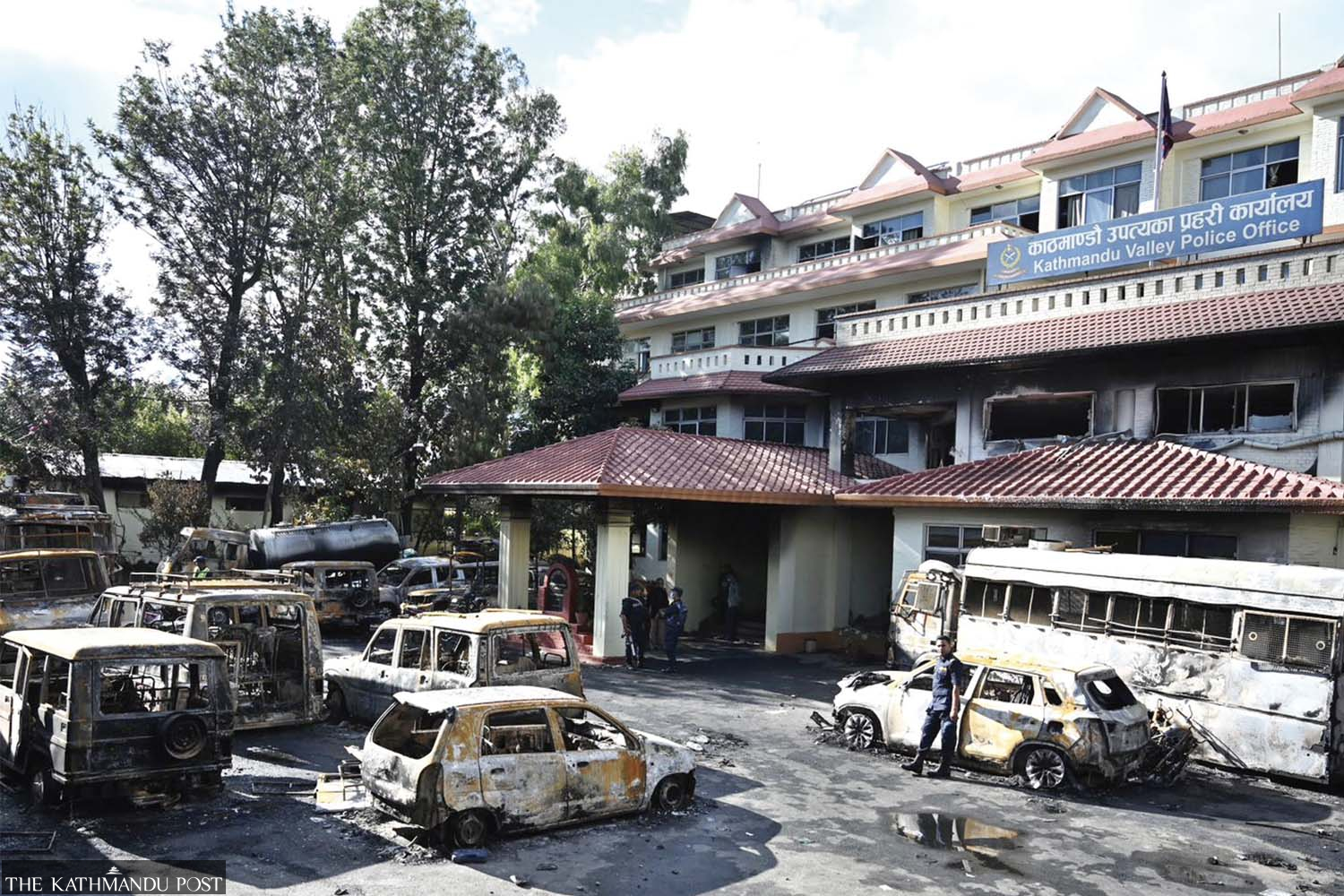
The interim government is under pressure to ensure stability during this critical period, but the police force, still recovering from the trauma of the protests, faces significant challenges. According to police officials and security experts, the morale of the force has been severely affected. Protesters not only looted weapons and ammunition but also stripped officers of their uniforms. Additionally, numerous police posts were destroyed, rendering them unusable.

This situation has led to pressing questions about how the police will manage law and order in the coming months. Although the Gen Z uprising ended after two days of protests on September 8-9, fears of further violence remain. Various Gen Z factions and other groups have threatened to launch more protests if their demands are not met. A group led by Durga Prasai, a controversial medical businessman, has also vowed to initiate a movement after Tihar and Chhath festivals, demanding the “restoration of monarchy.”
In response to these threats, the Kathmandu District Administration Office issued a ban on all forms of demonstrations, assemblies, and motorcycle rallies planned for Saturday. This decision came after rival groups had planned rallies for the same day.
The Psychological Impact on Officers
A Nepal Police officer, who asked not to be named, described the traumatic experience during the protests. “The image of colleagues brutally beaten to death before our eyes is still fresh,” he said. “The pain of having to surrender after removing our uniforms just to stay alive still lingers.” He recounted that some officers had to flee through drains mixed with sewage, while others witnessed protesters urinating on them.
Despite these harrowing experiences, Police spokesperson Binod Ghimire claims that the morale of the police force has not weakened. He stated that the Police Headquarters instructed officers to return to their respective areas of duty immediately after the incident. While some issues persist in parts of Kathmandu, he noted that police operations outside the capital have largely returned to normal.
Following the incidents of September 8 and 9, some officers were temporarily reassigned to different stations. However, a majority have now resumed duties in their original postings, according to Ghimire. He acknowledged the severity of the situation but emphasized that officers joined the force with full awareness of such risks. He compared the current situation to the decade-long Maoist insurgency until 2006, stating that the police institution has regained its footing after past crises.
Community Support and Ongoing Challenges
Ghimire highlighted that local communities began helping to rebuild police infrastructure and cooperating closely with the police in their locality. These efforts contributed to the rapid normalization of the situation. A senior superintendent partially agreed with the police spokesperson’s remarks, noting that unlike in Bangladesh last year, where residents had to plead with the police to resume their duties, the situation in Nepal was different.
“Here, the police did not show such reluctance to return to normal operations,” he said. While the protests certainly impacted the force, he added that the organization did not experience a loss of morale to the extent that it would make the force incapable of carrying out its regular duties.
However, he quickly added that post-traumatic stress was observed among some officers. A police officer requesting anonymity mentioned that some colleagues may require post-trauma healing, and it is the organization’s responsibility to recognize that and provide support.
Public Perception and Institutional Challenges
The psychological impact on the police has not only come from the government’s actions but also from the behavior of the protesters. After the Gen Z protests, officers whose morale had already been damaged faced verbal abuse from the public while on duty. In Kathmandu’s Buddhanagar, for instance, a young man threatened an on-duty officer, pointing his finger aggressively at him. The video of the incident went viral on social media, creating an impression that police officers were helpless.
According to an officer at the District Police Range Kathmandu, police officers in areas other than Balaju, Bauddha, Gaushala, and Baneshwar have resumed operations, and the demolished buildings have been repaired with the support of local people. However, having a building and personnel alone is not sufficient for effective policing.
“It is not yet possible to say when the police offices will begin operating at full capacity,” the officer said, on condition of anonymity. He claimed that public perception plays a crucial role in maintaining law and order, noting that no institution attacked during the protests is currently operating at its full capacity.
Escaped Detainees and Broader Implications
To make things worse, nearly 15,000 detainees escaped from several prisons and detention centers across the country on September 9. Former additional inspector general Surendra Shah emphasized that the responsibility for maintaining law and order does not rest solely on the police but also on other state agencies.
Shah believes that elections could be held under the current circumstances only if the interim government and political parties work together to create an environment conducive for that. He recalled the 1999 general elections, held amid a challenging political scenario due to the ongoing Maoist insurgency. Despite the presence of armed groups opposed to the election, the polls were successfully held, and he sees no reason why elections cannot be held now.