
Australia’s Share Market Hits New Lows Amid Global Uncertainty
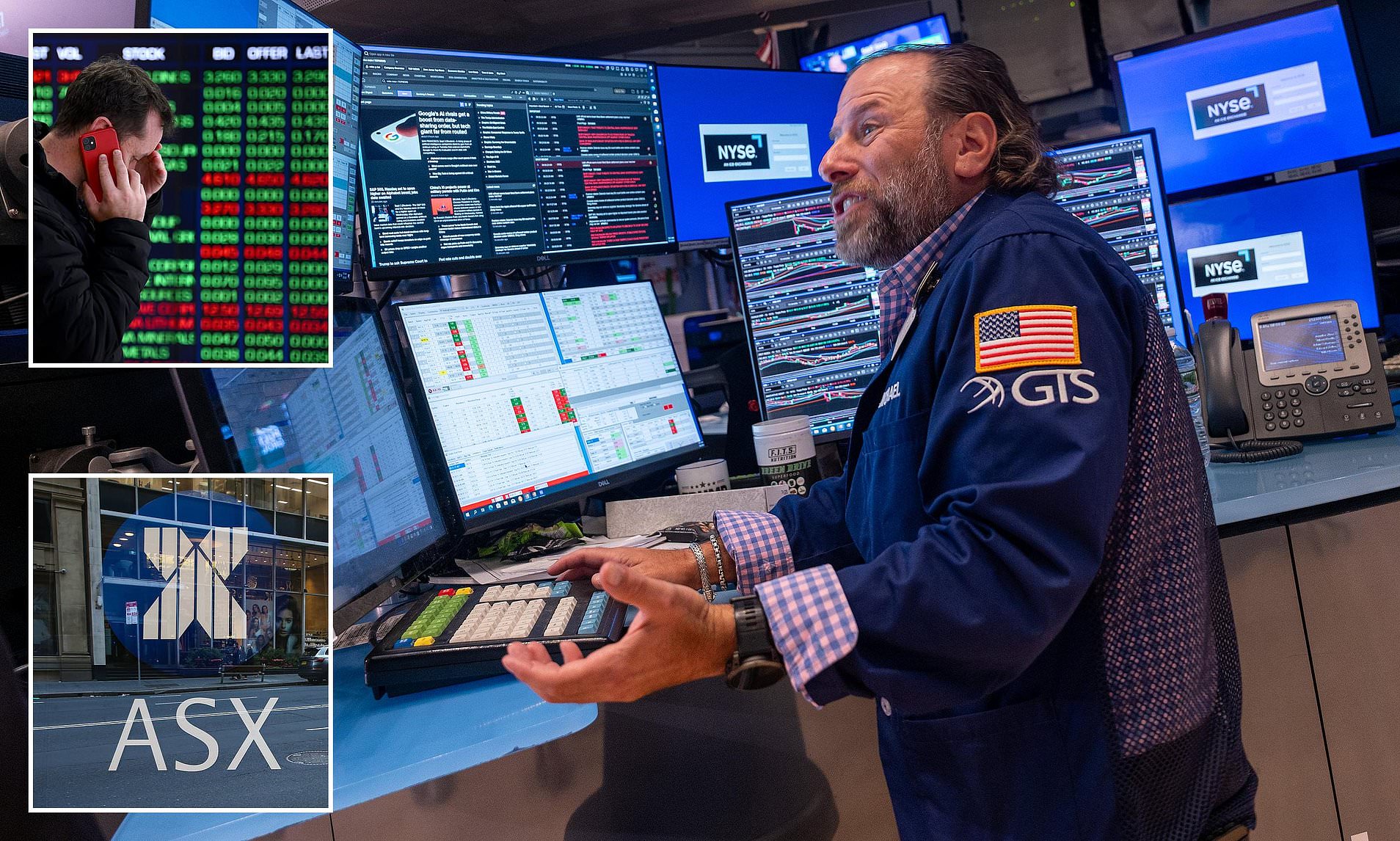
Australia’s share market has experienced a significant decline, reaching its lowest level since May. This downturn was driven by nervous investors who caused a sharp drop on Wall Street. The S&P/ASX200 index fell by 103.5 points by midday, marking a 1.21% decrease to $8,449.2. Meanwhile, the broader All Ordinaries index lost 113.9 points, or 1.29%, settling at $8,720.1.
This slump followed a negative performance in the U.S. market overnight, where even strong earnings from the world’s largest company failed to ease concerns about high equity valuations. Initially, the S&P 500 showed signs of recovery, with an early gain of 1.9%. However, it quickly reversed, dropping as much as 1.3%.

The most significant losses were seen in sectors that had previously been the market’s top performers. Companies like Nvidia and cryptocurrencies, which had seen substantial gains due to the AI technology frenzy, contributed to the downward trend. Bitcoin, for instance, fell below US$87,000, down from nearly US$125,000 last month.
Factors Behind the Market Volatility
The market had already been unstable before Thursday, primarily due to two major concerns: the possibility that AI-related stocks might have become overvalued, and the potential end of the Federal Reserve’s interest rate cuts, which are favored by Wall Street.
Nvidia, the largest company in the U.S. market by value, initially saw a 5% increase but later dropped into negative territory, losing 3.2%. Its stock has a significant influence on the S&P 500 due to its size.
Tony Sycamore, a market analyst at IG, noted that the reversal in U.S. equities erased the relief rally that followed Nvidia’s earnings report. He highlighted several factors contributing to this shift, including a mixed September jobs report that dampened hopes for a December Fed rate cut, and Nvidia’s earnings failing to calm concerns about stretched tech valuations.
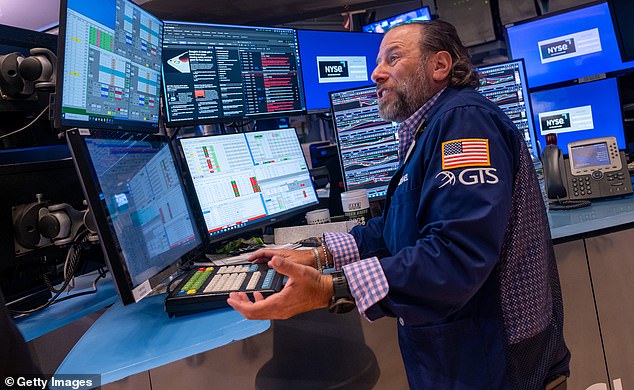
Despite Nvidia’s impressive numbers, worries about a potential AI bubble remain. Investors are questioning whether the large investments in AI chips and data centers will ultimately lead to significant profits and productivity gains. Nvidia expects to sell an additional $65 billion worth of chips in the next three months, surpassing analysts’ expectations. However, it remains to be seen if these chips will translate into substantial profits for companies like Amazon.
A recent survey by Bank of America revealed that a record number of investors believe companies are overinvesting. This concern has made the potential AI bubble the top risk identified by fund managers, despite its lower probability of occurring.
Sector Performance and Investor Sentiment
The impact of the market volatility was felt across all 11 local sectors by midday, with raw materials stocks leading the decline. Iron ore giants such as BHP, Rio Tinto, and Fortescue each dropped more than 2%, while gold stocks fell as the precious metal stabilized around $US4,065 per ounce.
Investors also showed renewed concerns about the sustainability of the AI boom, causing rare earth elements and critical minerals plays, along with copper miners, to suffer significant losses. The financial sector edged lower, with major banks and Macquarie Group experiencing declines. Westpac, in particular, dropped 1.5%.
Energy stocks fell 1.7%, following a decline in oil prices. Coal producers and uranium plays also faced pressure, with Yancoal, Whitehaven, Paladin, and Deep Yellow all seeing notable drops.
In contrast, the Australian tech sector fell 0.9%, with WiseTech Global performing well after its board reassured shareholders of strong growth. However, other IT companies, such as NextDC and Technology One, saw their shares tumble more than 3%.
Impact on Other Sectors
Real estate stocks declined 1.2% amid a broad-based market drop. Consumer-facing stocks performed relatively better, with staples and discretionary items slipping less than 0.5%. The healthcare sector posted the smallest loss, down 0.3%.
The Australian dollar remained stable, trading at 64.55 US cents, slightly lower than the previous day’s closing rate of 64.79 US cents. Despite earlier drops to three-month lows, it appears to be stabilizing.
As global uncertainties persist, the Australian market continues to face challenges. The interplay between AI innovation, economic trends, and investor sentiment will likely shape the future direction of the market.