


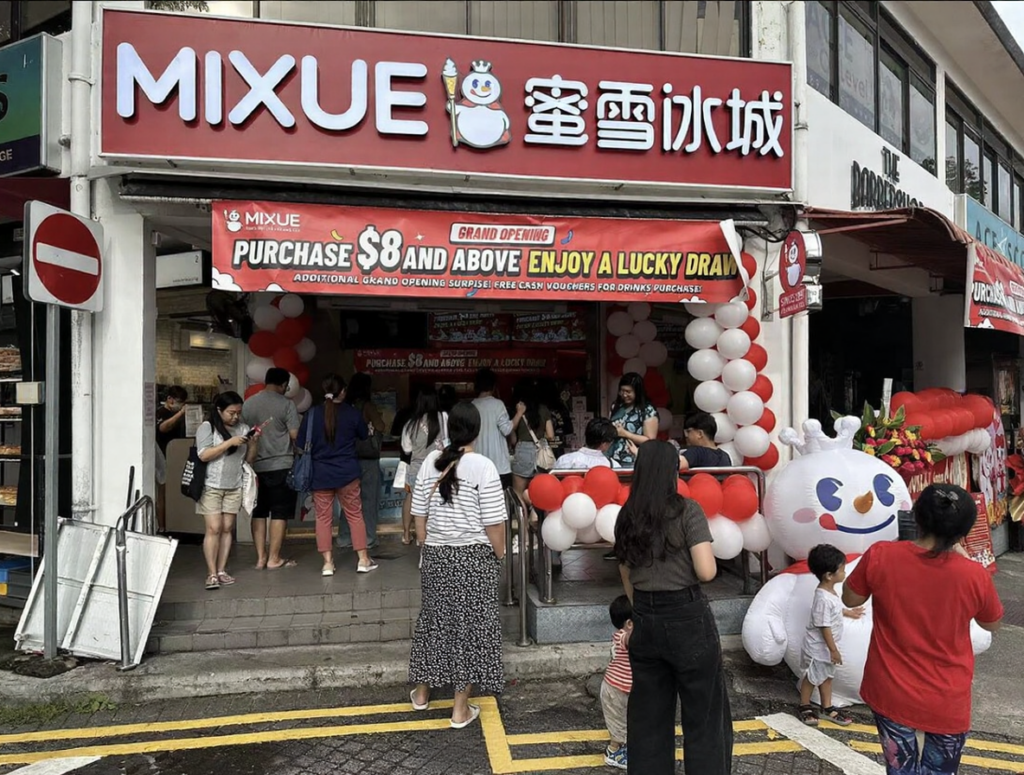

If you’ve taken a stroll through Singapore’s shopping centres recently, you might have noticed a significant shift in the retail scene. The Lion City is experiencing a rising trend of Chinese brands establishing themselves, spanning across food and beverage (F&B), fashion, and lifestyle sectors.
In the past, brands originating from China often faced skepticism, frequently being viewed as providers of substandard imitations. However, this perception has undergone a remarkable transformation. Chinese brands have now made a considerable impact worldwide, expanding forcefully into both Eastern and Western markets. In a compact market like Singapore, these brands are making substantial progress.

Why the Sudden Surge of Chinese Businesses?
The increase in Chinese retail brands entering Singapore gained momentum in the period following the COVID-19 pandemic, spurred by a mix of economic challenges in China and prospects available in Singapore.
In China, the previously thriving consumer sectors were reaching their limits. Markets were becoming saturated, growth was slowing down, and profit margins were shrinking, especially for businesses in the F&B and lifestyle retail industries. Consumer spending had also become sluggish.
These deflationary pressures and intense price competition made expanding overseas an appealing strategy to sustain revenue streams.
Singapore became an obvious choice. Its strong currency, geographical closeness to China, and majority-Chinese population made expansion both culturally familiar and commercially sensible. Furthermore, high purchasing power, predictable regulations, and the advantages of the ASEAN Free Trade Area—including reduced tariffs and improved infrastructure—further boosted its appeal.
Chinese companies backed by investors saw Singapore as a stable and easily accessible market, while smaller business owners and managerial staff were attracted to the city-state because of the possibility of a more sustainable work-life balance, escaping the demanding “996” work culture (working from 9 AM to 9 PM, six days a week).
These combined push-and-pull factors have resulted in a significant wave of Chinese businesses entering Singapore, spreading across almost every retail and F&B category after the pandemic subsided.
Competing on Price, Quality, and Experience

Chinese brands have now permeated almost every market segment, ranging from F&B to lifestyle and fashion.
Singaporeans are drawn to these brands for a number of reasons: affordable prices, a perception of better value (particularly in F&B), a strong service culture refined in China’s highly competitive market, visually appealing and highly efficient store layouts, and cultural and linguistic familiarity.
Therefore, it’s no surprise that you’ll find long queues at stores like Xiang Xiang Hunan Cuisine, CHAGEE, and Pop Mart.
The combination of affordability and a high-quality experience makes these brands appealing even to people who don’t speak Chinese.
However, this creates challenges for local businesses. Competing with brands that combine efficient operations, strong visual merchandising, and competitive pricing is a difficult task, especially in a society adjusting to a slowing economy.
The pressures vary across different sectors. Each sector has a unique story to tell about how Chinese brands are reshaping the market.
The Chinese Food Wave
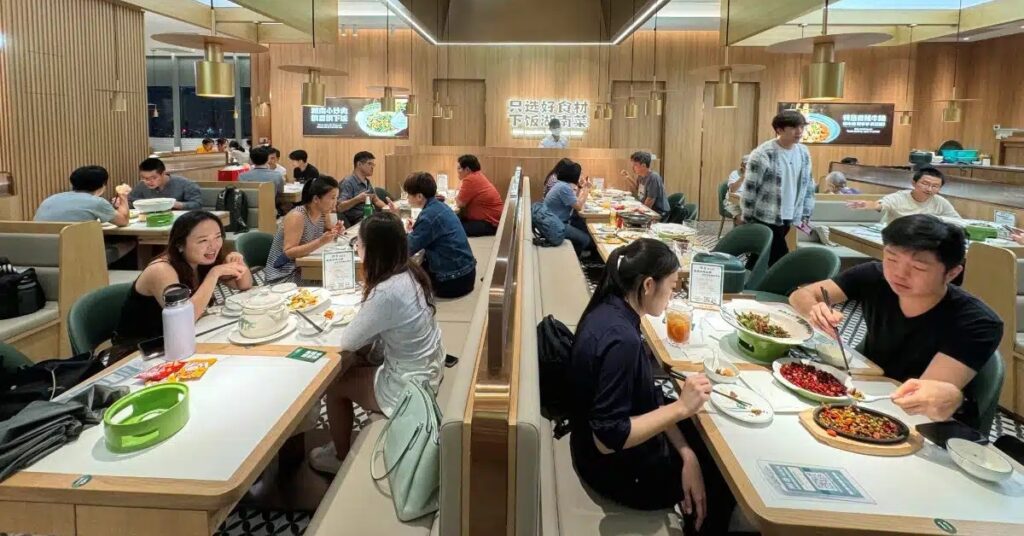
As of August 2025, approximately 85 Chinese food and beverage brands were operating around 405 outlets in Singapore—more than double the 32 brands running 184 outlets in June of the previous year, according to consultancy Momentum Works.
Many Chinese brands are supported by well-funded investors, enabling them to outbid local competitors for prime locations. For example, Michelin-starred Yong Fu from Shanghai entered Singapore with an investment of S$10 million last year.
Chinese eateries have now appeared everywhere, from hawker stalls to suburban malls, offering affordable meals, generous portions, bold flavours, and sensory-rich experiences. Strategically located in high-traffic areas, these outlets have transformed malls—from Tampines 1 to Grantral Mall at Macpherson—into curated slices of Chengdu, Harbin, or Guangzhou.
Singapore’s local businesses are feeling the impact.
Large-scale Chinese investments have increased rents, particularly in high-traffic areas with limited commercial space.
Local businessmen have noted that Chinese players seem to have access to significant capital. If the expected rental rate is between S$30 and S$40 per square foot, Singaporean tenants might offer around S$36 to S$38. However, a Chinese brand might offer S$45, a number even higher than landlords expect.
Some Chinese brands are willing to pay more because profit-making is not their primary goal. They simply want to establish a presence here to become international, focusing more on branding.
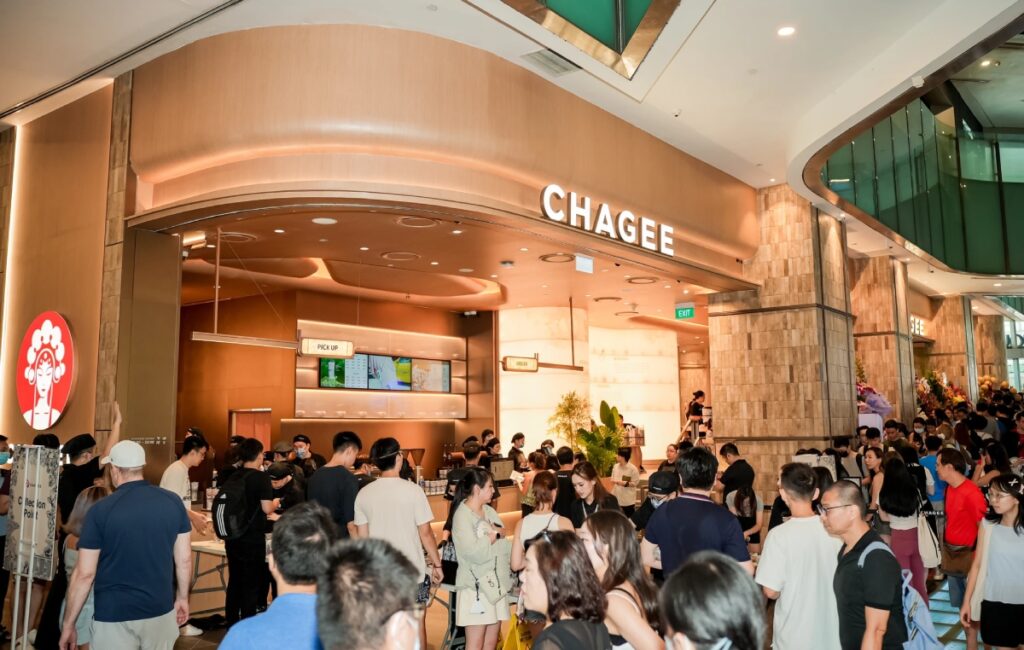
When it comes to beverages, Chinese brands are also making significant strides. Mixue, Luckin Coffee, and other similar brands offer lower prices and comparable, if not better, quality than established brands like Starbucks, leading to strong consumer adoption.
As of late 2024, Mixue, the world’s largest F&B chain by store count, had over 46,000 outlets worldwide, with 31 in Singapore as of May 2025. Luckin Coffee, which arrived in March 2023, operates 60 stores locally two years later.
Younger Singaporeans, in particular, are moving past old stigmas associated with products “Made in China”. Many of these brands are now seen as cool, modern, and emotionally in tune with what young consumers want. They feel both local and global.
Walking into a Chagee outlet, one can feel part of a new kind of aesthetic culture, characterized by clean design, soft lighting, and calming music. It is not just selling a product; it is selling a feeling.
Collectible Toys from China See Increased Popularity
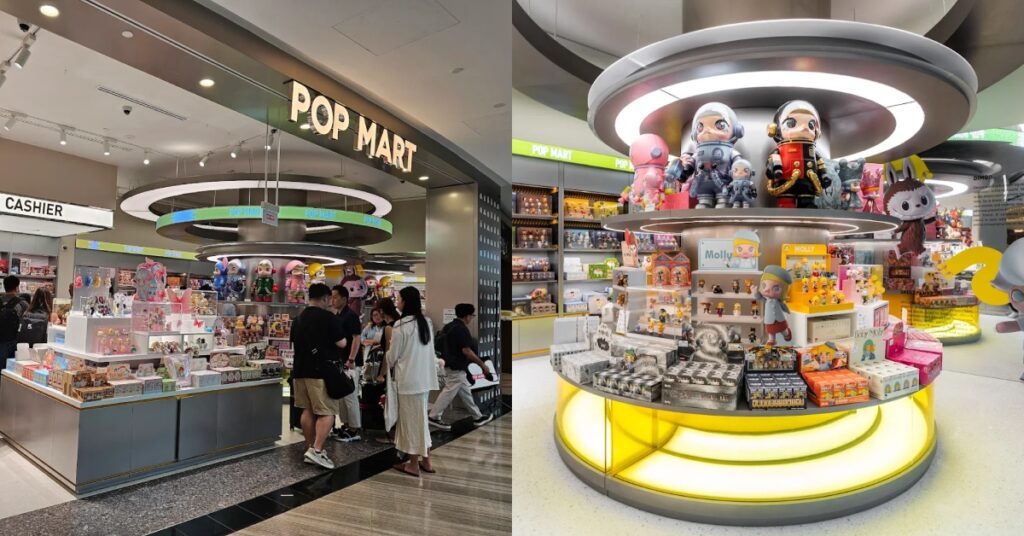
Lifestyle retail brands from China have also seen a surge. Both young and older collectors captivated by these quirky “cute‑ugly” toys are an increasingly common sight, with Labubus and Skullpanda keychains adorning bags.
Claw machines filled with these collectibles have also become a popular attraction in malls, drawing avid players eager to win their favorite characters.
This is thanks to Pop Mart’s retail entry into Southeast Asia through Singapore in 2021, and it has since expanded to 10 stores nationwide.
More recently, KKV, a Chinese lifestyle-collection chain, opened its first store this May at Tiong Bahru Plaza. The store offers a curated selection of items across eight categories, including toys, homeware, daily essentials, and cosmetics. It plans to open 10 stores by the end of this year.
Its candy-coloured aisles, aggressive expansion, and wide product range resemble Miniso but at a more curated, design-forward level.
Similarly, Scarlett Supermarket has expanded rapidly across heartland estates, meeting growing demand for Chinese groceries, snacks, and beverages. Opening 44 stores in just over five years, it is present in large shopping centers and also smaller heartland locations.
Chinese sportswear brands like Anta and Li-Ning are also expanding. Anta plans to reach 1,000 stores in Southeast Asia within the next three years after regional retail sales nearly doubled in the first half of 2025, with 224 stores as of Jun. Anta opened its first Singapore store in 2023 and now has 11 islandwide, while Li-Ning launched its first of two stores at the end of 2024.
Auto and Tech: When “Made in China” Becomes an Advantage
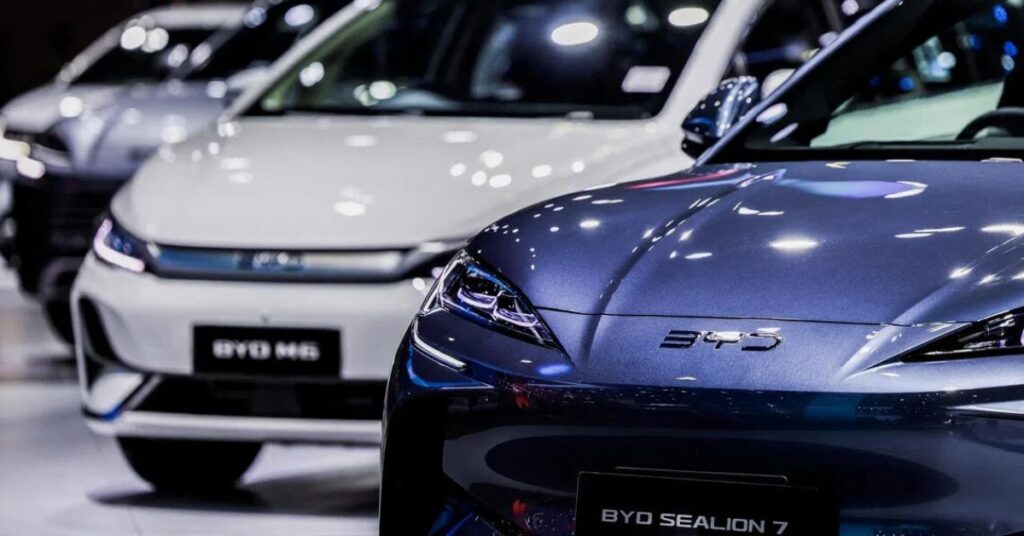
Chinese brands are also making significant inroads in higher-value sectors. BYD’s entry into Singapore’s electric vehicle (EV) market illustrates China’s growing dominance in electric vehicles.
Launching its retail passenger-car presence in 2022, BYD quickly overtook legacy automakers to become Singapore’s best-selling car brand for two consecutive years. Its EVs are significantly more affordable than comparable models from Toyota, BMW, or Tesla, yet they still offer modern technology, long battery range, and premium features.
Singapore’s car market is notoriously expensive, especially with Certificate of Entitlement (COE) costs; BYD’s pricing strategy makes EV ownership more attainable for a wider demographic.
In Oct 2025, the brand led the market with 7,473 registrations, surpassing Toyota by 2,027 units and representing 19.7% of new car registrations. Its strong price-to-performance ratio and accessibility have cemented its mainstream appeal.
Consider how many of your friends have purchased a Xiaomi robot vacuum or a Xiaomi TV in recent years. Chinese products are perceived as more reliable, affordable, and accessible than Western ones by Singaporeans, who have become more cautious with their spending amid a challenging economic climate.
The Premium Chinese Wave
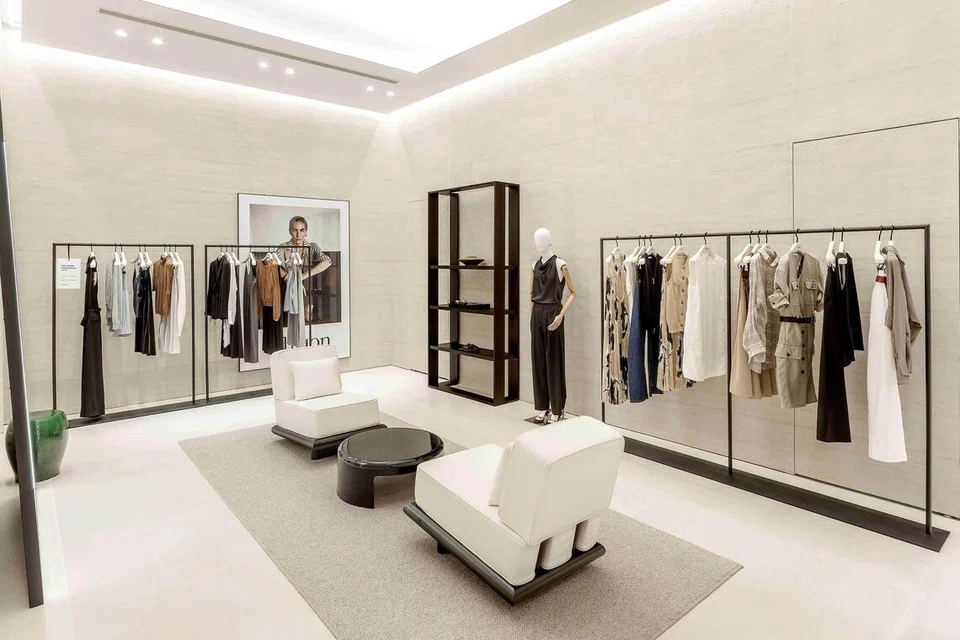
Chinese brands have also moved into premium segments.
No longer just affordable, mid-range brands like Yishion and Urban Revivo, Edition, and Mo&Co have established footholds in Singapore in high-end places like Raffles City and Jewel Changi Airport, supported by sleek branding and collaborations with Chinese and international celebrities.
Their presence signals that Chinese retail is no longer confined to “cheap and cheerful”—it is now sophisticated, trend-driven, and aspirational.
The accelerated adoption of Chinese phone brands has followed a similar trajectory, coinciding with broader shifts in consumer sentiment. Singaporeans are increasingly comfortable with products “Made in China”, seeing them as modern and reliable, sometimes even more so than their Western counterparts.
Demand for premium Chinese products is evident from consumers being willing to pay over S$1,000 for devices from Huawei or Oppo. This accelerated adoption of Chinese phones has coincided with a broader shift in consumer sentiment, as negative perceptions of Chinese brands have gradually faded amid perceived quality improvements over the years.
What This Means for Singapore Businesses
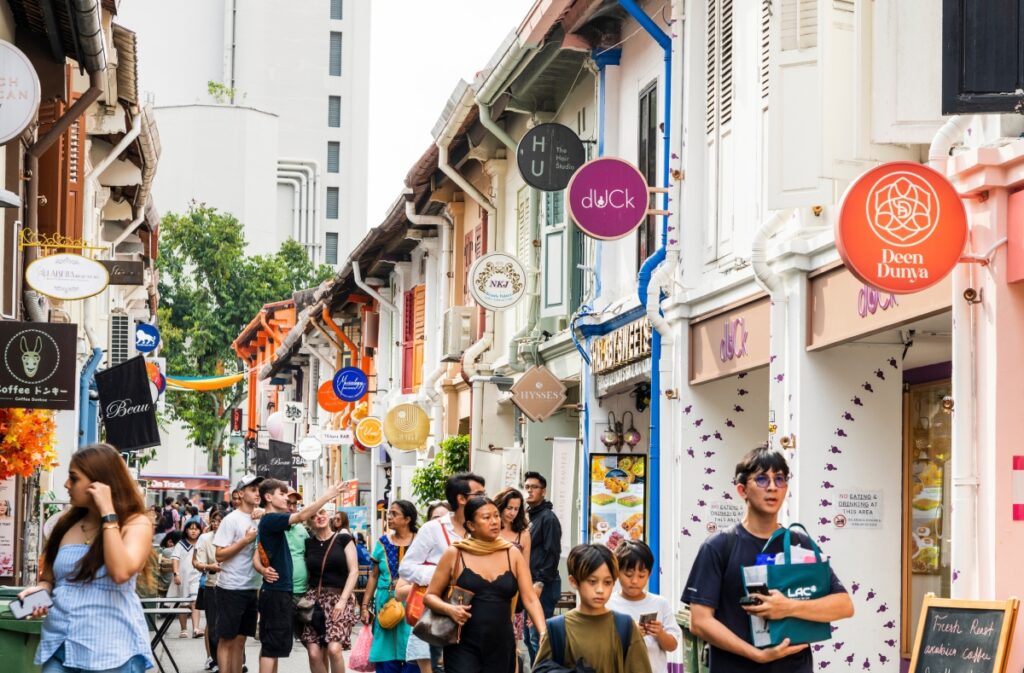
This retail wave raises cultural and economic questions. Is Singapore’s landscape becoming too homogenous? Are local brands being squeezed by aggressive pricing and expansion? Does the influx enhance diversity or erode local identity?
While Chinese brands bring vibrancy, choice, and affordability, they also reshape neighborhood malls and challenge homegrown players to remain relevant.
Singapore is witnessing a significant shift as Chinese retail businesses expand across sectors. Driven by challenges in China and attracted by opportunities in Singapore, these brands are changing not just what we buy, but how we shop and what we value.
For local businesses, competing on price alone is no longer a viable strategy. Survival and growth will require stronger storytelling, unique local concepts, premiumisation or niche positioning, and enhanced customer experiences. The market is becoming increasingly competitive, and only brands with clear, compelling concepts will stand out.
The question is no longer whether Chinese brands will continue to grow—they already have. The real challenge is whether Singaporean businesses can evolve quickly enough to maintain relevance and preserve the city-state’s unique retail identity. As Singapore changes, the true test is whether we can share our spaces without losing the places that make us feel at home.
Whether Singaporean businesses can adapt and thrive in this new retail landscape may depend not just on their innovation but also on how trade policies, commercial space management, and support mechanisms evolve in tandem.

