


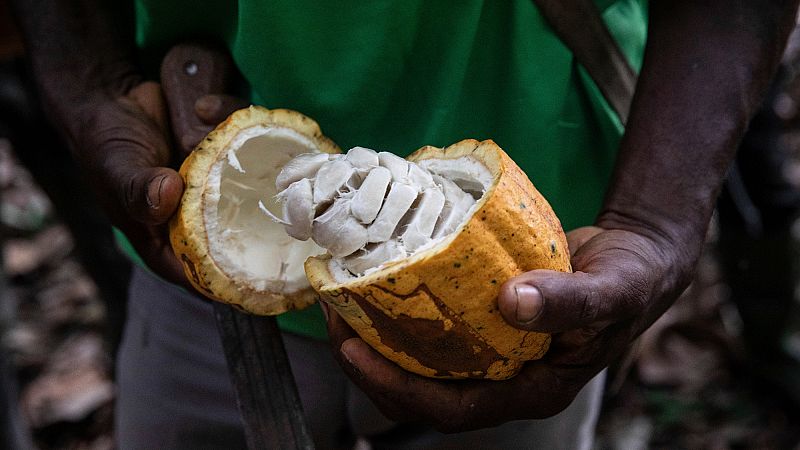

The Environmental Impact of Cocoa Production
Cocoa production has a significant environmental impact, especially in regions where tropical forests are cleared to make way for new plantations. This practice leads to substantial ecological damage, including loss of biodiversity and soil degradation. In recent years, the focus has shifted to Liberia, where the expansion of cocoa farming has raised serious concerns about deforestation and its consequences.
The Role of IDEF in Highlighting Deforestation
A recent investigation by The Initiatives for Community Development and Forest (IDEF) Conservation Association, an Ivorian nonprofit organization, has revealed the extent of deforestation linked to cocoa production in Liberia. The report underscores the urgent need for action from the European Union, which is the world’s largest importer of cocoa. The findings suggest that the EU must take a more active role in addressing this issue to prevent further environmental destruction.

Why Are Producers Turning to Liberia?
The Ivory Coast remains the world’s largest exporter of cacao beans. However, decades of reliance on the cocoa industry have led to severe environmental disruptions. Large-scale deforestation and the use of chemical fertilizers have weakened the soil, prompting producers to seek new areas for cultivation. This shift has resulted in increased pressure on neighboring countries like Liberia, where the legal framework prohibits deforestation but enforcement remains weak.
The Scale of Deforestation in Liberia
According to Global Forest Watch, Liberia lost 162,000 hectares of natural forest in 2024. The IDEF report highlights that the situation is even more alarming in the Grand Gedeh region, which borders the Ivory Coast. Since 2020, over 38,000 people have been registered in this area, contributing to the expansion of cocoa plantations. In the Grand Gedeh region alone, nearly 500,000 hectares of primary forest have been cleared for cocoa production.
The Human Cost of Deforestation
The environmental impact is not the only concern. The report also points to growing issues of human trafficking, exploitation, and child labor in the cocoa industry. Younger individuals are often brought to work on cocoa production and land clearing, raising serious ethical and legal questions about the practices involved.
Europe’s Role in the Cocoa Industry
As the world’s largest importer of cocoa, the European Union plays a critical role in the global supply chain. In 2023, the EU introduced the Deforestation Regulation (EUDR) to combat deforestation. This regulation aims to prohibit the marketing of products that contribute to deforestation, including coffee, cocoa, rubber, palm oil, soy, beef, and timber.
Challenges in Implementing the EUDR
Despite the intention behind the EUDR, its implementation has faced delays, with the current deadline set for December 2026. The report’s authors describe this as “extremely worrying.” According to Bakary Traoré, the Executive Director of IDEF, the EU could play a key role in preserving forests and supporting local communities through its regulations. However, the constant postponement of the law’s implementation is seen as a failure to act decisively.
The Urgency of Action
Traoré emphasizes that while Europe hesitates, the forests in Liberia are being destroyed at an alarming rate. He warns that without immediate action, it may be too late to save these ecosystems. The call for the EU to take a more proactive stance in enforcing its deforestation regulations is becoming increasingly urgent.
Conclusion
The issue of deforestation linked to cocoa production is complex and multifaceted. It involves environmental degradation, human rights concerns, and the need for international cooperation. As the EU continues to grapple with the challenges of implementing its deforestation regulations, the situation in Liberia serves as a stark reminder of the urgent need for action. The future of these forests and the communities that depend on them hangs in the balance.

