A 600-Pound Man Rescued from Florida Home Using Crane and Pallet
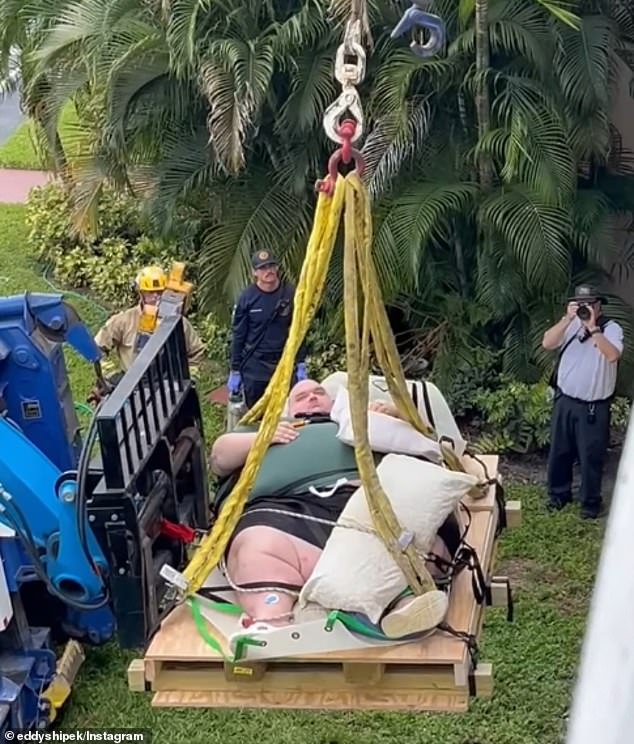
A man weighing around 600 pounds was rescued from his home in West Palm Beach, Florida, using a crane and a shipping pallet after experiencing a sudden medical crisis. The incident, which took place on Tuesday, involved a complex operation to get the man to safety due to his size and undisclosed health complications.
The individual could not navigate down the stairs or exit through the doors of his residence, prompting rescuers to use a crane and truck to lift him out. As seen in the video footage, responders had to remove part of the apartment wall and some of the balcony railings to facilitate the rescue. Firefighters carefully placed the patient on a sturdy pallet cushioned with pillows before lowering him 20 feet to the ground, where an ambulance was waiting. He was then taken to a local hospital for urgent care.

Obese patients who require specialist movers are referred to as bariatric in medical terms. First responders follow strict guidelines to ensure they are trained in safely moving individuals with such conditions. The rescue involved around a dozen people and appeared to be a success.
The video, shared on Instagram, sparked a wave of reactions from viewers, many of whom expressed concern for the man’s safety. One comment read, “Very sad,” while another said, “They put this man on the pallet?!” These comments highlight the public’s unease about the methods used in such high-risk rescues.
New Health Guidelines and Obesity Trends
This incident comes at a time when there is a major shift in health guidelines that could lead to an increase in obesity among Americans. According to new standards, more than 100 million Americans who are currently classified as overweight may now fall into the obese category.
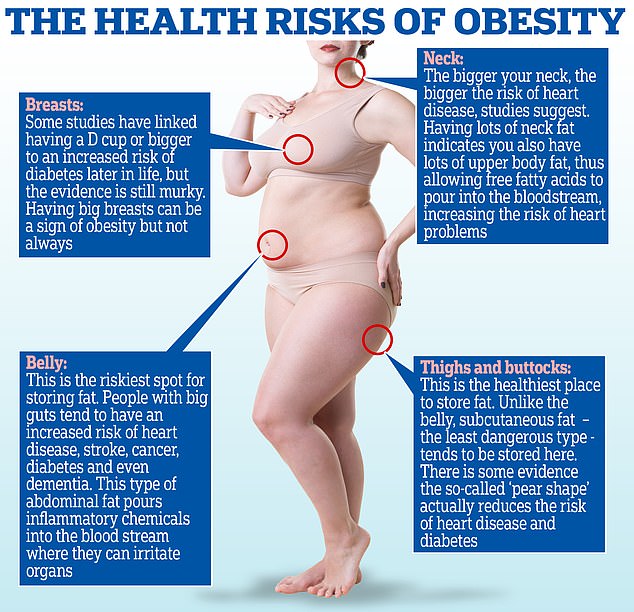
The traditional measure of overweight and obesity—body mass index (BMI)—may not fully capture the risks associated with obesity, according to the European Association for the Study of Obesity’s (EASO) framework. The EASO guidelines consider not only BMI but also waist-to-hip ratio and other medical, psychological, and functional factors.
Relying solely on BMI can leave doctors unaware of critical aspects of how and where fat accumulates in the body and how it affects metabolism. It also fails to distinguish between muscle and fat. A ‘good’ BMI can even mask underlying health conditions. For instance, around a fifth of people within the normal weight category may unknowingly be insulin resistant, a condition that can lead to diabetes.
Researchers from the American College of Physicians studied over 44,000 adults of varying weight and health levels. Nearly 19 percent of those previously classified as ‘overweight’ by having a BMI of 25 to 29 were now considered ‘persons with obesity’ (PWO) under the European standard, which takes into account weight, waist circumference, and metabolic health markers like liver enzymes and insulin levels.
If the same shift were applied to all 110 million overweight Americans, roughly 20.7 million people would be misclassified as overweight when they’re actually obese.

Implications for Healthcare and Emergency Services
The rise in bariatric cases has raised concerns about the impact on healthcare and emergency services. With more people requiring specialized care, the demand for bariatric assistance has surged. This has led to questions about whether such rescues could be preventing lifesaving firefighting efforts. Alarming insights suggest potential dire consequences due to the growing need for bariatric assists.
Experts are urging a radical overhaul of BMI-based diagnoses for millions of Brits, highlighting the need for more comprehensive health assessments. In the UK, data shows a fivefold increase in bariatric assists compared to a decade ago, indicating that firefighters are being stretched thin.
The situation raises important questions about how health standards are evolving and what this means for individuals who may be at higher risk of dangerous obesity-related conditions without knowing it. As guidelines change, it becomes crucial for both healthcare professionals and the public to understand the broader implications of these shifts.