


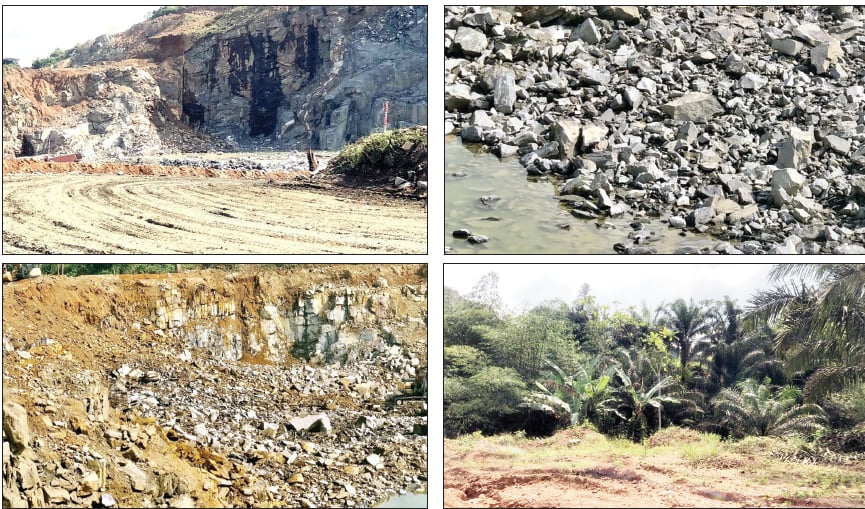

Nigeria, a nation blessed with abundant solid mineral deposits scattered across its states, faces a critical paradox: immense subterranean wealth largely remains untapped and responsibly exploited. Instead, this vast potential has become a fertile ground for informal, artisanal, and predominantly illegal mining activities. A confluence of factors – lax regulation, underdeveloped infrastructure, prohibitive financing costs, and poorly enforced laws – fuels this shadow economy, leading to significant economic losses, compromised livelihoods, and escalating insecurity.
The country grapples with a widespread crisis of illegal mining, operating largely unchecked and undocumented. This clandestine industry inflicts severe economic repercussions, including substantial revenue leakage for the government, the erosion of legitimate livelihoods, and a disturbing rise in insecurity. The majority of these operations are carried out by small-scale and artisanal miners who lack the necessary capital and technical expertise for sustainable practices, leaving behind scarred landscapes and vulnerable communities.

Escalating Crisis in Cross River State
Cross River State exemplifies the intensifying environmental, economic, and security crisis stemming from illegal mining. Unlicensed extraction of valuable minerals such as gold, limestone, and tourmaline has proliferated across numerous local government areas, including Yakurr, Biase, Akamkpa, Etung, Obubra, Boki, Ikom, and Obanliku. Even parts of the ecologically sensitive Cross River National Park have not been spared.
What began as isolated incidents in Yakurr and Biase has rapidly spread. Reports indicate that many of the individuals involved are migrants from Northern Nigeria and the Sahel region. Security agencies harbour suspicions that some of these mining operations serve as a cover for banditry and other illicit criminal enterprises.
The unchecked mining activities have precipitated widespread deforestation, severe soil degradation, and alarming levels of water pollution. Rivers and streams, including vital local water sources connected to the Osun River basin, have become contaminated, posing significant health hazards to the surrounding populations. Furthermore, the influx of armed, unauthorized individuals has exacerbated insecurity, fostering social vices and a pervasive atmosphere of fear.
State-Led Crackdown and Enforcement Efforts
In a decisive response, the Cross River State Government has initiated a robust crackdown on illegal mining. An Anti-Illegal Mining Task Force has been established with the mandate to raid illegal mining sites, apprehend suspected perpetrators, and confiscate mining equipment. Governor Bassey Otu has further solidified the state’s stance by enacting Executive Order No. 1 of 2024. This order mandates obtaining community consent and adhering to stringent environmental compliance for all mining operations. Traditional rulers found to be complicit in these activities face severe sanctions.
The state has also forged strategic partnerships with the Federal Government and various security agencies, including the Nigeria Security and Civil Defence Corps (NSCDC), to ensure the rigorous enforcement of mining regulations.
Over the past three years, intelligence suggests that more than 5,000 illegal miners, many reportedly armed and originating from Northern Nigeria and the Sahel, have converged on areas like Biase, Yakurr, Akamkpa, and sections of the Cross River National Park in pursuit of precious stones.
According to Prince Paul Effiong, the Chairman of the State Anti-Illegal Mining Task Force, over 2,000 illegal miners have been deported within the last year alone. Additionally, 215 suspects are currently undergoing prosecution in various courts. Effiong highlighted the intensification of enforcement efforts, noting the recent arrest of over 40 suspected illegal miners in a forest within Akamkpa Local Government Area, following coordinated surveillance operations.
Tragedy in Shikpeche: A Stark Warning
The devastating consequences of illegal mining were starkly illustrated on April 20, 2024, in Shikpeche, a community within Bishiri North, Obanliku Local Government Area. Two young men, Peter Shinong and Emmanuel Ushikeh, tragically lost their lives while working in an illegal mining pit.
The victims were among several youths employed to extract tourmaline, a gemstone valued for its industrial applications and purported healing properties. Operating with rudimentary tools, they dug a pit approximately six feet deep, which subsequently collapsed after an apparent electric shock. While three other workers were successfully rescued, Peter and Emmanuel succumbed to their injuries – one before extrication and the other en route to the hospital.
An eyewitness, who preferred to remain anonymous, recounted the perilous conditions: “They had no special tools or safety measures, just shovels and cutlasses. The miners were enticed by outsiders promising quick money, but it was a death trap.” Their deaths add to a grim national toll, with over 65 individuals having perished in mining-related collapses across Plateau, Taraba, and Adamawa states earlier in the year. Analysts caution that without fundamental reforms, such tragedies are likely to persist.
Environmental Devastation and Climate Ramifications
Illegal mining is accelerating environmental destruction in Cross River State, a region renowned for Nigeria’s most significant forest reserves. In Shikpeche alone, indiscriminate tree felling occurs to gain access to mineral deposits. The state’s forest cover has seen a dramatic decline, shrinking from 7,920 square kilometers in 1991 to approximately 6,102 square kilometers by 2008.
Lawrence Osong, Project Coordinator of the Africa Research Association Managing Development in Nigeria (ARADIN), has warned that the repercussions extend far beyond deforestation. “Temperatures in nearby Obudu Mountain Resort, once a cool refuge, now regularly climb to 27°C. Climate change is entering our communities through the backdoor,” he stated. Osong further explained that illegal mining strips the land of its capacity to sequester carbon, thereby exacerbating climate change. The World Health Organization projects that climate change could be responsible for an additional 250,000 deaths annually between 2030 and 2050 due to malnutrition, malaria, diarrhoea, and heat stress.
Laws Ignored, Communities Exploited
Nigeria’s Environmental Impact Assessment Act of 1992 and the Mining Act of 2007 stipulate rigorous environmental and social assessments prior to the commencement of any mining activities. However, these legal frameworks are frequently disregarded.
A community leader, Obo Amamong, lamented that companies operating in Shikpeche routinely flout all regulations: “They carry out exploitation under the guise of development. This is very disastrous for the residents.” While some community leaders initially supported mining initiatives, swayed by promises of financial benefits, fatal incidents have ignited widespread protests. Tragically, eight months after the collapse that claimed Peter and Emmanuel’s lives, their families have yet to receive any form of compensation.
Political Complicity and Criminal Networks
Prince Effiong has characterized the battle against illegal mining as a struggle against formidable interests. He stated, “Illegal miners are thieves who exploit our land, deceive our leaders, and bring insecurity to our communities.” He further alleged complicity among politicians, traditional rulers, and government officials, asserting, “Nobody will come into your house without an insider.” Speaking on FAD FM 93.1 Calabar on May 15, 2025, Effiong revealed that many apprehended miners hailed from Zamfara State, with some found in possession of sophisticated firearms like AK-47 rifles and shotguns. He emphasized, “Mining is not for the poor; it is for rich men. If you are not strong, the money alone can drown you.”
Legislative Alarm and Calls for Action
On July 25, 2024, Bette Philip Obi, a lawmaker representing Boki 1 State Constituency, sounded an alarm regarding the invasion of over 1,000 illegal miners into Boki communities. “These Fulanis have been carrying out illicit gold mining within the Government Reserved Area,” he warned. The Speaker of the State House of Assembly, Rt. Hon. Elvert Ayambem, pledged legislative action, advocating for swift arrests, prosecutions, and comprehensive community education initiatives.
A miner from the Uyanga community, who requested anonymity, admitted resorting to illegal mining out of sheer desperation: “I do this so that I can have what to feed my family… we are not seeing evidence of the resources we have.” Youth leader Rex Ubi accused politicians of actively mobilising young people for illegal mining activities, while elder Ukam Eso expressed deep concern over the pervasive health risks: “The stress here can kill you at any time.”
Recent collaborative operations conducted by federal and state authorities have uncovered multiple illegal mining sites, including a vandalised artisanal processing plant in Yala Local Government Area. Efiom Ekaha, the Commissioner for Mineral Resources, affirmed the state’s unwavering commitment to tackling the issue, noting that the restored facility could potentially empower local youths. Former Presidential Adviser Chief Okoi Obono-Obla has warned of the alarming links between illegal mining, terrorism, and transnational crime, advocating for the declaration of a state of emergency. “These crimes are inextricably linked, destabilizing communities and undermining national security,” he stated.
Charting a Path Towards Sustainable Solutions
The scourge of illegal mining deprives Cross River State of vital revenue, devastates its ecosystems, and exposes vulnerable workers to life-threatening conditions. Forests are razed, rivers are poisoned, and fertile farmlands are rendered unproductive. The cost of this illicit trade is not merely environmental; it is profoundly human.
While the state’s current crackdown represents a crucial step forward, experts underscore that enforcement alone is insufficient. Persistent unemployment remains a primary driver of engagement in illegal mining. The government must prioritize the creation of alternative livelihood opportunities and embrace modern surveillance technologies, such as satellite monitoring systems – a model successfully employed by India – to track illegal mining operations in real time. Only through robust governance, sustained community vigilance, and the establishment of viable economic alternatives can Cross River State hope to reclaim its mineral wealth without compromising the well-being of its people or the integrity of its invaluable forests.

