
A Close Call for Opponents of the EU-Mercosur Trade Agreement
A narrow but significant victory has been achieved by those opposing the controversial trade agreement between the European Union (EU) and the Mercosur countries. The deal, finalized in December 2024, has sparked intense debate among European lawmakers, with a recent vote highlighting deep divisions over its potential impact.
During a show of hands on Wednesday, 269 Members of the European Parliament (MEPs) rejected a specific paragraph in a resolution that expressed support for the EU’s political strategy regarding Latin America. This decision was seen as a strong signal of skepticism towards the Mercosur agreement. The vote was decided by a margin of just 10 votes, with 259 MEPs voting in favor of the paragraph. This close result reflects the divided opinions within the European Parliament about the trade deal.

French MEP Pascal Canfin (Renew) emphasized the significance of the vote, stating on LinkedIn that the message from the European Parliament is clear: more MEPs are doubtful about the benefits of the agreement than those who want it to be adopted immediately.
The European Commission, which led negotiations for over two decades, submitted the agreement for ratification to the Council and sought the European Parliament’s consent on 3 September. However, the final steps for the EU to conclude the deal remain uncertain.
Concerns Over Agricultural Competition and Environmental Impact
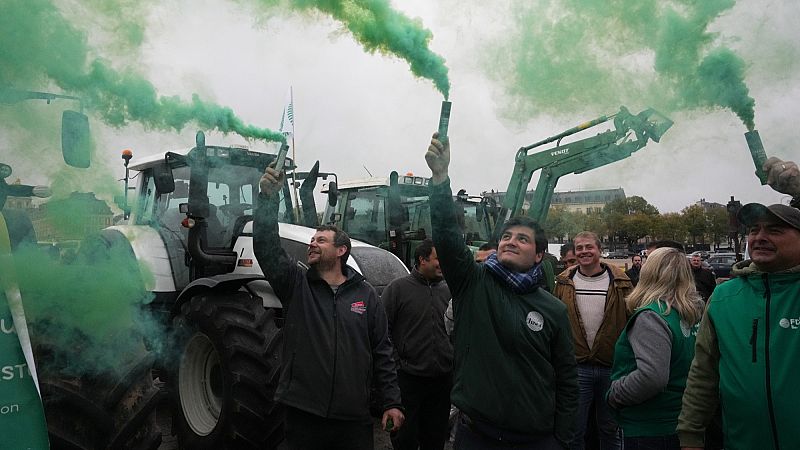
The agreement aims to liberalize trade between Mercosur countries—Argentina, Brazil, Paraguay, and Uruguay—and the EU. It includes provisions to reduce tariffs on various products, including some agricultural goods. This has raised concerns among European farmers, who fear they may face unfair competition from Latin American producers.
In response, a group of lawmakers is preparing to submit a resolution calling for the EU Court of Justice to intervene and suspend the deal’s approval. Opponents also worry that Mercosur countries may not meet European phytosanitary and environmental standards.
Spanish MEP Irene Montero (The Left), who initiated the vote, criticized the agreement, stating that it “abandons agriculture and livestock, harms the environment, fuels deforestation, and rolls out the red carpet for extractive multinationals.” She added that her group will continue fighting to prevent the agreement from being ratified due to the risks it poses to the environment and the primary sector.
Supporters Argue for Strategic Necessity
On the other hand, supporters of the deal argue that it is essential in the current global trade landscape. They believe the agreement, which creates a free trade area of 700 million people, is necessary to counter Chinese competition in Mercosur countries and diversify trading partners, especially as the US increases tariff barriers around its market.
The part of the resolution that was rejected welcomed the conclusion of the deal’s negotiations, emphasizing that it would be a “real game changer” for the relationship between the EU and Mercosur. The resolution highlighted that the deal would be the largest trade agreement ever signed by the EU in terms of population, covering more than 700 million citizens, and the most significant in terms of economic impact.
The document also stressed the “geopolitical value” of the deal, describing it as an essential tool for advancing the EU’s strategic interests in the current international context.
Next Steps and Uncertainty
Despite these arguments, the plenary vote on the Mercosur agreement itself has not yet been scheduled. A source familiar with the matter mentioned that the European Parliament’s administration hopes the vote will be included on the MEPs’ agenda by the end of the year. However, the outcome remains uncertain, with ongoing debates about the agreement’s long-term implications for both the EU and Mercosur countries.