
Faith Leaders Champion Climate Resilience for Kenyan Farmers
As extreme weather events intensify across Kenya, religious leaders are stepping into a crucial role, spearheading community-level climate action. Moving beyond their traditional spiritual guidance, they are now confronting a crisis that threatens the very sustenance of the communities they serve, pushing them towards widespread hunger.
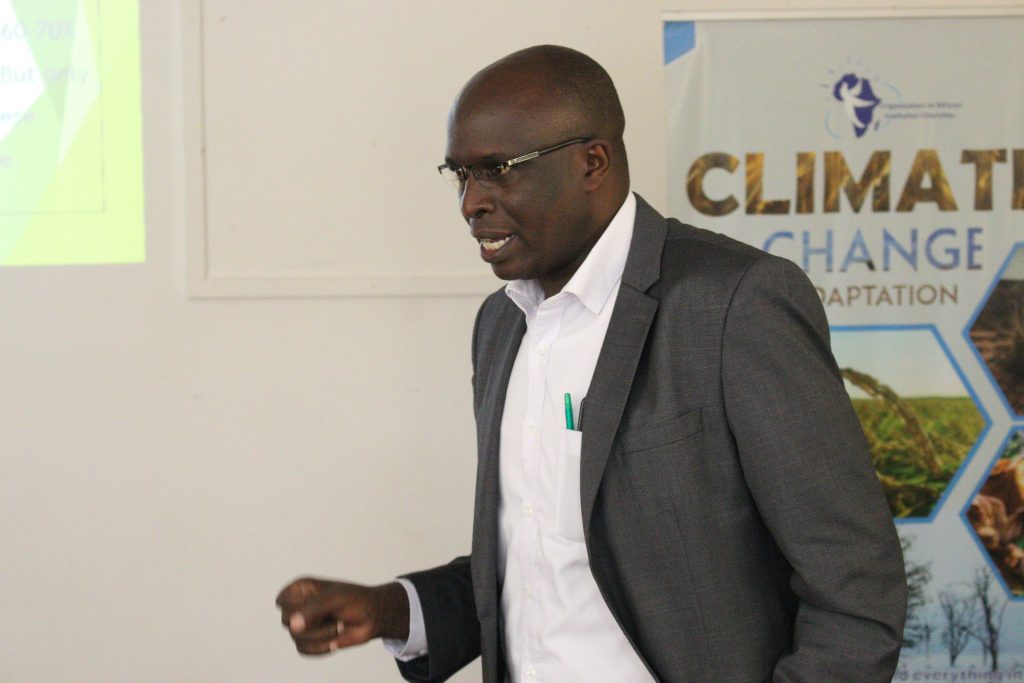
At a significant national consultation held in Kenya’s bustling capital, Nairobi, senior figures from the Organisation of African Instituted Churches (OAIC-Kenya) identified climate resilience for smallholder farmers as a paramount priority within their ministry. This commitment signals a powerful convergence of faith, community leadership, and environmental stewardship.

Representing a vast constituency of over four million congregants spread across 23 counties, these faith leaders have pledged to leverage their collective influence, resources, and moral authority. Their aim is to advocate for more robust agricultural policies, ensure accountability from both county and national governments, and provide vital support for grassroots adaptation initiatives.
Rev. Nicta Lubaale, General Secretary of OAIC-Kenya, highlighted the stark reality facing Kenyan agriculture. “Kenya’s adoption of climate-smart practices is still far below what is needed,” he stated. “Crop diversification is at 12%, irrigation at eight percent, and soil conservation at only six percent. These low numbers indicate that farmers need more support, education, and better resourcing.” This low adoption rate underscores a significant disconnect between existing climate policies and the daily struggles of the more than 70% of Kenyans whose livelihoods depend on agriculture. Despite the government’s development of climate-smart agriculture frameworks, critical resources such as effective extension services, improved seed varieties, and reliable early-warning systems remain largely inaccessible to many farmers.
The recent consultation, which convened faith leaders, researchers, and farmer representatives, was designed to bridge this knowledge gap. Rev. Lubaale explained its importance: “Our role as OAIC is to build the capacity of churches and farmer organisations to guide communities on decisions such as what to plant, how to conserve soil, how to manage livestock, and how to adopt practices that restore ecosystems while improving productivity.” This initiative ensures that clergy are well-informed about relevant policies and can effectively translate this knowledge into tangible action at the community level.
Drawing upon evidence presented by the Kenya Agricultural and Livestock Research Organisation (KALRO) and various county assessments, OAIC leaders have committed to a multi-pronged approach. This includes scaling up farmer training programs, actively promoting climate-smart agricultural practices, and utilising their extensive networks to champion equitable financing and more responsive service delivery.
“Climate shocks are escalating faster than smallholder farmers can adapt,” Rev. Lubaale emphasized. “Extension officers aren’t reaching communities. Seed systems are broken. Early-warning information never arrives. Faith leaders are uniquely positioned to bridge this gap because we have reach, trust, and we’re already in these communities.” The OAIC has a long-standing history of supporting smallholder agriculture across Africa, spanning over three decades. However, the escalating impacts of climate change have compelled the organisation to intensify its efforts.
“We are investing in demonstration farms, value-chain support, better post-harvest handling, and nutrition-sensitive agriculture,” Rev. Lubaale added. “In Kenya alone, we have reached over 40,000 smallholder households and aim to scale this to more than 400,000.”
The Growing Vulnerability of Kenya’s Food System
Kenya’s food system is becoming increasingly precarious. With over two-thirds of the population reliant on agriculture, the sector’s heavy dependence on rainfall leaves it exceptionally vulnerable to climatic fluctuations. Farmers are grappling with a litany of challenges, including erratic weather patterns, recurrent pest outbreaks, critical seed shortages, escalating fertiliser costs, degraded soil quality, and severely limited access to essential extension services.
Dr. Charles Langat, a research scientist with KALRO, corroborated these concerns during the consultation. He noted that while effective adaptation strategies exist, their reach to the majority of farmers is severely hampered.
- Rain-fed Agriculture Dependency: “Many farmers rely almost entirely on rain-fed agriculture, which leaves them extremely vulnerable,” Dr. Langat stated.
- Rising Input Costs and Water Scarcity: The cost of agricultural inputs continues to climb, while persistent water shortages exacerbate the challenges.
- Market Access Barriers: Limited access to markets remains a significant obstacle for farmers seeking to sell their produce.
- Technological Adoption Gaps: Despite the availability of advanced technologies, such as early-maturing and drought-tolerant seed varieties, insufficient financing and underdeveloped extension systems impede their widespread adoption.
Dr. Langat further elaborated on the pivotal role of faith leaders. He explained that due to their deep-seated trust within communities and their regular engagement with local populations, faith leaders are ideally positioned to disseminate crucial climate-smart information and encourage farmers to adopt essential practices like intercropping, soil conservation, and water harvesting techniques.
A Moral Imperative for Climate Action
Throughout the consultation, faith leaders framed the transition to climate-resilient agriculture not merely as an economic necessity but as a profound moral obligation. As spiritual figures who regularly witness firsthand the devastating effects of hunger, debt, and declining agricultural productivity, they argued that neglecting this crisis would fundamentally undermine the dignity and well-being of rural households.
Based on the evidence presented, the faith leaders identified several critical gaps that demand immediate attention:
- Ineffective Early-Warning Systems: Early-warning systems frequently fail to reach the farmers who need them most.
- Delayed Input Distribution: There are significant delays in the distribution of subsidised agricultural inputs.
- Weak Support Services: Veterinary and agricultural extension services are often under-resourced and ineffective.
- Inadequate Water Infrastructure: The existing water infrastructure is insufficient to meet the needs of agricultural communities.
- Limited Inclusivity: Women, youth, and persons with disabilities are not adequately included in agricultural decision-making processes.
The consultation culminated in a communiqué outlining specific commitments from the faith leaders. These include enhancing their understanding of climate-resilient agriculture, establishing demonstration farms to showcase best practices, expanding agribusiness initiatives for young people, promoting seed conservation, and actively advocating for equitable budgeting and improved public service delivery in the agricultural sector.
Furthermore, they issued a strong call to action for national and county governments. They urged closer collaboration with faith institutions, the strengthening of early-warning systems, improved seed availability, the expansion of small-scale irrigation projects, the rehabilitation of rural roads, and a commitment to ensuring that agricultural policies genuinely align with the daily realities and needs of smallholder farmers.
For communities already struggling with unpredictable weather patterns and volatile seasons, these collaborative efforts represent a potential turning point. They signal a move towards more grounded, people-centred adaptation practices, where the vital intersections of policy, scientific innovation, and lived experience can finally converge at the farm gate, fostering a more resilient and sustainable future for Kenyan agriculture.