
Emergency at COP30: Fire Disrupts Climate Talks in Belém
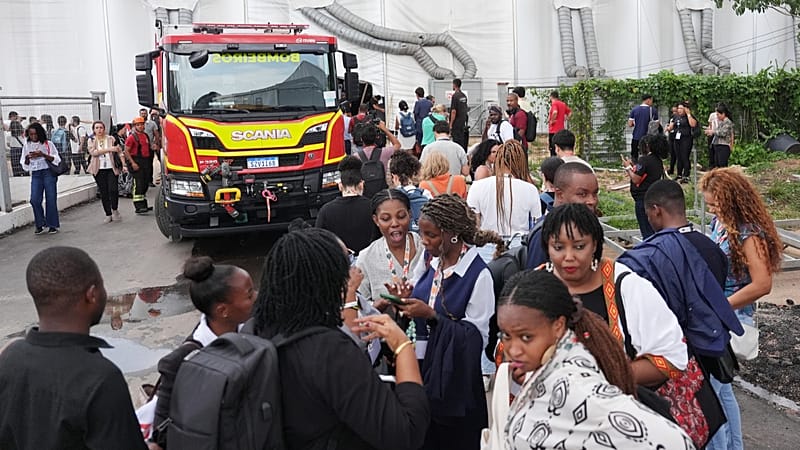
A sudden fire at the COP30 climate summit in Belém, Brazil, has caused a major disruption during a critical phase of negotiations. The incident forced the evacuation of the Blue Zone, where side events and discussions take place, and temporarily halted the United Nations climate talks. This development comes at a time when negotiators were working to finalize key agreements on global climate action.
The fire broke out in the Blue Zone’s pavilion space, which is used for various side events during the official negotiations. Fortunately, the blaze was quickly brought under control within minutes, and all participants were evacuated safely. However, the site was temporarily closed for safety assessments by the fire department.

“As a precaution, the Brazilian Government and the UNFCCC have jointly decided to temporarily close the Blue Zone while the fire department carries out a comprehensive safety assessment,” the organizers stated. The cause of the fire is believed to be an electrical device, likely a microwave, according to local fire services. Thirteen individuals were treated on-site for smoke inhalation, but no serious injuries were reported.
The Blue Zone was eventually reopened late on Thursday, allowing the climate talks to resume. However, the incident has added further challenges to an already slow-moving negotiation process. Friday is set to be the final day of the summit, and officials had planned for ministers and diplomats to work late on Thursday to finalize agreements. The fire has thrown this timeline into disarray.
Missed Deadlines and Growing Concerns
The summit had already missed a self-imposed deadline on Wednesday to reach an agreement on several key issues, including climate finance and the phaseout of fossil fuels. This delay has raised concerns among negotiators and climate advocates about the likelihood of reaching a strong and effective agreement.
Teresa Anderson, climate justice lead at ActionAid, expressed her worries about the situation. “It means there is a lot to do with very little time. There were already huge gulfs to bridge and this won’t help,” she said. Some negotiators fear that the delay, combined with the lack of initial agreement, may force additional compromises that could weaken the final outcome.
Alden Meyer, a veteran observer of climate negotiations from the European think-tank E3G, noted that while emergencies can sometimes bring people closer together, the underlying interests at play are deep and complex. “You could get something that’s so weak that no one wants it,” he warned.
Calls for Compromise and Results
Just hours before the fire, UN Secretary-General António Guterres urged countries to show willingness and flexibility to deliver results. He emphasized that achieving progress would require “compromise and common ground.” Despite the setbacks, Guterres remains confident that an agreement can still be reached on contentious issues such as climate finance and fossil fuel phaseout.
“We are down to the wire, and the world is watching Belém,” Guterres said. “Communities on the frontlines are watching too […] They have heard enough excuses. They demand results.”
As the final day of COP30 approaches, the pressure is mounting on negotiators to overcome the challenges posed by the fire and the missed deadlines. With the global community closely watching, the success of the summit will depend on the ability of nations to find common ground and commit to meaningful climate action.