



Rising Challenges in the UK Housebuilding Sector
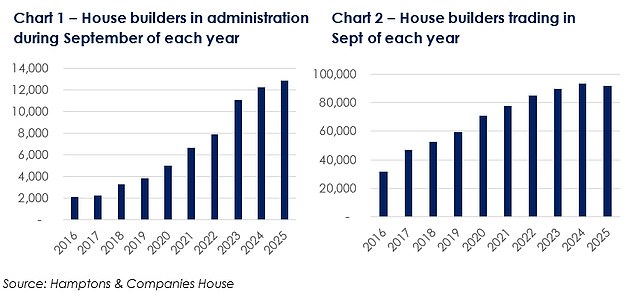
The UK housebuilding sector is facing significant challenges, with a notable decline in the number of active housebuilders over the past year. According to recent data analyzed by estate agent Hamptons, as of September this year, 12,904 housebuilders were either in administration or in the process of being wound up. This represents a 63% increase compared to September 2022 and a staggering 240% rise from September 2019. The figures highlight the growing pressure on the industry, with the number of housebuilders currently trading falling by 1,507 in the year to September 2025—the first annual decline in at least a decade.

This decline could have long-term implications for the housing market. With fewer builders operating, there may be a reduction in the number of new homes being constructed, which could lead to higher house prices. However, some buyers are finding opportunities to secure deals on new build homes, particularly as housebuilders face financial difficulties and seek to sell properties quickly.
Rob Dix, co-founder of Property Hub, which specializes in finding buy-to-let properties for landlords, believes the current conditions are favorable for his business. He advises potential buyers to negotiate discounts on new builds, noting that developers are more open to offers than they have been in years. “Even when they need to protect their pricing, we’re finding them open to throwing in extras,” he adds. These extras can include furniture, upgraded kitchen units, flooring, cashback, or even payment of the buyer’s stamp duty.
Dix has also managed to negotiate lower deposit requirements for off-plan new-builds. While developers typically require a deposit of 15% or more, he has secured deals with just a 5% deposit. This flexibility is driven by the tough conditions faced by housebuilders, who are eager to sell properties despite the challenging market.
Impact of the Help to Buy Scheme
The broader housing market is experiencing a slowdown due to various factors, including affordability issues, an uncertain economic outlook, and concerns about potential tax changes in the Autumn Budget. However, the new-build market has struggled since the end of the Help to Buy scheme in 2023. This government initiative was designed to assist first-time buyers by providing loans of between 5 and 40 per cent of the property cost, thereby boosting their deposits.

The scheme had a significant impact on the housebuilding sector, as it required buyers to purchase new-build homes, leading to a surge in the number of new housebuilders. At its peak, the number of new housebuilders reached 20,000 in the year to September 2022. However, many of these businesses are now struggling to sustain themselves in a post-Help to Buy environment. Rising mortgage rates and construction costs have dampened demand while increasing building expenses.
Falling house prices in parts of the southeast have further complicated the situation, making it harder for developers to turn a profit. Nearly three-quarters of housebuilders going out of business this year had been established during the Help to Buy era, according to Hamptons. As a result, the average life expectancy of a housebuilder has dropped to just 9.8 years, a figure that has steadily declined as more developers go out of business.
Only around 5% of current housebuilders were established before 2000, typically the larger ones. David Fell, Hamptons’ lead analyst, emphasizes that housebuilding requires significant upfront investment, including land acquisition, sourcing materials, and hiring labor. “That model works well when prices are rising, but when falling, it can quickly become unprofitable,” he explains.
Implications for Labour’s Housing Target
These challenges come at a time when the Labour Government has pledged to build 1.5 million homes by the end of this parliament in 2029. However, the progress so far has been slow, with only 38,780 new homes completed between January and March this year. To meet the target, around 300,000 homes would need to be completed each year, or 75,000 every three months.
Jo Eccles, founder and managing director at property search company Eccord, recently told This is Money that meeting the 1.5 million target looks increasingly unlikely. She points to the slow planning system, rising construction costs, and affordability constraints for first-time buyers as key obstacles. Private developers, she adds, will only build if they can be confident of selling at a decent profit margin. If not, they may hold onto land until conditions improve.

