
Healthcare Strike Intensifies as Unions Maintain Indefinite Industrial Action
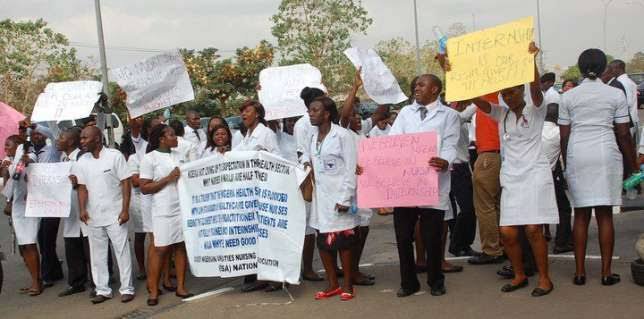
Nigeria’s public health sector is facing a critical juncture as the Joint Health Sector Unions (JOHESU) and the Assembly of Healthcare Professional Associations have declared their unwavering commitment to an ongoing indefinite strike. The industrial action, which commenced on November 15, 2025, shows no signs of abating unless the Federal Government makes significant concessions to the unions’ demands.
The core of the dispute, according to union officials, lies in the Federal Government’s persistent failure to implement the adjusted Consolidated Health Salary Structure (CONHESS). This, coupled with a litany of other unresolved welfare and systemic issues plaguing healthcare professionals, has pushed the unions to this drastic measure.

Martin Egbanubi, the National Secretary of the unions, confirmed in a recent statement that the collective bargaining efforts have been narrowed down to a single, paramount condition for the suspension of the strike. “For now, we have resolved to continue the strike,” Egbanubi stated. “We met with the government twice since the commencement of the strike, and nothing has changed. So, the indefinite strike continues, and we will not accept any intimidation or sanctions on any of our members.”
The Central Demand: CONHESS Implementation
The primary catalyst for the current industrial action is the protracted delay in implementing the adjusted CONHESS. This salary structure, recommended by a High-Level Body Committee, was submitted to the Presidential Committee on Salaries and Wages in 2022. However, its implementation has been stalled, leading to immense frustration among health workers.
“The crux of the matter in the present circumstance is the long delay in the implementation of the High-Level Body Committee’s report on the adjusted Consolidated Health Salary Structure since its submission to the Presidential Committee on Salaries and Wages in 2022,” Egbanubi elaborated. He further accused successive administrations of neglecting the longstanding issue of salary disparities that continue to affect health professionals across the nation.
The unions have emphasized that the adjusted CONHESS is not merely a matter of increased pay, but a foundational element upon which many of their other welfare concerns and allowances are built. “We have narrowed our current demands to one demand, and it is to implement the adjusted Consolidated Health Salary Structure, because the majority of our welfare issues and allowances revolve around this,” Egbanubi explained. “We’ve looked at the Memorandum of Understanding we signed last year, and we discovered that the government has not shown sufficient commitment to address these current factors.”
Broader Union Representation
JOHESU is an umbrella organization representing a significant portion of Nigeria’s healthcare workforce. Its membership comprises several influential unions, including:
- The Medical and Health Workers’ Union of Nigeria
- The Nigerian Union of Allied Health Professionals
- The Senior Staff Association of Universities, Teaching Hospitals, Research Institutes and Associated Institutions
- The Non-Academic Staff Union of Educational and Associated Institutions
This broad coalition underscores the widespread discontent within the health sector and the collective strength of the striking workers.
Impact on Healthcare Services
The ongoing industrial action has had a profound and detrimental impact on Nigeria’s public health infrastructure. For weeks, medical operations across federal and state health facilities have been severely disrupted. This has resulted in a critical situation for hundreds of patients who are struggling to access essential medical care, leading to potential health crises and increased suffering. The strike highlights the vulnerability of the healthcare system to industrial disputes and the urgent need for effective resolution mechanisms.
The unions’ stance remains resolute, emphasizing that the strike will continue until their primary demand for the implementation of the adjusted CONHESS is met. The ball is now firmly in the Federal Government’s court to address the legitimate grievances of its healthcare professionals and restore normalcy to the nation’s vital health services.