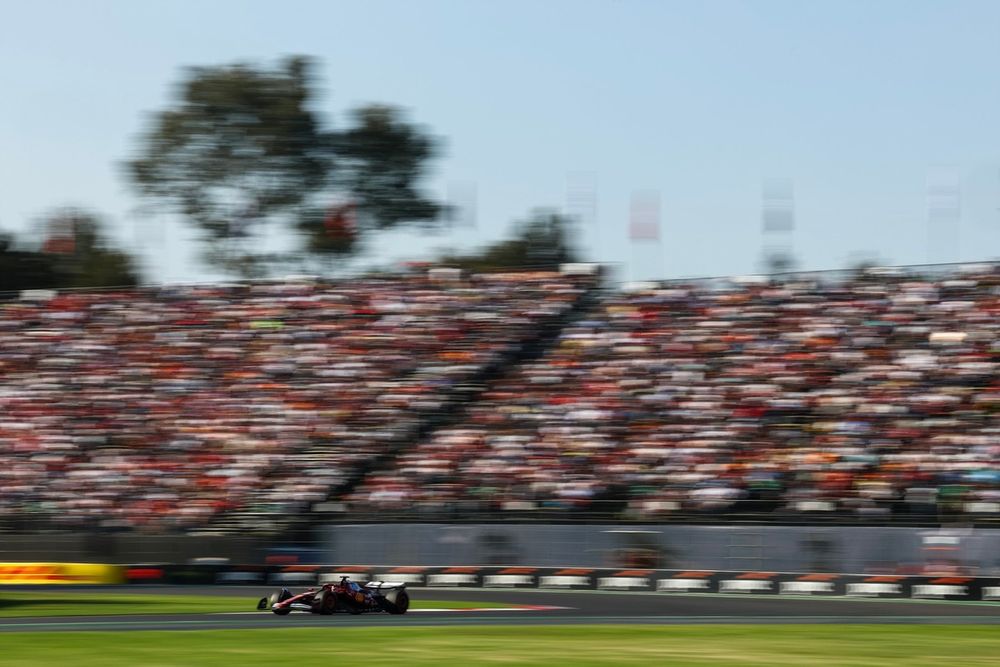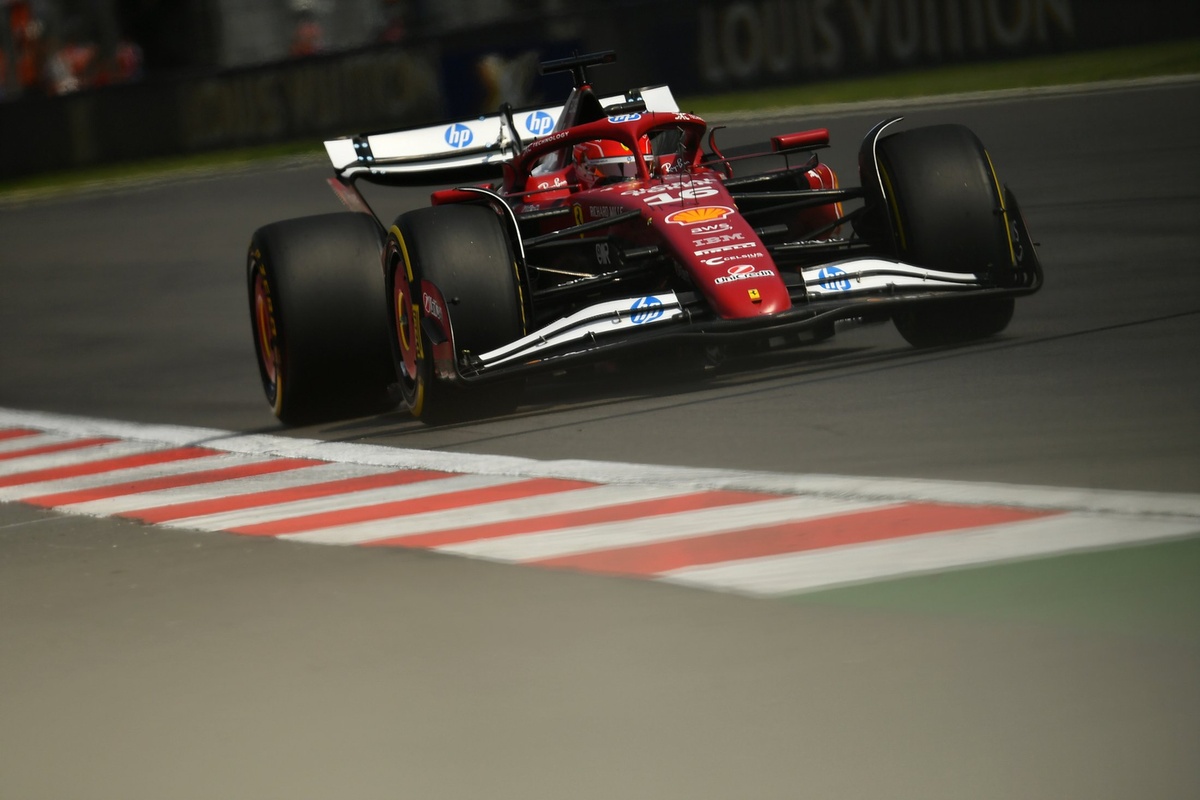

Lando Norris Secures Pole Position in Mexico Grand Prix
Lando Norris delivered a remarkable performance during the final lap of Q3 at the Formula 1 Mexico Grand Prix, shaving off nearly six-tenths of a second from his previous best time. This impressive result was not only a testament to Norris’s driving skills but also highlighted the evolving conditions of the Autodromo Hermanos Rodriguez track, which has been providing drivers with opportunities to improve their lap times.
Norris’s achievement is particularly significant for his championship aspirations, as it has been challenging for the McLaren team to extract strong qualifying performances recently. However, Norris managed to push through and secure a crucial position on the grid.

His success cannot be attributed solely to his own efforts, as Charles Leclerc of Ferrari also played a pivotal role. Leclerc demonstrated exceptional skill behind the wheel, setting a time of 1m15.991s, which was over eight tenths faster than his Q2 time. Despite this, Norris managed to outpace him in the final stage of qualifying, securing the pole position with a time of 1m15.586s, while Leclerc ended up with a time of 1m15.848s.
The data reveals that both drivers were incredibly close on their best laps until they reached the Foro Sol stadium, now officially known as the Estadio GNP Seguros. It was here that Norris made a decisive move, navigating the slow-speed corners and gaining momentum through the semi-Peraltada, a section named after Nigel Mansell’s famous maneuver against Gerhard Berger in 1990.
Sector Analysis: Key Moments in the Lap
Sector 1: Norris Finds Tiny Margin with Turn 3 Exit
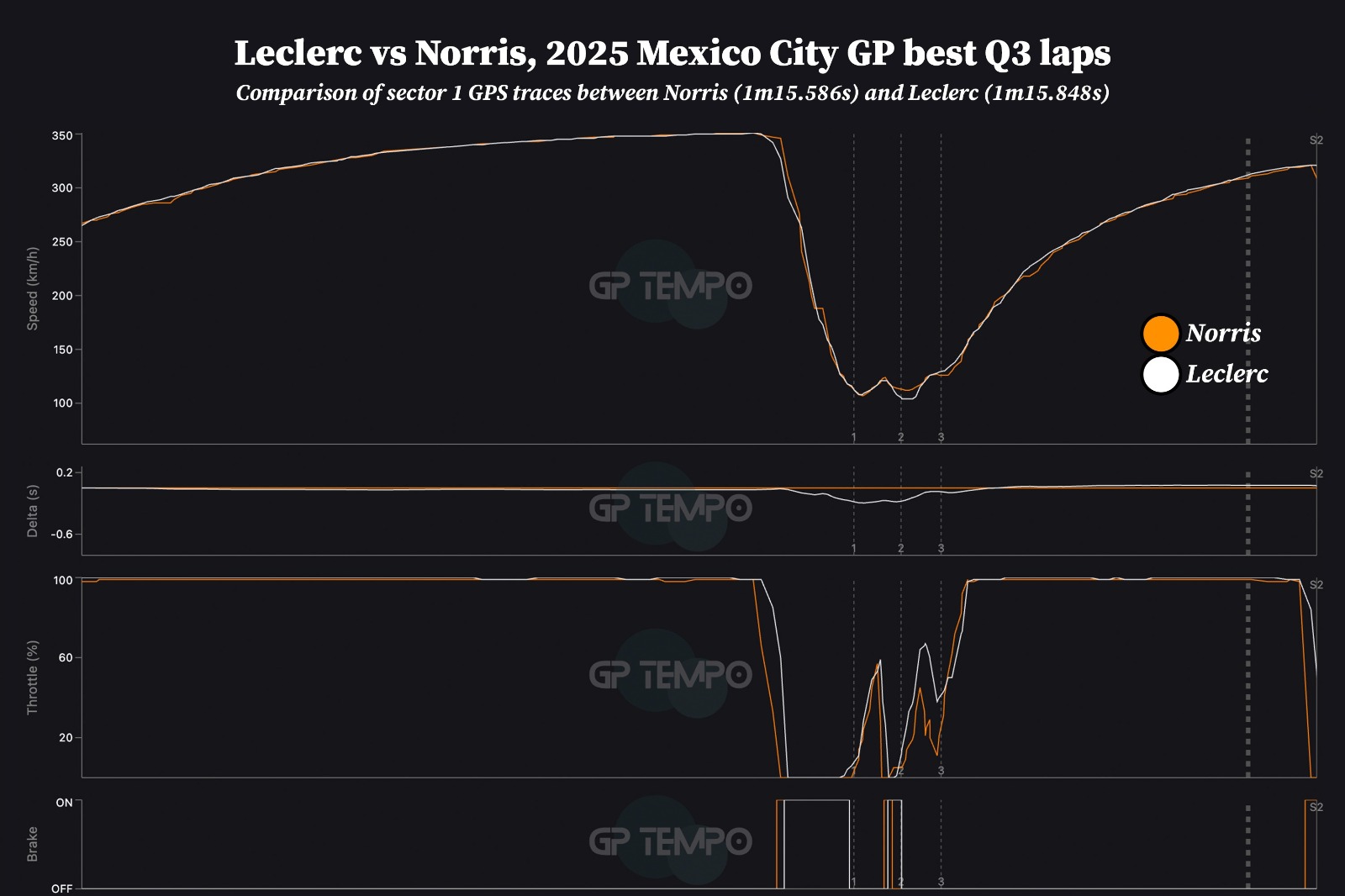
At the first-sector timing point, Norris and Leclerc were separated by just 0.029 seconds. Most of this difference came from Norris’s exit through Turn 3. Both drivers handled the kerbs well in the opening corners, taking advantage of the wider white lines to attack the course with more confidence.
Norris braked earlier for Turn 1 compared to Leclerc, allowing him to carry more speed into the opening complex. However, this meant that Leclerc had an initial advantage of two tenths. The key difference lay in how each driver approached the subsequent corners. Norris’s earlier braking allowed him to maintain a more open steering angle through Turn 3, giving him a slight edge.
Sector 2: Leclerc Aggressive Through Turns 4-5-6, but Norris Reclaims Time Through Esses
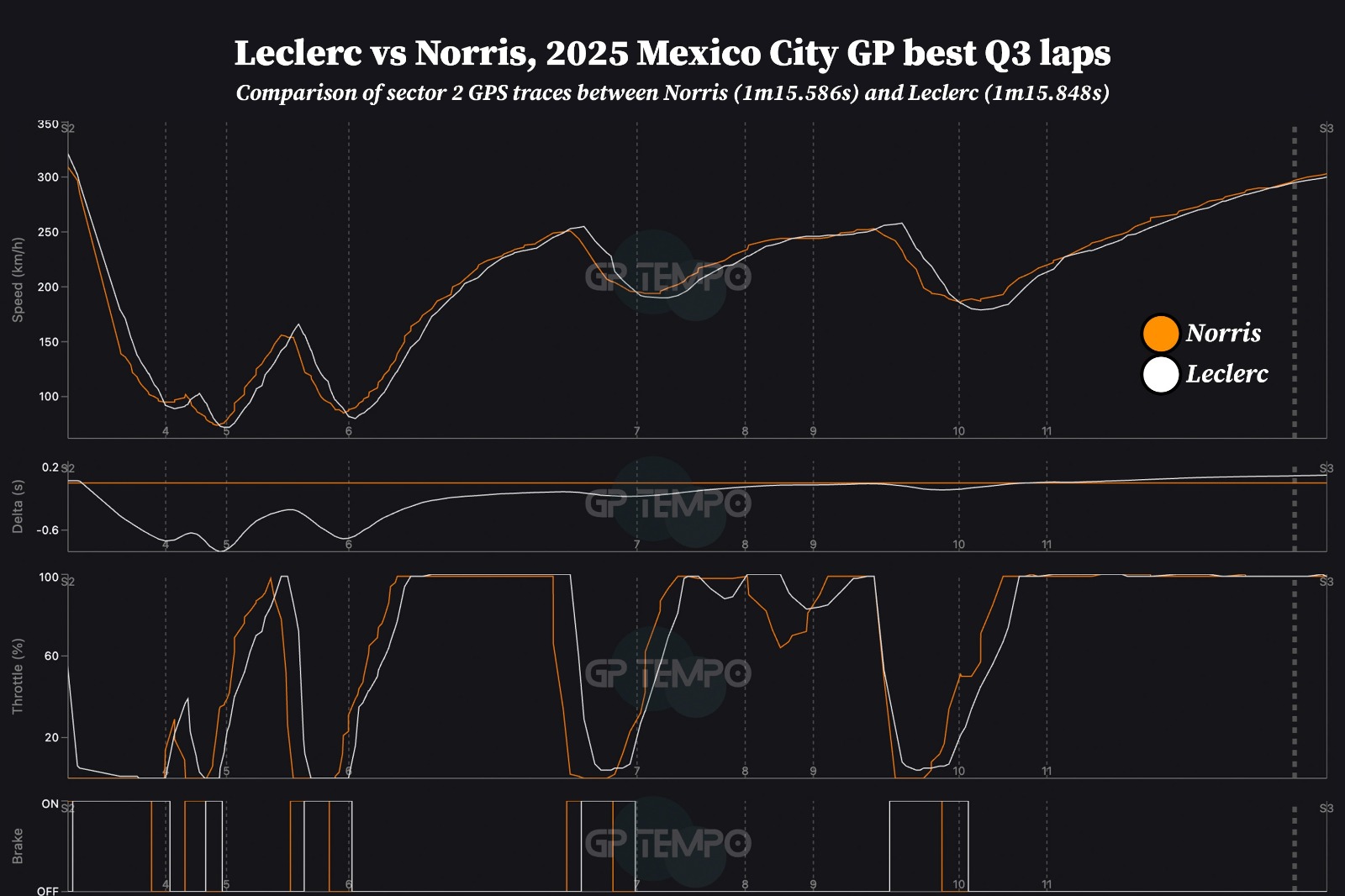
In this sector, Norris braked for Turn 4 before the split line on-track, while Leclerc delayed his braking point. This created a slight phase difference between the two drivers, making it appear as though Leclerc gained significant time through the upper part of the circuit. In reality, this was due to the positioning of the cars and the different lines taken through the double-right 5/6 corners.
Leclerc’s aggressive approach allowed him to gain over a tenth on Norris by the exit of Turn 7. However, Norris’s strategy of braking earlier but for a shorter duration enabled him to recover quickly through the Esses section. This helped him regain the momentary time loss and maintain a competitive edge.
Sector 3: Norris Doubles His Advantage with Approach to Turn 14
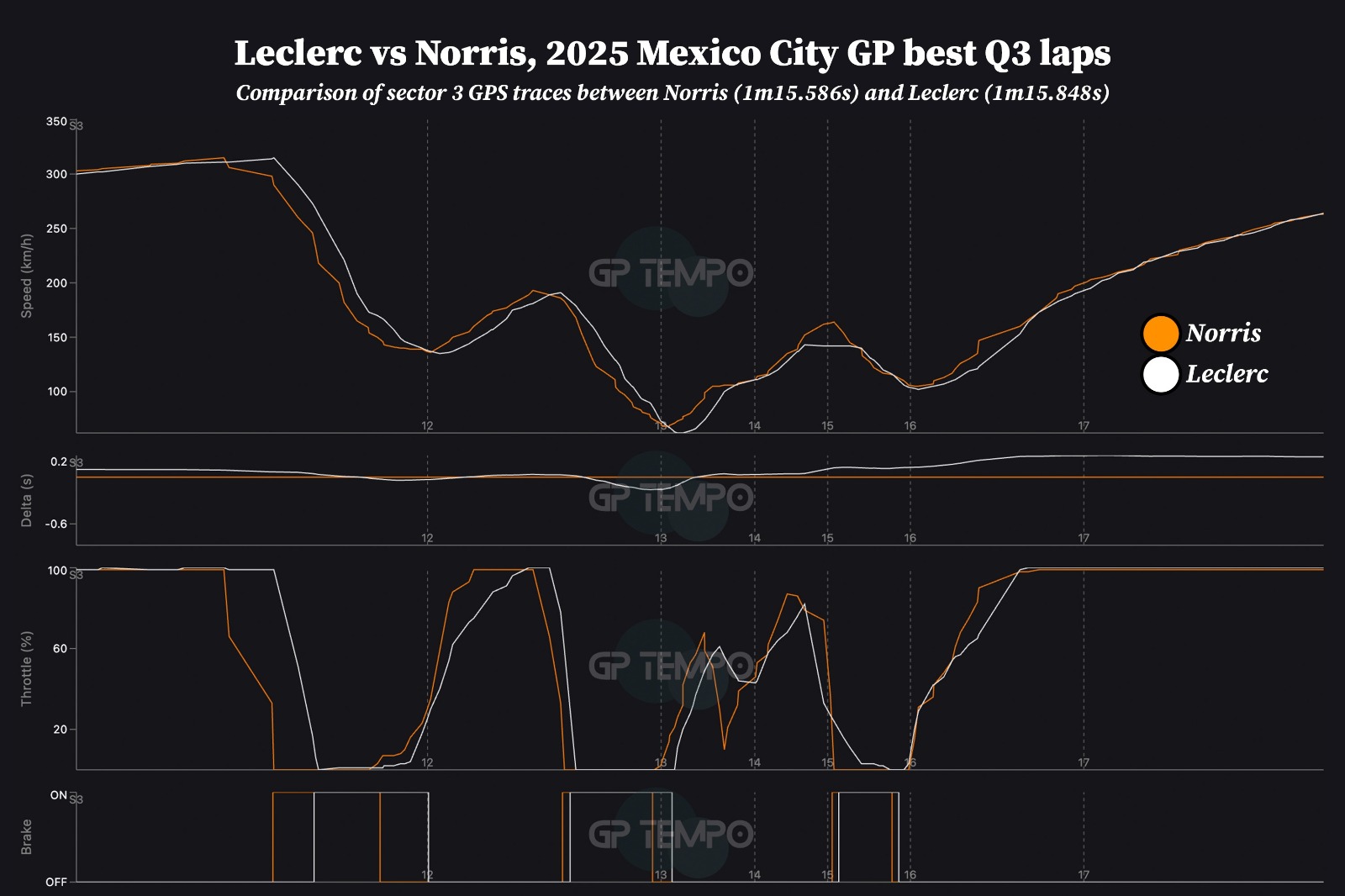
As the pattern continued, Norris hit the brakes earlier for Turn 12 to ensure he could navigate the stadium without taking too much exit kerb. The stadium section required precise line management, and both drivers took slightly different approaches.
Leclerc braked later for Turn 12, but their brake points for the in-stadium Turn 13 were very similar. Leclerc attempted to swing his car into the tight left, using more kerb to create a straighter line into the fiddly Turns 14-15-16. Norris, however, chose to attack Turn 14 more aggressively, allowing him to get on the throttle sooner for the final braking zone of the circuit.
This strategic decision enabled Norris to carry more speed through the final set of corners, ultimately giving him a significant advantage. He got on the throttle earlier for the final run to the start-finish line, sealing a much-needed pole position.
Final Thoughts
While securing pole position is a significant achievement, it may not offer a huge advantage in Mexico. Leclerc might actually prefer having a tow off the McLaren on the run to the first corner. However, Norris can dictate how the opening flurry of activity unfolds, choosing whether to cover Leclerc or Hamilton. This decision will be crucial in determining the outcome of the race.