


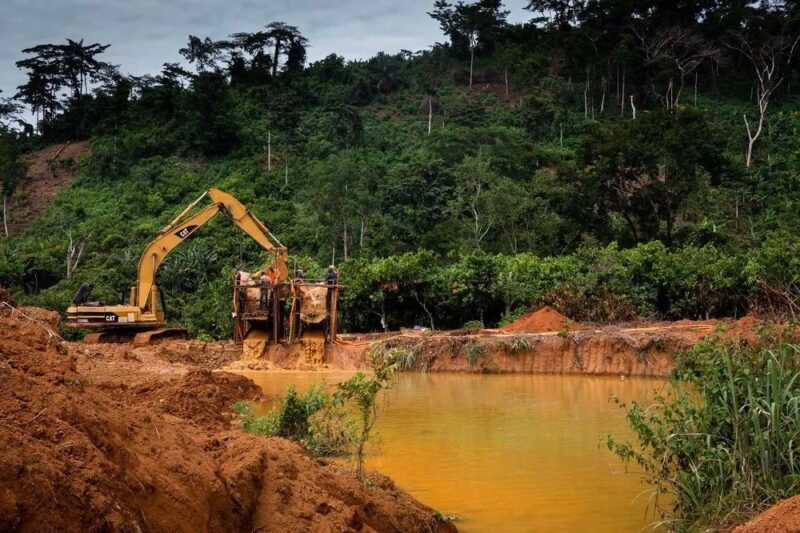

Addressing the Economic and Environmental Crisis of Illegal Mining in Nigeria
The House of Representatives has taken a significant step in addressing the growing threat of illegal mining by establishing an Ad Hoc Committee dedicated to tackling this issue. The committee, launched with the aim of curbing the estimated $9 billion in annual losses caused by illicit mining activities, has already begun its work.
A Major Economic Drain and National Security Threat
During the inauguration of the committee, the Chairman, Sanni Abdulraheem, emphasized that illegal mining is not just an economic problem but also a serious threat to national security. He highlighted how these activities have continued despite previous efforts, leading to significant revenue loss, environmental degradation, and increased criminal activity in affected communities.

Abdulraheem pointed out that the Federal Government introduced the Mining Marshals initiative in 2024, which has already resulted in the arrest of over 300 illegal miners across 10 states and the Federal Capital Territory. Additionally, 98 illegal mining sites have been shut down nationwide. This initiative is seen as a critical step in addressing the ongoing crisis.
Commitment to Transparency and Revenue Protection
The committee’s primary goal is to block revenue leakages, enforce transparency, and ensure that Nigeria’s mineral wealth contributes to the country’s economic growth. Abdulraheem stressed that illegal mining not only robs the treasury but also hinders legitimate operations that could significantly boost national revenue.
Through structured oversight, the committee aims to strengthen revenue tracking systems and ensure that proceeds from the mining sector directly benefit the government. This includes monitoring and regulating all aspects of mining activities to prevent exploitation and ensure compliance with laws and regulations.
Combating Criminality and Environmental Degradation
Illegal mining is also linked to increased criminality and environmental damage. These activities contribute to insecurity, pollute waterways, destroy forests, and displace vulnerable communities. Abdulraheem described this as a matter of national urgency that requires immediate action.
The committee is committed to exposing and prosecuting individuals or groups involved in the illegal mining network. This includes investigating corruption, curbing malpractices, and ensuring that national resources are used for the benefit of all Nigerians.
Reviving Key National Assets
Abdulraheem expressed optimism about the renewed efforts by the President Bola Tinubu-led administration to revive the Ajaokuta Steel Company. For many years, this company has symbolized unrealized potential. However, the current administration has shown political will to rejuvenate this critical national asset.
The appointment of an indigenous professional to lead the revival of the Ajaokuta Steel Company signals a new dawn for Nigeria’s steel and industrial sectors. This move is expected to bring much-needed investment and expertise to the sector, contributing to economic growth and job creation.
Collaboration with the Mining Marshals
In his remarks, the Commander of the Mining Marshals under the Nigeria Security and Civil Defence Corps, Attah Onoja, pledged full cooperation with the committee. He disclosed that since the launch of the Mining Marshals operation in March 2024, over 500 illegal miners had been arrested, with about 270 currently facing trial.
Onoja assured the committee of the NSCDC’s maximum cooperation and support to achieve the important task of combating illegal mining. This collaboration is crucial in ensuring the success of the committee’s initiatives and the overall protection of Nigeria’s natural resources.

