
The Unseen Currents of Belonging: A Journey Through Uncertainty
In the quietude of her existence, a life composed of suspended moments and transient encounters, she had maintained a deliberate distance. Faces and places, fleeting guests in the theatre of her days, were gently nudged away, as if the slightest pressure might ward off the inevitable sting of prolonged attachment. A deep-seated belief in universalism had once been her compass, a hastily scribbled creed that belonging was an act of boundless expansion, a shedding of the self-imposed confines of nation, race, and religion. Yet, as time flowed, an unyielding river, an unfamiliar ache began to surface—a yearning for the tangible, the ordinary, for a place to finally call home.
She had, for so long, harboured a quiet hope, a patient anticipation for a return to equilibrium, a steady rhythm, a fixed point in the ceaseless, restless drift of the world. In this state of waiting, she found herself both observer and wanderer, caught in the liminal space between what was irrevocably lost and what might, with time, find its way back. The desire for normalcy had, for a considerable period, been a subject of her derision, perceived as a weakness, a retreat into the comforting simplicity of the familiar. But with each passing year, the profound, almost primal need for kinship, for a sense of belonging, for something to anchor her, grew stronger.

One evening, the silence in her room was a palpable presence. She closed the window, the dim lamplight casting long shadows, and picked up her pen, her fingers poised above the blank page. The words remained elusive, a silent testament to the oppressive emptiness that pressed against her chest, an unnamed hollow ache. A hesitant, looping line traced its path across the paper, a futile attempt to conjure meaning from the void. Setting the pen down with a sigh of resignation, she lit a cigarette. The smoke, a bitter-sweet plume, lazily ascended, mirroring the spiralling, suspended thoughts that filled the quiet void.
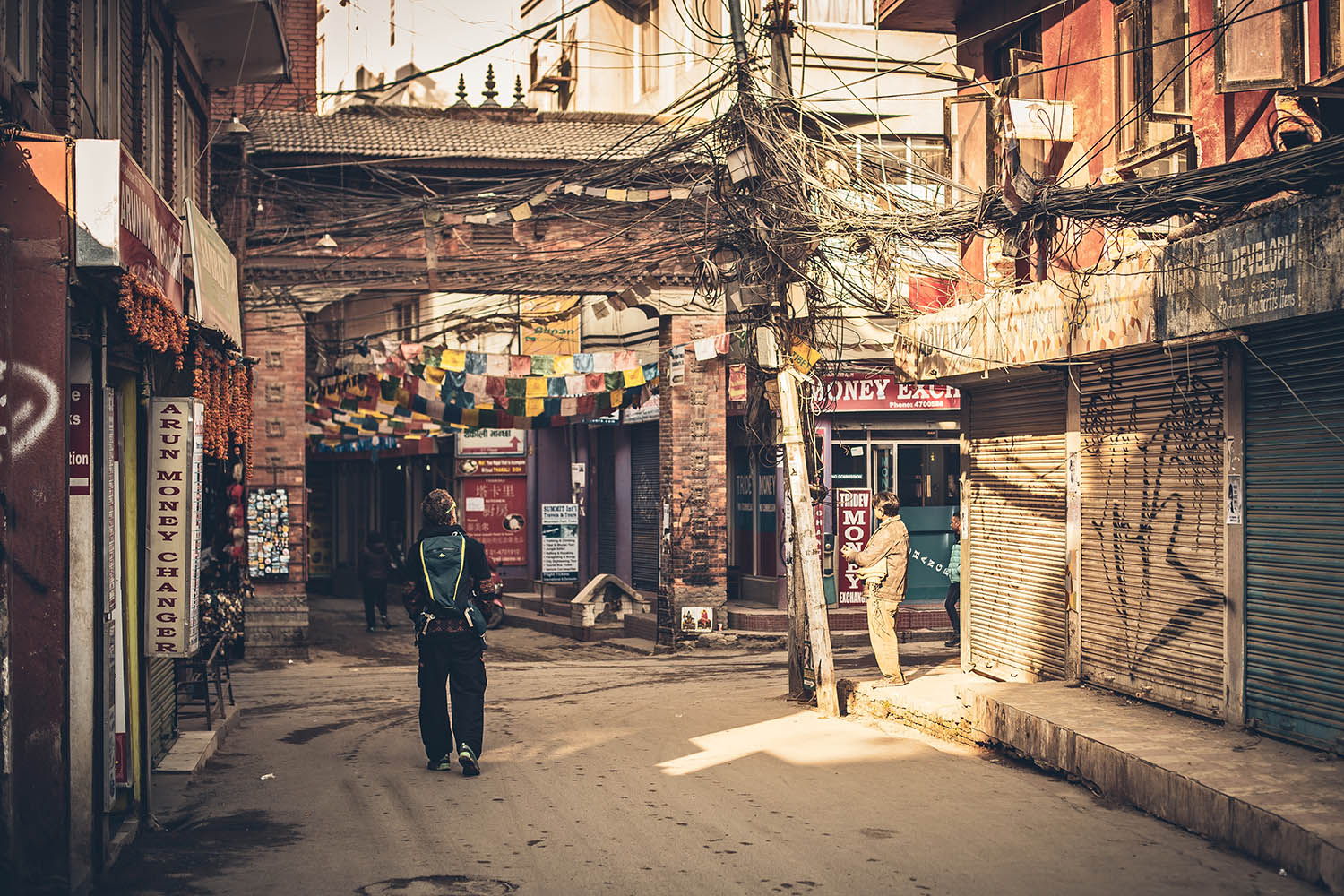
The preceding day had found her navigating the narrow, labyrinthine streets of Jyatha, a district nestled in the heart of Kathmandu’s Thamel. It was a familiar terrain, yet it always presented itself anew, a reflection of the ever-shifting world she inhabited. A friend, sharp-tongued and dismissive, had insisted she watch a documentary on the Maoist movement in Nepal. Her initial instinct was to refuse, but the compelling urgency in his voice, coupled with the promise of a rare insight into revolution, had ultimately swayed her.
The documentary began its arduous journey, buffering endlessly, its progress punctuated by repeated pauses. A caption flashed across the screen: “Revolution does not wander alone; it is carried in the breath and bone of those who dare to live it. Lives move it forward. It never moves without them.” The room fell into a hushed silence, as if the very air had become thick with an unspoken question. She remained transfixed, the stress and ambiguity of the unfinished image seeming to coalesce before her eyes. The pause stretched, a moment where time itself appeared to hold its breath. She departed without a word, the heavy, patient silence trailing her like an inescapable shadow.
The documentary’s message had resonated deeply, prompting introspection on the nature of belonging. She pondered whether true belonging could ever exist without its antithesis, without the ever-present specter of exclusion lurking just beyond reach. How could one engage with the world not as a singular, isolated self, but as a multifaceted entity, embracing every fragment and shadow of one’s identity? This question had become a constant companion, a weighty stone carried in her pocket for years. Now, with the relentless pressure of time bearing down, the answer could no longer be deferred.
In her youth, such introspective thoughts would have been swiftly dismissed as weakness, a betrayal of the carefully constructed armour of her principles. Her devotion to universality, to the expansive self, had long defined her, rendering her both guarded and seemingly untouchable. Yet, a sorrow, a quiet hum beneath her ribs, now compelled her to question those very tenets. Was there an intrinsic rhythm to the world, a deep pulse that called for a return to the solid, the fixed, a reality far less fluid than she had ever conceived?
This internal conflict was a struggle to reconcile her burgeoning need for belonging with the fiercely guarded freedom she had once held as absolute truth—the untethered, ever-shifting self she believed was the sole path to liberation. Each surge of longing seemed to pull against the currents of her established beliefs, leaving her suspended in a state of yearning and liberation. The very notion of a “standard” felt like a subtle defiance of the convictions she had carried as a sacred text.
(In)Visibility
Within the confines of her small Kathmandu residence, amidst the disarray of her thoughts, she had penned in her journal the previous night: “In my Kathmandu residence, time has folded itself still. Paused, inside, outside, everywhere, the hours hold their breath, waiting for something unnamed to stir them again.” What exactly was she awaiting? A return to normalcy? A semblance of order? It felt as though she were caught in a suspended tide of uncertainty, a weight more profound, somehow, than the specter of death that had once drifted along the Bagmati River’s narrow currents.
That week, she had walked to TU, the campus permeated by the scent of crushed flowers. These blossoms, trampled underfoot, their beauty a casualty of broken dreams and the relentless, unheeding march of time, stood as silent witnesses. They were fragile, trembling reminders of all that had been surrendered, all that had slipped through fingers too eager to believe. They whispered of a freedom that, like a shimmering promise, ultimately rang hollow when exposed to the harsh light of reality. The campus was heavy with loss, a place where hopes and ideals had withered quietly, fading into the pale glare of fluorescent lights, unnoticed and unclaimed, leaving only shadows to bear witness.
Students, young comrades clad in black, white, and red, their clothes stained with the mud of their struggles, had gathered. They moved in circles, their voices, speaking of revolution and change, slicing through the quiet of the fading winter day. She found herself drawn to them, captivated by the fire of their rebellion, the raw pulse of their passion refusing to be ignored. The dog at one comrade’s feet flinched at a raised voice, and for a fleeting moment, she imagined it groaning, a low, mournful sound too profound for words, as if it carried the weight of everything the world refused to name. Amidst the slogans and posters, under the looming shadow of Marx, she glimpsed something both beautiful and tragic. The movement, though draped in the gaudy colours of a consumerist world, still throbbed with a stubborn, unyielding pulse, evident in the chants that filled the air. Their voices called for a freedom that she could neither grasp nor relinquish, a freedom that slipped through her like smoke, as elusive as the answers to the persistent questions that had followed her for years.
A palpable tension hung in the air, a strange inevitability pressing against her skin. In the crowded courtyard, men and women of all ages gathered, their voices rising and falling like tides as they spoke over one another, their demands for justice, for change, for something better, repeated with an almost desperate urgency, as if the world might finally be compelled to listen. “She found herself asking, almost to the dust and the wind, ‘What has become of these roads? Of this country? The questions rose in her like old spirits, refusing to be quieted.’” In the endless debate surrounding development and freedom, the answers seemed as fragmented as the lives of those around her.
She caught herself asking, not to anyone in particular, “Where in this wide living does ease reside?” The question drifted out of her like a sigh, a silent plea for an answer from the world. This was a question she had carried for years, worn smooth by constant contemplation. An economist, she mused, would surely offer a concise solution. But she was no economist; she was merely a witness, observing hope fray at the edges, watching bright ideals sag and fold into shapes far more tangled and troubling than she had ever been taught to imagine. Amidst it all, she felt the weight of her own isolation, the quiet realization that she was, perhaps, more invisible than she had ever allowed herself to acknowledge.
Her life had been a relentless pursuit of answers, only to be met with more questions, greater ambiguity, and deeper contradictions. Yet, in the silence of those moments, in the stillness that accompanied the buffering of the film, she discovered a peculiar sense of peace. It was a recognition that perhaps freedom, like all profound truths, was never as simple as it initially appeared. Her own life, too, felt like a slow, circling buffer, perpetually loading, never quite landing. And perhaps, in that suspension, in that held breath between what was and what might be, lay a truer, more complex truth than she had ever dared to embrace.