



The Struggle for Survival: Congenital Heart Disease in Kenya
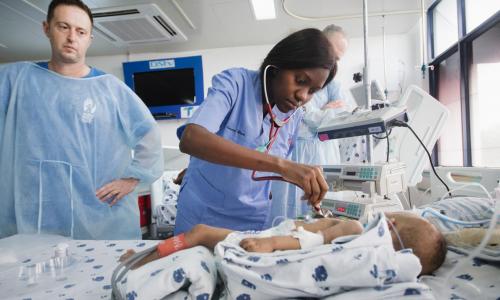
At Kenyatta National Hospital (KNH), the soft rise and fall of tiny chests reflect a desperate fight to maintain life. These infants, diagnosed with congenital heart disease (CHD), face a battle not just against their condition but also against a healthcare system that often fails to provide timely intervention. Their gasps for air are more than just biological responses—they are cries for help.
A recent study conducted by researchers from the University of Nairobi and KNH analyzed 1,703 medical records of patients with CHD admitted between January 2016 and December 2021. The findings reveal a grim reality: many children die before they can receive the treatment they need. The study found that 615 (36.1%) of the patients died within a year of diagnosis, highlighting the urgent need for improved access to care.

Understanding Congenital Heart Disease
Congenital heart disease refers to a group of birth defects that affect the heart’s structure and function. These defects can range from minor issues, such as small holes in the heart, to severe conditions involving underdeveloped or missing parts of the heart. While some cases are detected during pregnancy, others may not become apparent until later in life.
The study showed that most patients (53.6%) were under one year old at the time of diagnosis. However, despite the critical nature of their condition, many did not receive the necessary interventions. Only 37% of children who required surgery received it within a year. On average, patients had to wait 59 days for an operation, while those recommended for catheterization waited 95 days. For those referred abroad, the waiting period stretched to an agonizing 349 days.
Barriers to Treatment
Dr. Bonface Osano, a lecturer and pediatric cardiologist at the University of Nairobi, led the research team. He noted that 62.9% of patients recommended for surgery did not undergo the procedure. This delay is attributed to several factors, including limited access to specialized care and the high cost of treatment.
KNH is one of only three public facilities in Kenya equipped to handle congenital heart disease. The other two are Moi Teaching and Referral Hospital in Eldoret and Coast General Teaching and Referral Hospital in Mombasa. Despite its capacity, the hospital faces significant challenges due to a shortage of experts and the sheer volume of patients.
Many patients arrive too late, when complications have already developed. In fact, 57 children were deemed inoperable at the time of diagnosis and were advised to pursue palliative care. Palliative care focuses on managing symptoms rather than curing the condition, leaving families with little hope.
Socioeconomic Factors and Health Outcomes
The researchers emphasized that socioeconomic factors play a crucial role in the outcomes of CHD patients. Poverty, malnutrition, and lack of access to clean water and sanitation increase the risk of complications and infections. These factors contribute to higher mortality rates among affected children.
Children who survive the long waits often live with anxiety and uncertainty. The study found that older children and those with Tetralogy of Fallot—a severe form of CHD—were more likely to die. Tetralogy of Fallot causes breathlessness and cyanosis (blue lips) due to insufficient oxygen in the blood. While a simple operation can correct this condition, it must be performed in time.
Global Context and the Need for Action
In high-income countries, more than 85-90% of children who undergo heart surgery for congenital defects survive and lead normal lives. However, globally, an estimated 261,000 deaths from CHD occurred in 2017, with nearly 70% being infants in developing regions.
The researchers called for immediate action to reduce the time between diagnosis and intervention. They also urged better documentation of patient data at KNH to improve outcomes.
The situation in Kenya highlights the urgent need for investment in diagnostic capabilities, specialized care, and affordable treatment options. Without these changes, many children will continue to lose their lives to a condition that is treatable with timely intervention.

