


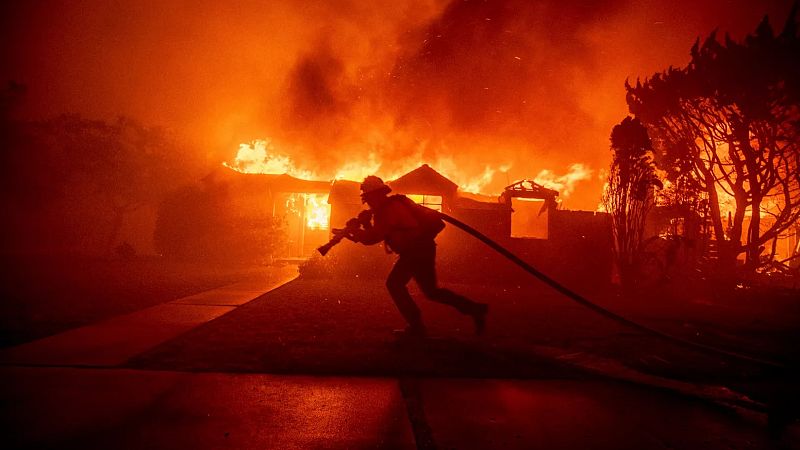

California Man Charged in Connection with Largest Fire in Los Angeles History
Authorities in California have charged a man with starting a fire that escalated into the most destructive blaze in Los Angeles history, leading to the destruction of much of the affluent Pacific Palisades neighborhood. The incident was officially announced by officials on Wednesday.
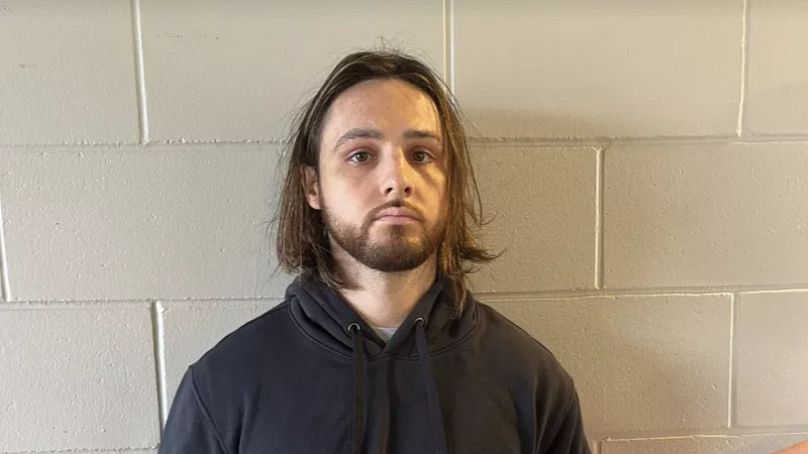
Federal law enforcement authorities accuse 29-year-old Jonathan Rinderknecht of igniting a fire on New Year’s Day, which was initially extinguished by firefighters. However, the fire continued to smolder underground before reigniting during strong winds, according to acting US Attorney Bill Essayli, who made the statement during a news conference.

Rinderknecht was arrested in Florida on Tuesday and is scheduled to appear in court later on Wednesday. He faces charges including malicious destruction by means of a fire.
According to Essayli, Rinderknecht fled the scene of the original fire but returned to the same trail to observe it burning. “He left as soon as he saw the fire trucks were headed to the location. He turned around and went back up there. And he took some video and watched them fight the fire,” Essayli said.
The criminal complaint also revealed that Rinderknecht made several 911 calls to report the fire. During an interview on 24 January, Rinderknecht provided investigators with information about where the fire began—details that had not been publicly disclosed yet. The complaint noted that he would not have known this unless he had witnessed the event firsthand.
He lied about his location during the interview, claiming he was near the bottom of the hiking trail, as stated by Essayli. The suspect appeared visibly anxious during the conversation, according to the complaint. His actions, such as calling 911 and asking ChatGPT about a cigarette lighting a fire, suggested that he wanted to preserve evidence of himself trying to assist in suppressing the fire and create a more innocent explanation for the cause of the fire.
Investigators concluded that the fire on 1 January was intentionally started, likely using a lighter or paper on vegetation. The criminal complaint ruled out other possibilities, including fireworks, lightning, and power lines. Although they considered the possibility of a cigarette causing the fire, they determined it was not the source.
A “barbecue-style” lighter was found in the glove compartment of Rinderknecht’s car on 24 January. It appeared to be the same lighter that was in his apartment on 31 December, based on a photo on his phone. Rinderknecht admitted to carrying a lighter when he walked up the hill.
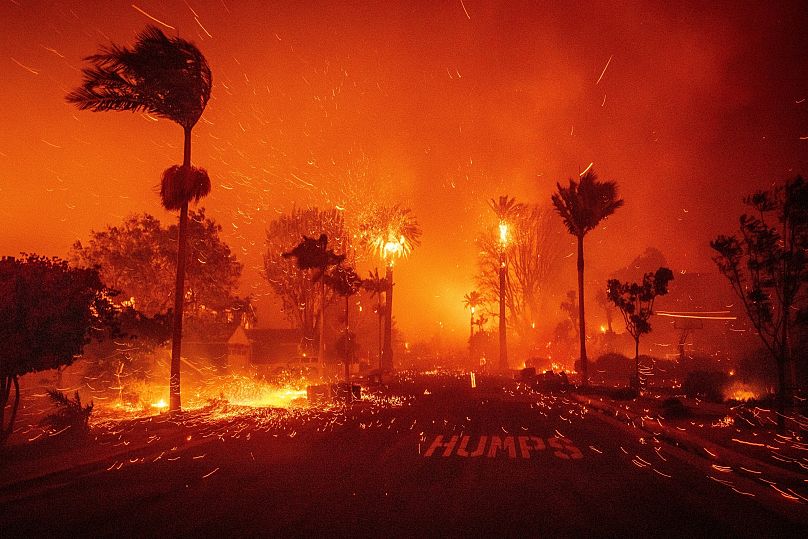
The massive blaze, which erupted on 7 January, resulted in the deaths of 12 people and destroyed over 6,000 homes and buildings in the coastal Pacific Palisades neighborhood. The fire swept through hillside areas, destroying mansions that offered ocean and downtown Los Angeles views.
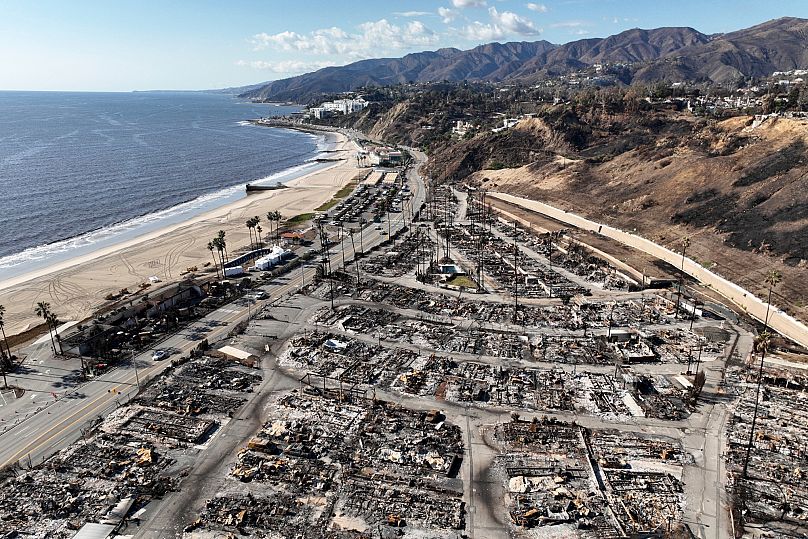
Investigations are still ongoing to determine the cause of a second fire, known as the Eaton Fire, which broke out on the same day in the Altadena community and claimed 18 lives. Both fires burned for days, leaving entire neighborhoods reduced to gray and black ash and debris.
An external review released in September highlighted that a lack of resources and outdated policies for sending emergency alerts contributed to delayed evacuation warnings. The report, commissioned by Los Angeles County supervisors, identified several weaknesses, including “inconsistent practices and communications vulnerabilities,” that hindered the county’s response to the disasters.

