

Michael Jordan’s Audacious Bet: A Casino Mentality Fuels NASCAR Investment Amidst Legal Battle
Michael Jordan, a name synonymous with sporting excellence and astute business acumen, has once again demonstrated his willingness to take calculated risks, this time in the high-octane world of NASCAR. Beyond his legendary basketball career, Jordan has amassed a considerable fortune, positioning himself as one of the wealthiest athletes in history. This financial clout, however, is not merely for show; it underpins his bold ventures, including his significant investment in 23XI Racing, a prominent team competing in NASCAR’s top-tier Cup Series.
While Jordan’s presence on the track is now as a team owner, his most impactful involvement with the sport has recently revolved around a high-profile legal dispute. Accusing the racing governing body of operating a monopoly, Jordan and other team owners have been engaged in a protracted legal battle. After a year of courtroom skirmishes, reports suggest a potential settlement is on the horizon.

However, the discovery phase of this legal process has unearthed some particularly illuminating details, revealed through candid text messages and emails. A standout moment came when Jordan’s financial advisor expressed concerns about the substantial cost of signing a new driver to 23XI Racing. Jordan’s response, a testament to his audacious spirit, was reportedly: “I have lost that in a casino. Let’s do it.” This anecdote paints a vivid picture of Jordan’s comfort with significant financial gambles, a trait that seemingly extends from the poker table to the motorsport arena.
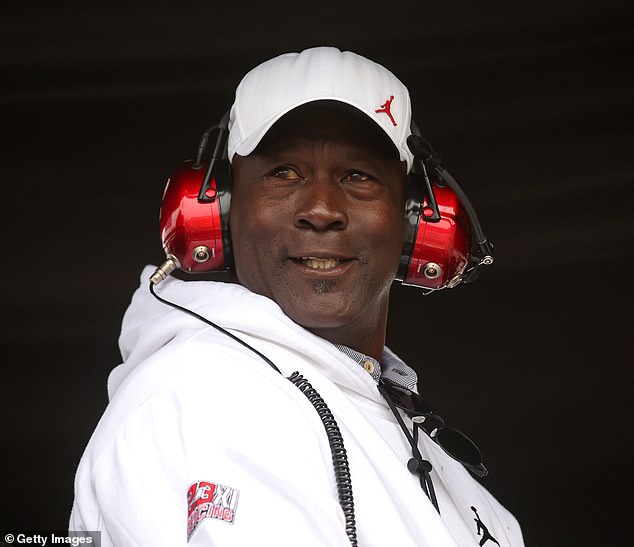
The legal discovery process has also shed light on the financial intricacies of Jordan’s racing enterprise and that of his fellow plaintiffs, including Front Row Motorsports (FRM). According to sports business reporter Joe Pompliano, Michael Jordan has injected a staggering $40 million into 23XI Racing. Pompliano’s analysis further highlights the precarious financial landscape of NASCAR, noting that a substantial 75 percent of its teams operate at a loss. FRM, for instance, has reportedly incurred losses amounting to $100 million.

In an in-depth article penned for his Substack publication, “Huddle Up,” Pompliano delved deeper into the financial revelations. The discovery documents underscored the significant operational costs associated with running a NASCAR team, estimated at approximately $20 million annually. The financial strain is further evidenced by the governing body’s own reported losses of a combined $55 million from just three street races held in Chicago.
A Billionaire’s Stance Against Alleged Monopoly
Jordan’s immense net worth, reportedly in the region of $3.8 billion, uniquely positions him to challenge a powerful sports governing body. His financial capacity allows him to engage in a prolonged legal fight that might be prohibitive for less affluent team owners.
The Unfolding Settlement and its Ramifications
After a lengthy legal showdown that reached its ninth day of proceedings, an unexpected settlement has been reached between NASCAR and the team owners. A key element of this agreement is NASCAR’s decision to grant all its teams permanent charters. Previously, these charters, which function akin to franchise agreements, were subject to revocation by the racing league. The permanent granting of these charters represents a significant victory for the team owners, offering them greater stability and a more secure foundation for their investments.
This legal battle and its subsequent settlement carry profound implications for the future of NASCAR. The case has brought to the forefront discussions about the sport’s revenue models and the power dynamics between the governing body and its participating teams. Jordan’s willingness to confront alleged monopolistic practices has not only highlighted financial challenges within the sport but has also potentially paved the way for a more equitable and sustainable future for all NASCAR stakeholders. The outcome could reshape how revenue is distributed and how teams operate, potentially fostering an environment where more teams can achieve profitability.