
The allure of a better life, coupled with the harsh realities of a competitive job market and stringent qualification requirements, is increasingly driving Nigerian youth and even public officials towards the illicit path of certificate forgery. This disturbing trend persists despite ongoing efforts by law enforcement agencies and federal authorities aimed at restoring credibility and integrity to educational and professional qualifications.
The Weight of Unmet Aspirations
For many young Nigerians like Bernard Chike (not his real name), a 27-year-old unemployed resident of Lagos, the lack of a university degree feels like an insurmountable barrier. “I have always wished I had a university education,” Chike shared, his voice tinged with regret. “If I had known the job market would be like this, where prospective employers berate you for not having a degree, I would have sorted myself out with a certificate long ago.”

Chike’s dreams of higher education were dashed at 18, shortly after completing secondary school, with the passing of his mother, a successful businesswoman. The subsequent economic downturn in 2016 further cemented his fate. His father, unable to support him and his elder brothers any longer, advised him to abandon his educational pursuits and find menial work. “It was during the recession of 2016,” he recounted. “Our father told me bluntly that he couldn’t feed or cater for me anymore, that we were all men in his house, and I should forget about school and find a menial job.” His elder brothers were already employed, leaving Chike to take up casual labor in a factory. “If there had been even one relative willing to sponsor my education, I would have braved the odds and proceeded to university,” he lamented.
The Temptation of a False Start
As years passed, Chike’s social circles expanded. He reconnected with old school friends and made new acquaintances online. One such acquaintance was Stanley, a project manager at a private firm who appeared to be living a life of success and comfort. “Most of my friends from secondary school who went to university had better opportunities,” Chike explained. “I began to feel very inferior anytime I saw them, so I rarely told people I didn’t have a degree. To hide my inadequacies, I started reading books and memorizing words from dictionaries so I could impress them with my grammar.”
This underlying insecurity led Chike to confide in Stanley about his lack of a degree and the persistent requirement of an OND, HND, or BSc for most job opportunities. Stanley, initially surprised by Chike’s fluency in English, eventually offered a disturbing solution: forging a certificate. “He advised me to forge a certificate,” Chike revealed. “According to him, he could help me do this if I was ready. He promised to take me to a place where they would fabricate a degree for me, which I could then use to get a job.”
While the cost of such a forgery was prohibitive for Chike, another friend offered a glimmer of hope, mentioning a job vacancy at Idumota that would accept his Senior School Certificate. After weeks of negotiation, Chike was offered a position at a shopping plaza. However, his joy was short-lived when the plaza owner demanded to see his certificates. The manager, who had seemingly arranged the employment, stammered as the owner scrutinized Chike’s SSCE result with disdain. “Is this the only qualification you have, and you expect us to pay you N100,000 to work here?” the owner demanded. The humiliation was palpable, echoing past rejections. Chike admitted that the prospect of forgery might become his only recourse, despite acknowledging its illegality.
The Persistent Network of Forgers
Investigations reveal that certificate forgery in Nigeria is a deeply entrenched problem, fueled by widespread unemployment and underemployment. The National Economic Summit Group reported Nigeria’s unemployment rate at 5.3% in the first quarter of 2024, with higher rates affecting females and urban dwellers.
Individuals lacking the required academic qualifications often turn to forgery agents who either alter existing documents or create entirely new certificates for a fee. In some instances, people resort to stealing or using others’ certificates without their knowledge to secure employment, promotions, or licenses.
A notorious hub for such activities has historically been the Oluwole area on Lagos Island, known for decades as a center for forged documents, including educational certificates, passports, and government papers. While authorities raided and demolished the original “Oluwole den” in 2005, the “Oluwole phenomenon” has merely adapted, becoming more covert and leveraging digital tools. Syndicates now employ sophisticated software to alter legitimate institutional documents, creating fake NYSC certificates, university degrees, and various licenses.
The Independent Corrupt Practices and Other Related Offences Commission (ICPC) and the Nigerian Police actively pursue and prosecute cases of certificate forgery. A report by the ICPC indicated that between 2015 and 2018, over 721 staff members across six federal agencies were found to have secured employment using forged certificates.
The Case of the Fake Doctor
The audacious deception of Martins Okpe, who posed as a doctor for nearly a decade, sent shockwaves through professional and public circles. Okpe served as the chairman of the Nigerian Medical Association in Abuja and even led a federal government delegation of medical experts to Liberia during the Ebola outbreak.
Employed by the Federal Ministry of Health in Abuja in 2006 as a Senior Medical Officer under the assumed identity of “Dr Daniel George,” Okpe drew a salary and allowances for ten years. He was apprehended in June 2015 during a verification exercise by the Medical and Dental Council of Nigeria. Investigations revealed that Okpe had stolen a Bachelor of Medicine and Bachelor of Surgery degree and National Youth Service Corps (NYSC) certificates belonging to his childhood friend, Dr Daniel George.
He was accused of impersonating George, using the stolen certificates to gain employment with the Federal Government, and even obtaining a staff identity card in George’s name to apply for postgraduate training. The ICPC filed a seven-count charge against Okpe, alleging he made false statements to secure employment. The court found that Okpe had received salaries and allowances totaling N17.2 million over ten years based on fraudulent documents. In November 2024, Justice E. Okpe of the Federal Capital Territory High Court sentenced Okpe to six months’ imprisonment consecutively on each of the seven counts, totaling four years and two months. He was also ordered to refund the illicit earnings, with an additional year of imprisonment for non-compliance.
Fraudulent Documents Plague Public Service
Certificate forgery continues to be a significant problem across Nigeria. In July, the Economic and Financial Crimes Commission (EFCC) arraigned Anthony Ebikonbo-Owen on charges of conspiracy to defraud, forgery, and possession of fraudulent documents.
In Delta State, the civil service uncovered extensive fraud involving age falsification and certificate forgery among public workers. A circular from the Permanent Secretary of the State Civil Service Commission instructed designated officers to appear before a verification committee with all academic and professional documents. The chairman of the committee decried the prevalence of fake certificates, citing shocking cases such as a woman working with her daughter’s certificate and name.
Legal Ramifications of Forgery
Lawyer Cyril Ugonna explained that under Nigeria’s Criminal Code, general forgery offenses can attract up to three years’ imprisonment, with more severe penalties for forgeries involving public debt, wills, or valuable securities, which can lead to 7, 14 years, or even life imprisonment. Sections of the Penal Code also address forgery, carrying potential punishments of up to 14 years’ imprisonment, a fine, or both. The act of dishonestly using a forged document is punishable in the same manner as the forgery itself.
Government Officials Caught in the Net
The ICPC has also apprehended government officials involved in certificate forgery. A Superintendent of the Nigeria Security and Civil Defence Corps, Hassan Abdullahi, was convicted for submitting a forged Nigeria Certificate in Education to advance his career. He was sentenced to two years’ imprisonment or a fine of N2,000,000 for the forgery. Furthermore, he received a five-year prison sentence without an option of a fine for using his position to gain corrupt advantage by receiving salaries and benefits based on the forged certificate.
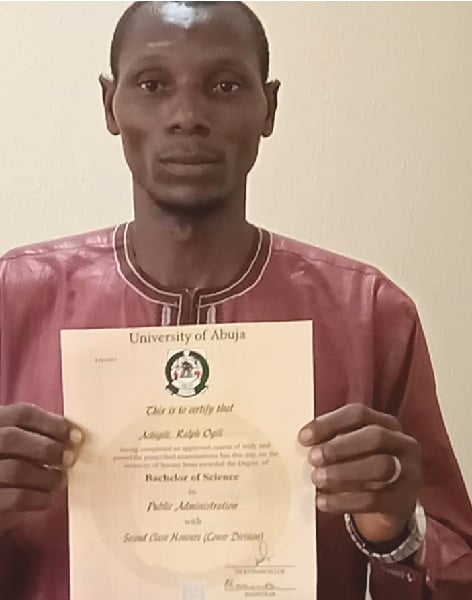
Approximately four years prior, two officials from the Federal Road Safety Corps (FRSC) were arrested by the ICPC for certificate forgery. Investigations revealed that they had presented forged BSc degrees in Public Administration to facilitate their promotion. Verification with the University of Abuja confirmed the certificates were fraudulent, and the officials were ineligible to graduate due to multiple course carry-overs. They allegedly paid substantial sums to a forgery syndicate for the fabricated degrees.
Federal Government’s New Initiatives
In a concerted effort to combat certificate racketeering, the Federal Government has mandated the nationwide enforcement of the National Policy for the Nigeria Education Repository and Databank. Effective October 6, 2025, this directive requires the verification of academic credentials for all staff and recruits across government and higher education institutions.
A service-wide circular issued by the Secretary to the Government of the Federation directed all ministries, departments, agencies, and institutions to utilize the National Credential Verification Service (NCVS) for verification and traceability of all certificates, diplomas, and awards. A National Credential Number will become a mandatory part of employee documentation.
Earlier, a Joint House Committee engaged with the Minister of Interior to discuss the integrity of Nigerian citizenship documentation and the need for robust verification systems. The committee emphasized the critical role of data integration in combating certificate racketeering.
Economists highlight that a culture that glorifies wealth and power often drives young people towards such illicit shortcuts. They stress the importance of regular auditing, background checks, and the strict prosecution of anyone caught engaging in certificate forgery or its use.