
Russia’s ‘Doomsday Radio’ Transmits Ominous Codes, Fueling European War Fears
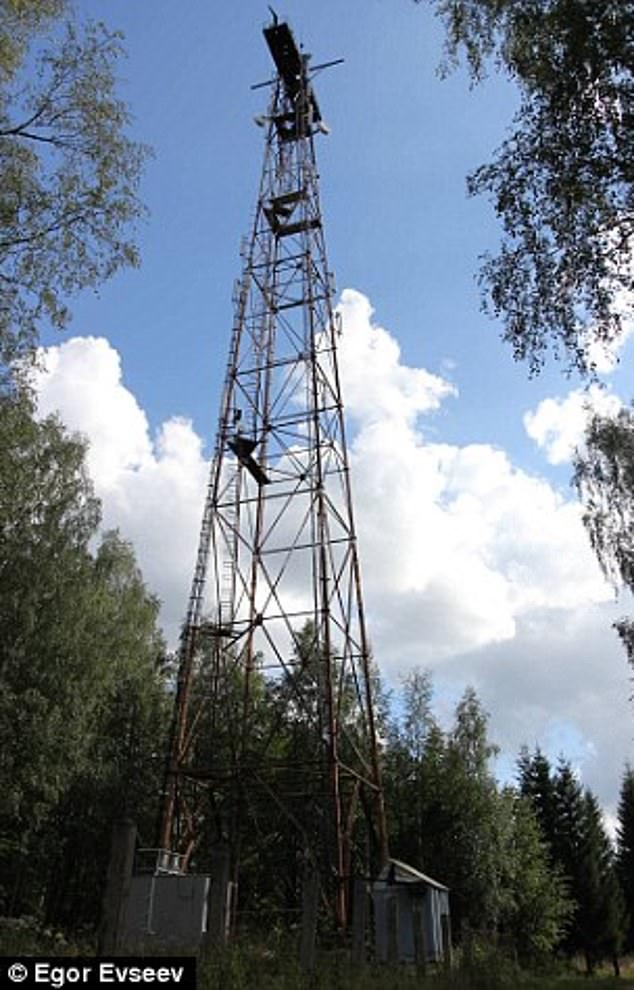
A persistent and enigmatic shortwave radio station operated by Russia, widely known as UVB-76, or more ominously, ‘Doomsday Radio,’ has recently amplified its mysterious transmissions, sending a flurry of coded messages that have heightened anxieties across Europe. The station, a fixture on the airwaves since the 1970s, is primarily recognised for its signature, low-frequency buzzing sound, reminiscent of malfunctioning equipment. However, its recent surge in activity, featuring complex numerical and alphabetical sequences, has led experts and intelligence agencies to speculate about its potential role in modern military communication and the escalating geopolitical climate.
Over the past week, listeners have detected a significant increase in coded broadcasts, with multiple transmissions occurring in quick succession. This week alone, the station emitted three distinct signals on Monday, followed by an additional eight on Wednesday. Each of these cryptic messages comprises a unique set of alphanumeric characters and specific code words. Among those identified are:

- PEPPER SHAKER
- TRANSFER
- PABODOLL
- SPINOBAZ
- FRIGORIA
- OPALNY
- SNOPOVY
- MYUONOSVOD
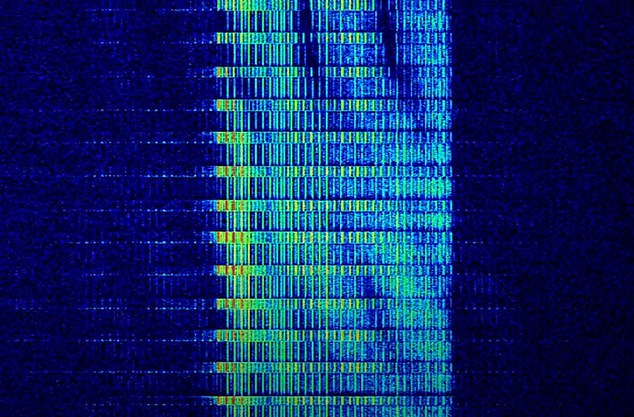
The sheer volume of these transmissions, with as many as 15 secret messages reportedly heard by enthusiasts and observers in the last week, is unusual. The intended recipients and the precise meaning of these codes remain a subject of intense speculation. Adding to the unsettling atmosphere, on Friday, the station was observed broadcasting what sounded like faint music interspersed with prolonged bursts of Morse code.
The Strategic Significance of UVB-76
Experts in intelligence and communications suggest that UVB-76 is not merely an antiquated broadcasting anomaly but is likely linked to Russia’s strategic military command. Its function could be to relay covert directives to the nation’s armed forces or to agents operating in clandestine capacities abroad. This theory gains traction when considering the station’s historical pattern of increased activity during periods of global crisis.
The ongoing war in Ukraine has served as a backdrop for this heightened broadcast frequency. In response to these developments, British Military Intelligence Service (MIS) Defence Minister Al Carns has issued a stark warning, suggesting that Europe may be teetering on the precipice of a wider conflict. Carns articulated that “the shadow of war is knocking on Europe’s door,” emphasizing the imperative for the UK’s NATO allies to be in a state of readiness.
Echoing these sentiments, NATO Chief Mark Rutte, in a recent address in Berlin, stated that “Russia has brought war back to Europe, and we must be prepared for the scale of war our grandparents and great grandparents endured.” This rhetoric underscores the gravity with which the alliance is viewing the current security landscape.
The Latvia Connection and Escalating Tensions
The recent surge in coded messages has been particularly concerning due to the inclusion of specific geographical references. State media organisation Izvestia reported on November 14 that the mysterious signal had temporarily gone offline following a Ukrainian drone strike that impacted nearby power stations. However, since its resumption in late November, UVB-76 has been broadcasting a continuous stream of new messages.
One particular series of codes, detected on November 17, included a message with the sequence: ‘NZHTI NZHTI 15854 LATVIA 5894 4167.’ The explicit mention of Latvia, a NATO member state, within this coded transmission has ignited considerable alarm. Given the already volatile tensions between Russia, Ukraine, and NATO, any perceived threat to a NATO country carries profound implications. An attack on Latvia would unequivocally trigger Article 5 of the NATO treaty, compelling all member nations, including the United States, to come to its defence, potentially escalating the conflict into an all-out global confrontation.

Listener Observations and the Nature of Morse Code
Online communities dedicated to monitoring UVB-76 have noted the unusual frequency and pattern of the recent transmissions. One Russian-speaking listener commented on social media platform X, highlighting the anomaly: “It is interesting that as many as 15 messages were sent at once, even though the usual interval is once a month or every two months.” This deviation from the norm suggests a potential shift in operational protocols or an urgent need for communication.
While no new coded messages were reported on Friday, the station continued to emit a continuous stream of long and short tones, widely recognised as Morse code. Morse code, a communication system utilising short and long beeps (dots and dashes) with pauses to represent letters and numbers, offers several advantages for covert military operations:
- Efficiency: It allows for rapid transmission of information.
- Resilience: It is exceptionally difficult to jam effectively.
- Anonymity: It does not readily reveal the sender’s identity or precise location.
These characteristics make Morse code an ideal, albeit dated, tool for secure military communications, even in the contemporary digital age. For those equipped with the appropriate decryption keys and codebooks, these seemingly random sequences translate into actionable intelligence or direct orders. For the uninitiated, however, they remain an enigmatic series of sounds, a chilling reminder of the unseen currents of global strategy.