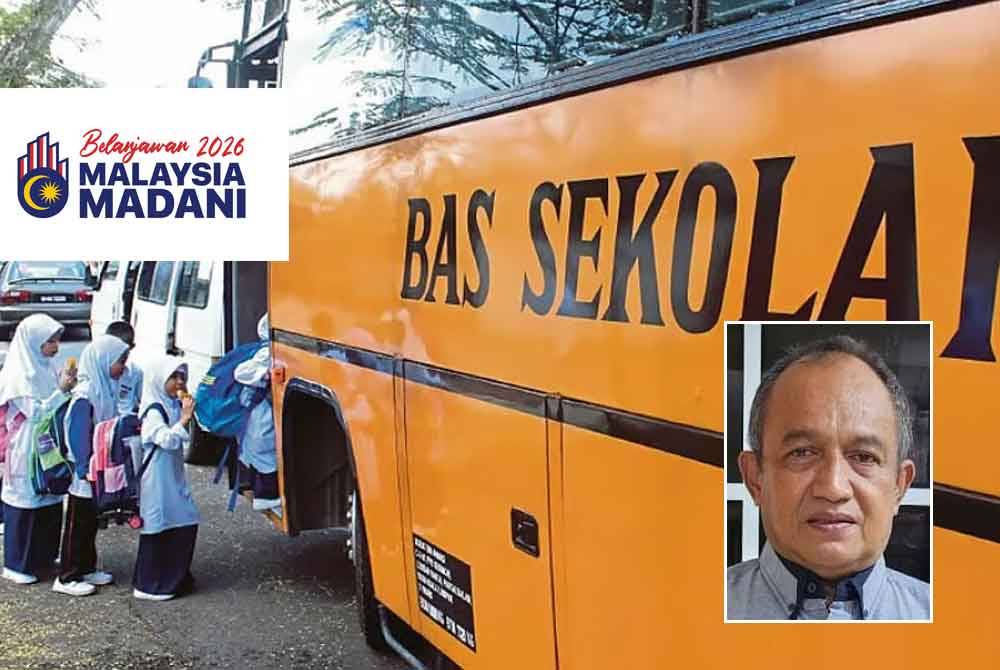

School Bus Operators Seek Government Support for Renewed Replacement Scheme
School bus operators in Malaysia are calling on the government to revive and improve the school bus replacement scheme that was previously introduced in 2013. The initiative, which was discontinued in 2014, is now being revisited with a focus on including the purchase of used buses to help sustain small and medium-sized operators.
Amali Munif Rahmat, President of the Malaysian School Bus Associations Federations, highlighted the growing financial challenges faced by operators. Rising costs such as vehicle maintenance, insurance premiums, and the high price of new buses have placed a significant burden on these businesses.

He expressed hope that the government would announce an updated version of the scheme in the upcoming 2026 Budget, set to be presented by Prime Minister and Finance Minister Datuk Seri Anwar Ibrahim on October 10.
“Previously, the scheme allowed the purchase of new buses at RM150,000. However, the current price of a bus has reached up to RM1 million. This is impossible for most operators,” he said.
Amali suggested that expanding the scheme to include used buses under a certain age would make it more practical and achievable. He also proposed that the scheme should offer low-interest loans, rebates similar to the RM10,000 previously provided, and a simplified approval process without unnecessary bureaucracy.
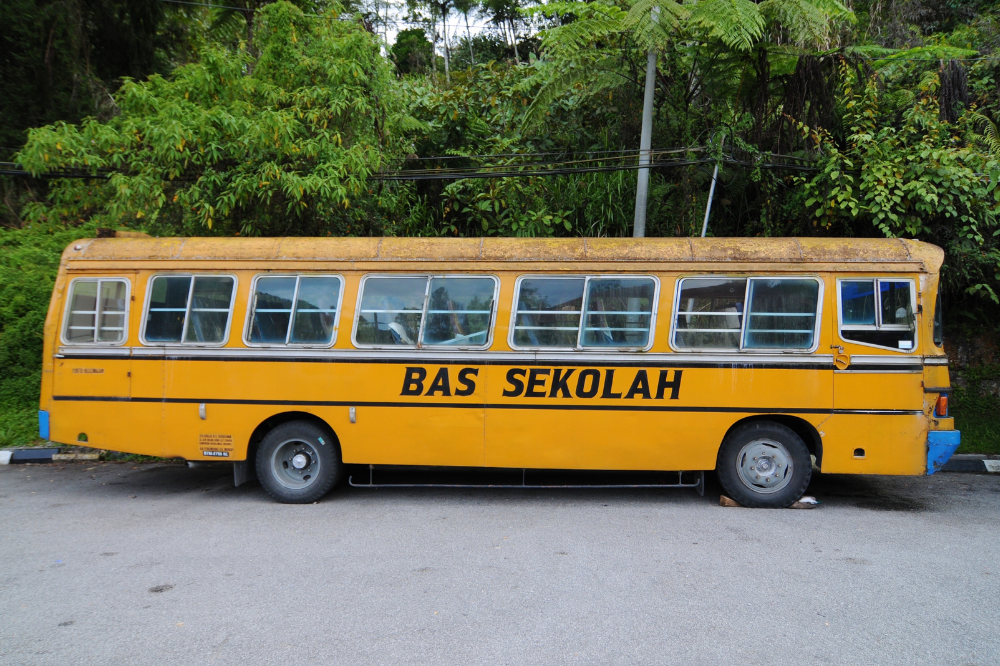
Addressing Unlicensed Operators and Fuel Quota Issues
In addition to the replacement scheme, Amali emphasized the need to regularize over 100,000 unlicensed operators currently operating illegally across the country. He called for a review of the current fuel quota system, noting that monthly fuel costs for a single bus can reach thousands of ringgit.
He questioned why e-hailing drivers are eligible for additional fuel quotas while school buses are not, despite their critical role in transporting the nation’s children. To address this, he urged operators to register for the Subsidised Diesel Control System (SKPS) under the Budi95 initiative, which has been open for registration since September 15.
Amali also raised concerns about the sharp increase in insurance premiums. Starting last month, the minimum premium has nearly doubled from RM25,000 to RM50,000. Despite this, statistics show that accidents involving school buses are very low, not even reaching two per cent annually.
Proposals for Free School Bus Schemes
To alleviate the financial strain on operators, Amali proposed that the government consider a free school bus scheme funded by local authorities. He cited examples from Kuala Lumpur City Hall (DBKL), the Department of Orang Asli Development (Jakoa), and the Malaysian Armed Forces (ATM, which have already implemented similar initiatives. The scheme has also been successfully introduced in Kuching and Miri.
If the government is serious about easing the people’s burden, Amali suggested that the initiative could be expanded nationwide.
Emphasizing Safety and Government Support
Amali stressed that school buses remain the safest mode of transport for students. They undergo inspection by the Computerised Vehicle Inspection Centre (Puspakom) every six months, and drivers are required to take annual health screenings.
With the government’s support through proper incentives and assistance, he believes that operators can continue to provide the best, safest, and highest-quality service for school children in Malaysia.