
Supermarkets and the Challenge of Price Matching Aldi
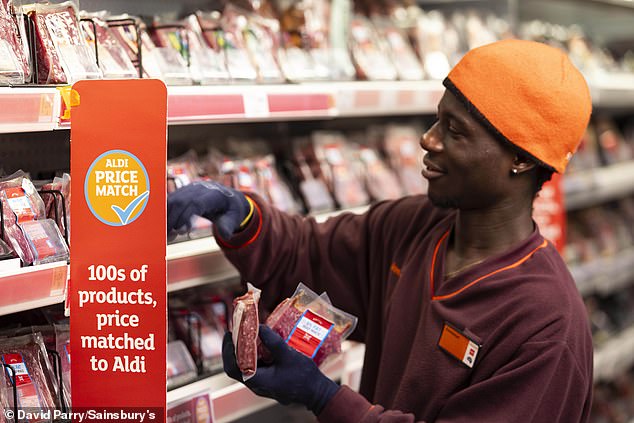
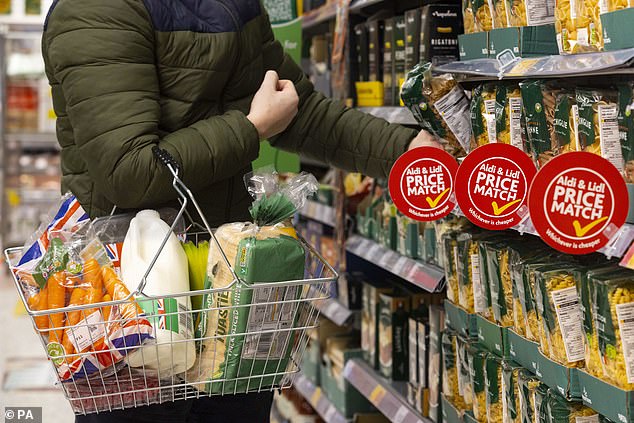
Supermarkets are increasingly adopting price match schemes to retain customers who might otherwise switch to Aldi, a German discount supermarket known for its low prices. However, these schemes often do not guarantee that the products being matched are identical in quality or ingredients, according to a recent investigation.
The study by Which? revealed that while major supermarkets like Sainsbury’s, Tesco, and Morrisons have launched promotions to match Aldi’s prices, there are discrepancies in product composition. For instance, pork pies from different brands may have varying percentages of pork, even if they are priced the same. This can lead to confusion for shoppers who assume that a price match means an exact product match.

Discrepancies in Product Composition
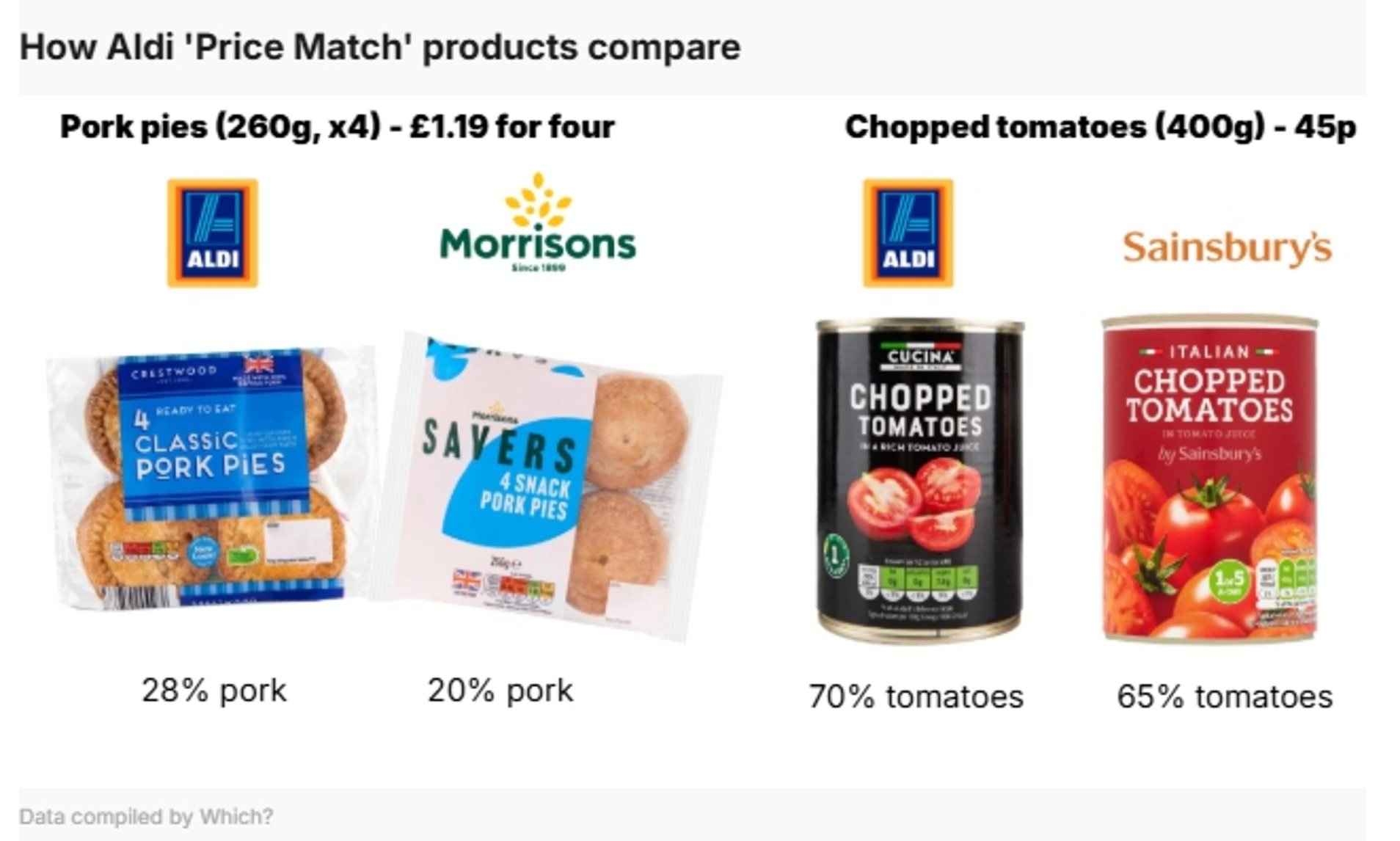
One example highlighted in the research is the difference between Aldi’s ‘Crestwood Classic Pork Pies 4 Pack’ and Morrisons’ ‘Savers 4 Snack Pork Pies’. Both are priced at £1.19 and weigh 260g, but the former contains 28% pork, while the latter has only 20%. Similarly, tins of chopped tomatoes from Aldi and Sainsbury’s show differences in tomato content—70% versus 65%, respectively.
These variations can be misleading for consumers who believe that a price match implies an identical product. The study also found that some products labeled as matches may differ in their ingredient lists. For example, a coconut milk product from Sainsbury’s had a higher percentage of coconut extract than Aldi’s version.
Differences in Ranges and Pack Sizes
Another key finding was the variation in product ranges. Some supermarkets offer budget versions of products when matching Aldi, which can affect the perceived value. Additionally, pack sizes may differ even if the unit price per 100g or 100ml is the same. This could mean that a larger pack might not actually offer better value, despite appearing so at first glance.
The research also noted that some supermarkets match multiple flavors of a single product to just one Aldi version. This can give shoppers more choices, but it may not align with their expectations of what a ‘match’ entails. For example, Aldi’s Cucina Pasta Sauce Bolognese 500g was matched by 14 different products across other supermarkets, including various types of sauces.
Expansion of Price Match Schemes
Several major supermarkets have implemented Aldi price match schemes. Sainsbury’s leads the way with 898 matched products, followed by Tesco with 761 and Morrisons with 504. These schemes include a wide range of products, mostly non-perishable items, with fewer options for alcohol, frozen foods, and other categories.
The schemes vary by supermarket, with Sainsbury’s focusing on own-label products and Tesco having a higher proportion of branded items. Morrisons also matches prices to Lidl, choosing whichever is cheaper. However, not all stores carry these products—Aldi price match items are not available in Morrisons Daily convenience stores.
Consumer Advice and Considerations
Reena Sewraz, retail editor at Which?, emphasized the importance of careful consideration when purchasing products under price match schemes. She advised shoppers to look closely at product details and not take the labels at face value, as matches may not always reflect the same quality or ingredients.
While price match schemes can help consumers save money, especially for those without access to Aldi, it is crucial to understand the nuances of these offers. Shoppers should compare products carefully and consider factors beyond just price, such as ingredient quality and portion size.