



Legal Ruling on Omission vs. Active Interference
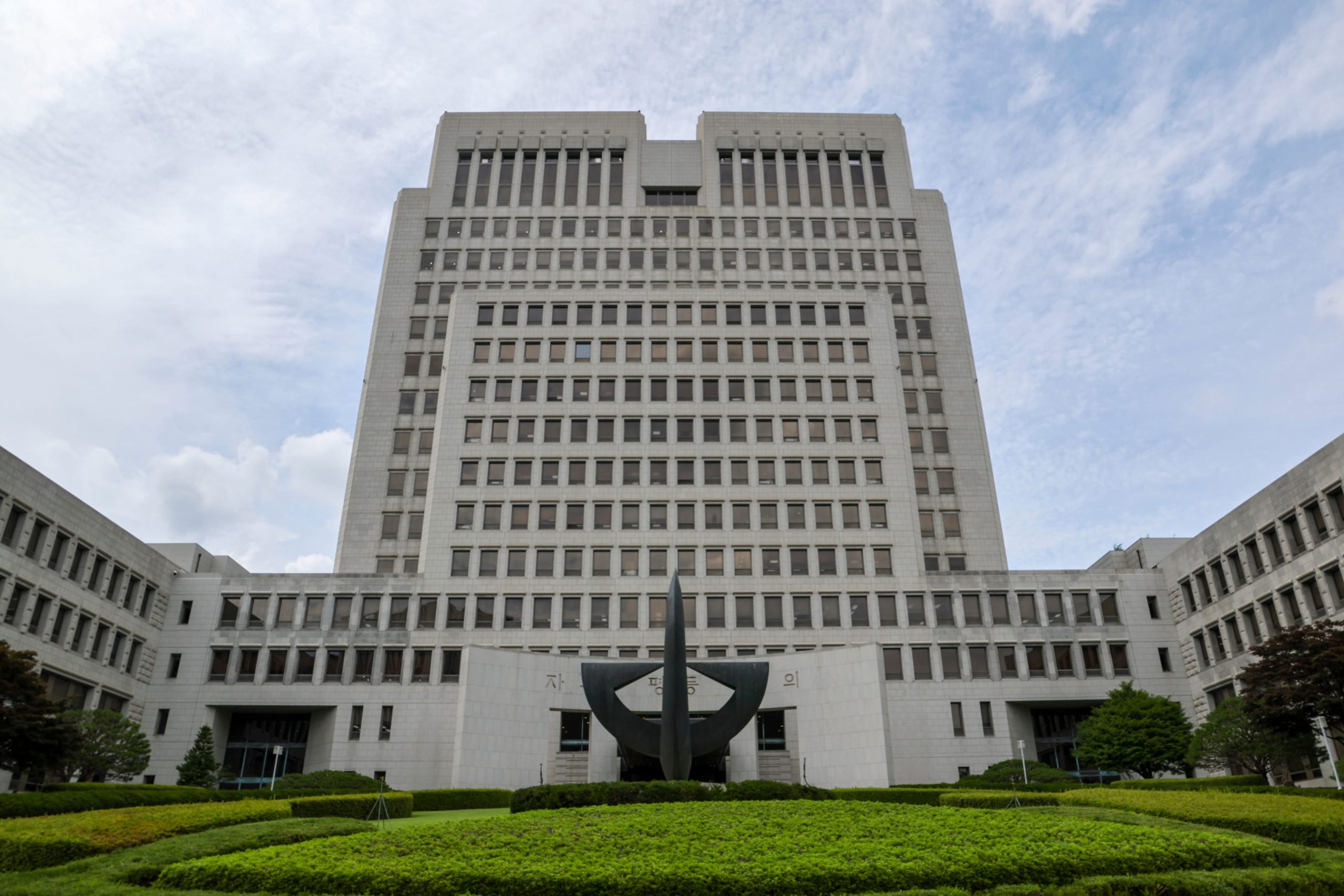
The Supreme Court has made a significant ruling regarding the legal implications of an apartment residents’ representative council chairperson’s failure to return official documents after their term ended. The court determined that such a failure cannot be considered as obstruction of business, emphasizing that “failure to act” (omission) does not equate to active exertion of force.
The Supreme Court’s Second Division, presided over by Justice Kwon Young-jun, overturned a lower court’s decision that had fined an individual, referred to as A, for obstruction of business. This case was remanded to Uijeongbu District Court last month, according to the court’s announcement on the 9th.

A, who was previously the chairperson of an apartment residents’ council in Namyangju, Gyeonggi Province, was charged with obstruction of business for refusing to hand over a bank seal and a business registration certificate to the newly elected successor in April 2021. Despite the successor’s term having officially begun, A raised concerns about the election process.
Under the Criminal Act, individuals found guilty of spreading false information or obstructing business through force may face penalties including up to five years in prison or a fine of up to 15 million Korean won.
Key Legal Question: Definition of ‘Force’
The central legal question in this case was whether A’s refusal to return the seal and certificate constituted “force” as defined by the Criminal Act. According to Supreme Court precedents, force can include not only violence or threats but also pressure exerted through social status or influence.
Lower courts had ruled that A obstructed the successor’s duties by refusing to return the seal and had the intent to disrupt business, leading to the imposition of a fine. However, the Supreme Court overturned this ruling, leaning toward acquittal.
The court stated, “For an omission to qualify as ‘force’ in obstruction of business, it must hold the same criminal value as active interference.” It added, “A merely refused to hand over the items but did not actively obstruct the successor’s duties, such as impersonating the chairperson using the seal.”
Outcome and Implications
The court also noted that the successor assumed the residents’ council without issues after taking office. Therefore, the court concluded, “It is difficult to argue that the business became impossible or significantly hindered.”
This ruling highlights the distinction between active interference and passive omission in legal contexts. It underscores the importance of intent and actual disruption when determining whether an action constitutes obstruction of business.
Conclusion
The Supreme Court’s decision reinforces the principle that not all forms of non-compliance are equivalent to active obstruction. By distinguishing between omission and active interference, the court has set a clear precedent for future cases involving similar legal questions. This ruling will likely influence how similar cases are interpreted and handled in the legal system, ensuring that the definition of “force” remains consistent with the principles of justice and fairness.

