
The Unsung Heroes of the Himalayas: Championing Porter Rights in Nepal
The breathtaking landscapes of Nepal, from the towering peaks of the Manaslu and Annapurna circuits, draw adventurers from across the globe. Yet, amidst the awe-inspiring vistas and the struggles of trekkers battling thin air and sub-zero temperatures, a less visible struggle unfolds. Porters, the indispensable backbone of Nepal’s trekking industry, often undertake journeys with loads of 40 to 60 kilograms, frequently clad in inadequate clothing and footwear, a stark contrast to the high-altitude gear donned by the very people they assist.
Thousands of these individuals navigate Nepal’s challenging terrains, and for many, fair treatment and awareness of their rights remain elusive. However, a dedicated organisation based in Kathmandu is actively working to redress this imbalance. The Kathmandu Environmental Education Project (KEEP), established in 1992, has been a steadfast advocate for porters’ rights, coupled with crucial educational initiatives.

Tara Datt Joshi, the manager of KEEP, highlights a pervasive misconception: “One of the biggest misconceptions about porters is that they are superhumans.” He clarifies, “But the porters are normal people. Many of them come from the lowlands and are not better adapted to the high altitude and rough conditions than other people.” Currently, Nepal lacks official government regulations or checkpoints to enforce weight limits for porters’ loads. In response, KEEP strongly recommends that porters carry no more than 25 kilograms, a figure that encompasses both their personal gear and the trekkers’ luggage. This recommended weight should be further reduced at altitudes exceeding 5,000 meters.
These guidelines are not merely suggestions; they are life-saving directives. Joshi reveals that this year alone, an estimated two to three trekking porters have succumbed to altitude sickness and issues stemming from improper gear.
A significant challenge is the lack of awareness among many porters regarding their entitlements. For instance, they may be unaware that travel agencies are legally responsible for providing their insurance coverage. Furthermore, many porters do not realise that their agency should be covering their food and accommodation expenses, or at the very least, providing additional funds for these necessities on top of their wages. The Trekking Agencies’ Association of Nepal (TAAN) does propose a minimum daily wage of Rs2,400 for porters, a standard that not all agencies consistently uphold or inform their staff about.
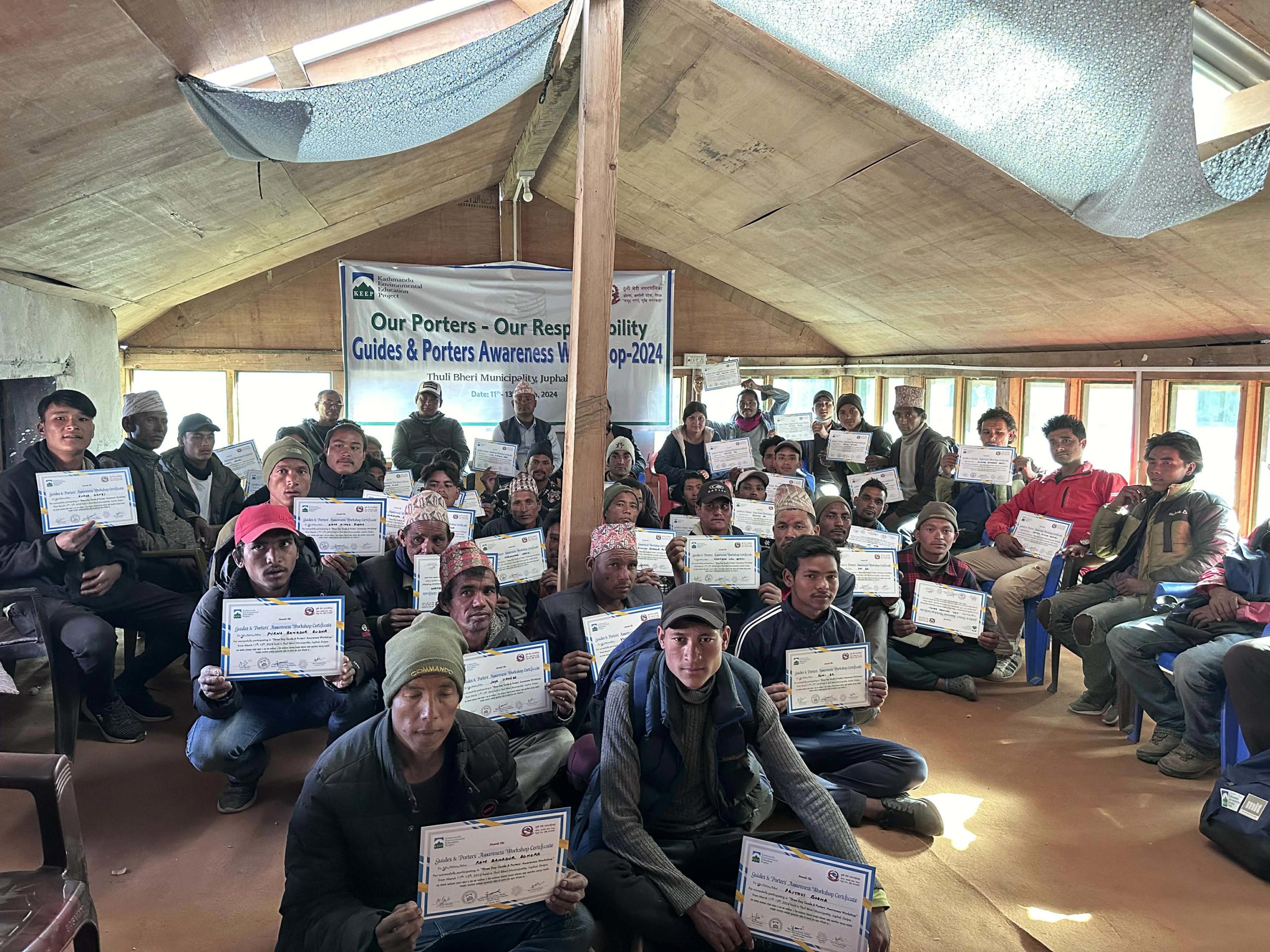
To bridge this knowledge gap, KEEP organises a series of training sessions and porter awareness workshops. These are strategically held during the off-season, not only in Kathmandu but also in the very regions from which many porters hail, such as Solukhumbu and Langtang. In some remote areas, KEEP extends its reach by conducting door-to-door campaigns to ensure every porter is informed of their fundamental rights.
Joshi elaborates on the guidance provided: “We tell them to first look into the company: if it is properly registered, what the company policies are, and if they have insurance.” He stresses the importance of due diligence, advising, “There are many trekking providers, and in the workshops, the porters learn that they should refuse if someone expects inhumane things from them. It is better to go with an agency that enforces the standards.”
Beyond rights awareness, KEEP also provides vital first-aid training. This equips porters with the knowledge to better manage their own health and that of the trekkers they accompany. “Many porters don’t know the symptoms of altitude sickness, so they push themselves, even though it’s already dangerous,” Joshi states. “In the courses, they learn to read the signs and react appropriately.”
Recognising the growing international nature of trekking, language training in English and French is another popular offering. These courses empower porters to communicate more effectively with international visitors, opening doors to career advancement. Many begin their careers as porters and, with acquired skills and experience, transition into roles as guides, agency owners, and even high-ranking positions within the tourism sector. Joshi explains the sustainable ripple effect: “This is sustainable-when someone becomes an agency owner, they can hire porters, who can then later become the new agency owners.”
A tangible support system is the clothing centre in Kathmandu, a critical component of KEEP’s operations. This centre houses essential trekking gear such as hiking boots, warm jackets, gloves, hats, and socks. A significant portion of this equipment is generously donated by trekkers upon their return, supplemented by financial contributions.
Porters and travel agencies can borrow this equipment by paying a small deposit. KEEP harbours ambitions to expand this initiative by establishing more clothing centres in the porters’ home regions. Currently, porters residing far from Kathmandu often rely on friends in the capital to transport necessary clothing, or travel companies arrange for equipment to be delivered to the trek’s starting point.
Upon the return of the borrowed items, the deposit is fully refunded. Charges are only incurred for essential cleaning costs. “Sometimes, pants and jackets come back very dirty, because the porters have to sleep on the floor,” Joshi notes, illustrating the often-harsh realities of porter accommodation, where lodge owners prioritise paying tourists, leaving porters in rudimentary shelters.
While the situation has seen marked improvement since KEEP’s inception, it is far from perfect. In the 1990s and early 2000s, porters frequently faced the indignity of sleeping outdoors, seeking refuge in caves or behind rocks. Tragically, when accidents occurred, they were often abandoned, while tourists received immediate rescue. Joshi acknowledges the significant role of trekkers in driving this change: “It was also due to the awareness of the trekkers that the situation has improved. They demanded better working conditions for the porters from the trekking companies.”
Joshi strongly emphasizes the responsibility that tourists bear when engaging porters. “The biggest effort needs to be done when finding a tour company and booking the trek,” he advises. “Trekkers should ask the company about their policies, the salary for the porters, whether the porters will be properly equipped, or how much they’ll need to carry. And then book with a company that has good working conditions.” KEEP actively supports this by maintaining a list of Nepalese travel agencies on their website that have committed to upholding their standards. Additionally, they operate a travel advice drop-in centre in Thamel.
Ultimately, Joshi underscores the economic and social importance of hiring porters. “Porters are the backbone of tourism in Nepal; without them, trekking would not be possible.” Engaging porters not only secures vital employment but also sustains the broader trekking industry, providing a crucial entry point into the tourism sector for many Nepalese individuals.