
Kathmandu’s Unlikely Flourishing: Resilience and Reinvention in a Turbulent City
Kathmandu, the vibrant capital of Nepal, presents a fascinating paradox: its urban leisure industry, particularly dance bars and restaurants, experienced significant growth not in times of peace and prosperity, but during the nation’s most turbulent political periods. From the late Panchayat era to the 1990 People’s Movement and, most notably, the Maoist insurgency, these phases of economic instability and pervasive uncertainty paradoxically fueled an expansion of Kathmandu’s nightlife. This surge in the formal economy’s shadow was driven by a populace seeking solace, anonymity, and a temporary respite from the prevailing chaos.
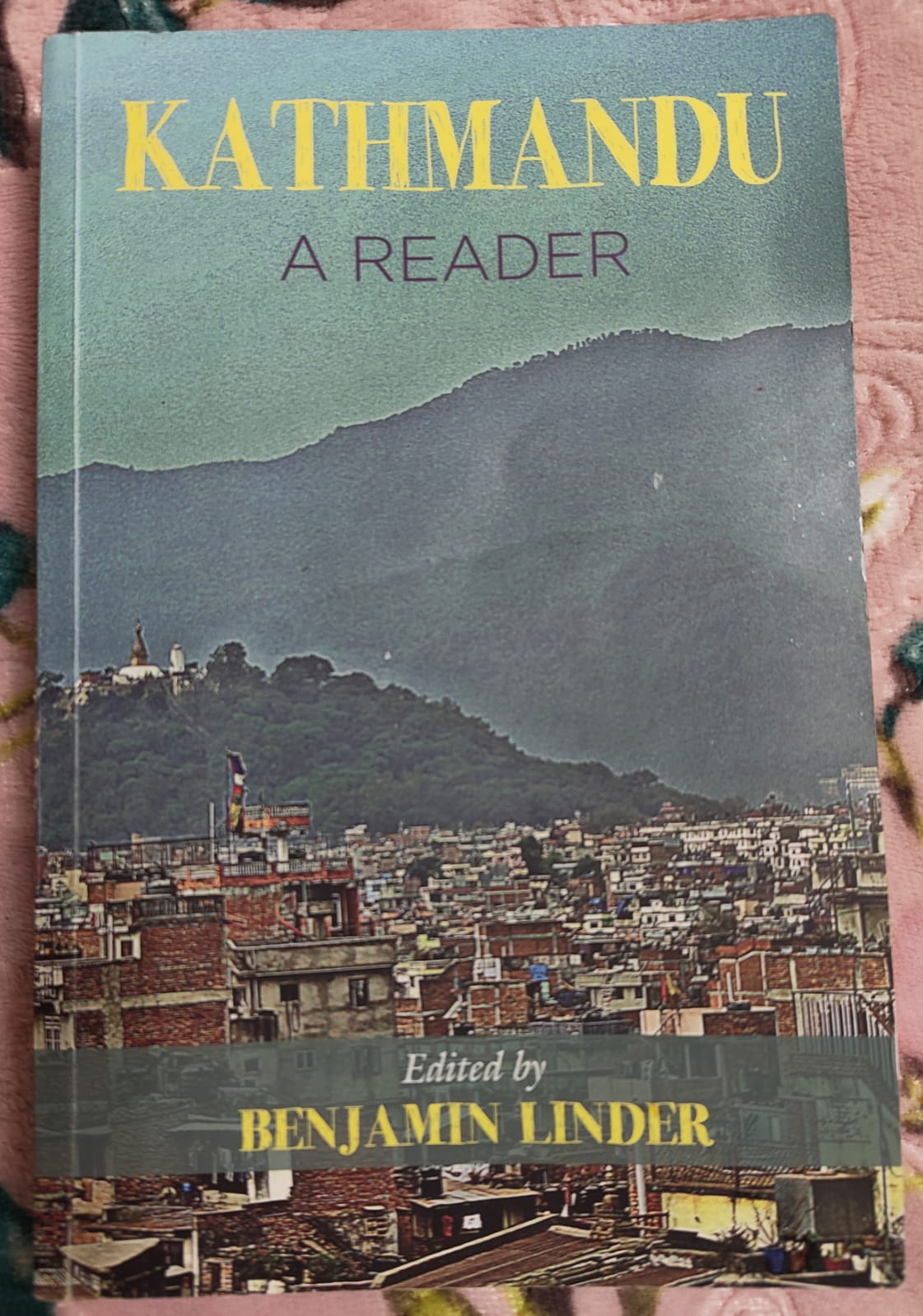
This intricate tapestry of urban transformation and societal shifts is meticulously explored in Kathmandu: A Reader, an anthology of anthropological essays published by Martin Chautari and edited by Benjamin Linder. The collection delves into the multifaceted contradictions and ongoing evolutions of Kathmandu, examining its physical landscape, political histories, evolving social values, and the daily practices that have shaped life in the Kathmandu Valley throughout the 21st century.

Unveiling Hidden Histories: Sex Work and Shifting Social Norms
One particularly striking revelation emerges from Mark Liechty’s chapter, ‘Carnal Economies: The Commodification of Food and Sex in Kathmandu.’ This essay offers an unexpected glimpse into the city’s past, highlighting the surge in prostitution during the 1980s. At that time, the issue captured the attention of investigative journalists, who documented how young women, often from impoverished and marginalized communities, were drawn into the sex trade. The contemporary reader might find it astonishing to imagine a news agenda where prostitution, rather than political power or financial crime, dominated investigative efforts. This historical emphasis underscores the profound shifts in Kathmandu’s societal anxieties and priorities over the decades.
The essay also sheds light on the complex interplay between caste and sexuality. While Nepal’s nineteenth-century Muluki Ain strictly regulated sexual interactions along caste lines, contemporary dynamics have evolved. Today, it is often middle-class men, frequently from upper-caste backgrounds, who engage the services of sex workers from lower-caste communities. While old taboos surrounding sexual propriety may linger, their manifestation has changed. Caste boundaries remain deeply intertwined with food and commensality, whereas sexual exchanges are increasingly governed by monetary transactions and market logic.
Liechty’s work also addresses the perception of Nepali women in India. The significant presence of Nepali women working in Indian brothels has unfortunately led to Nepal being associated with prostitution in the minds of many Indians. This perception has, in turn, contributed to harmful stereotypes perpetuated in popular culture, as evidenced by references in Bollywood productions like ‘Paatal Lok,’ which have used derogatory terms to depict Nepali women, reflecting a broader Indian popular imagination that links Nepal with commercial sex.
The Dawn of Autonomy: Scooters and the Reshaping of Gender Dynamics
Another compelling chapter, ‘Scooty Girls,’ examines the profound impact of the scooter’s arrival on gender dynamics within Kathmandu. The essay reveals the relatively recent phenomenon of young women independently navigating the city streets on scooters. Unlike the heavier and more traditionally masculine motorcycles, scooters provided women with unprecedented access and mobility, transforming how they experienced and interacted with the urban environment. The seemingly ordinary sight of girls commuting to college, work, or social gatherings represents a significant and comparatively recent shift in Kathmandu’s social fabric. This chapter illustrates how mobility gradually became a powerful symbol of autonomy, with the humble scooter fundamentally altering women’s navigation of the city, their public visibility, and their self-perception.
Tourism, Branding, and the Manufactured Image of Tradition
The collection also scrutinizes the influence of tourism, commercialization, and branding on cultural identity, particularly in areas like Thamel. The essay reveals that districts such as Jhamsikhel were once colloquially referred to as ‘Little Thamel’ or ‘Jhamel.’ These nicknames, the book explains, did not arise organically but through a deliberate process of layering cafes, expatriate-friendly bars, boutique stores, and a globalized aesthetic that consciously mimicked Thamel’s tourist-centric atmosphere.
This chapter encourages readers to observe subtle yet significant indicators of this transformation, such as the prevalence of English signage, menus catering to foreign tastes, and a saturation of yoga studios and minimalist restaurants. These elements are presented not merely as stylistic choices but as integral components of a manufactured identity. While the book refrains from outright judgment, it effectively highlights the cultural trade-offs inherent in this process: what becomes of the communities that originally shaped a place when it is transformed into a marketable brand?
The Ideology of Tradition and the Aestheticization of Poverty
The essay ‘Mapping the ideological construction of traditional places’ deconstructs how the very concept of ‘tradition’ is manufactured, especially in locations like Bhaktapur, which are often marketed as Nepal’s cultural time capsules. The author uses a seemingly minor incident from 1995—an altercation between a local woman worshipping at a Ganesh shrine and a tourist who photographed her—to illustrate this point. The woman demands payment, while the tourist claims he has already paid the Bhaktapur entry fee. This small dispute serves as a microcosm, demonstrating how tourism reorders relationships, transforming people into commodities and locals into performers of ‘authenticity.’ Tourists, in this context, become ‘walking dollars,’ and what appears as simple commercial desire is, in fact, shaped by global gazes and power imbalances that redefine what is considered ‘pure tradition.’
Furthermore, the chapter ‘Sukumbasi and the Politics of Aesthetics and Urgency’ offers a particularly incisive critique of the perception of ‘inauthentic sukumbasi’ (squatters). The essay highlights the middle-class suspicion that genuine squatters must conform to a visual stereotype of poverty, lacking clean clothes, motorbikes, or aspirational appearances. This reveals the disturbing trend of aestheticizing poverty, where the visual presentation of the poor becomes a metric for legitimacy. Drawing on Mary Douglas’s metaphor of ‘matter out of place,’ the author illustrates how the appearance of the impoverished is scrutinized to validate their identity. If a sukumbasi does not visually embody the stereotype of deprivation, their claim to legitimacy is dismissed as fraudulent. This politics of appearance resonates strongly with Ananya Roy’s arguments about the ‘aestheticization of poverty,’ where slums are viewed as images to be eradicated rather than as communities requiring understanding and support. The chapter effectively employs these theoretical frameworks not as mere academic references but as active analytical tools to interpret the evolving moral landscapes of Kathmandu.
In conclusion, Kathmandu: A Reader provides a rich and analytically sharp, multi-layered portrait of a city in perpetual self-reinvention. While the anthology is commendable, a future edition could be further enriched by incorporating more contributions from Nepali scholars and writers. Their intimate, lived experiences of Kathmandu’s social transformations would undoubtedly offer even deeper perspectives. Nevertheless, this collection stands as an excellent starting point for anyone seeking to comprehend the complexities of the Kathmandu Valley. Whether approached from the disciplines of anthropology, urban studies, or simply through a genuine curiosity about the city’s rhythms, this volume profoundly broadens the reader’s horizon, leaving them with much to contemplate long after its pages are closed.
Kathmandu: A Reader
Editor: Benjamin Linder
Publisher: Martin Chautari
Year: 2025