
The Nobel Prize in Chemistry 2025: A Breakthrough in Molecular Structures
Three scientists have been awarded the Nobel Prize in Chemistry for their groundbreaking work in creating a new type of molecular structure that has significant applications in environmental sustainability. Their research has enabled the extraction of carbon dioxide from the air and the separation of pollutants from water, marking a major milestone in chemical science.
The winners are Susumu Kitagawa from Kyoto University in Japan, Richard Robson from the University of Melbourne in Australia, and Omar M. Yaghi from the University of California, Berkeley, in the United States. Their innovative contributions involve the development of metal-organic frameworks (MOFs), which are complex structures composed of metal nodes and polydentate organic ligands. These ligands act as connectors between the metal nodes, forming a network with large cavities that allow molecules to flow in and out.

According to the Nobel Prize, MOFs have the potential to revolutionize various fields. They can be used to separate “forever chemicals” from water, break down pharmaceutical residues in the environment, and capture carbon dioxide from the atmosphere. The significance of these materials is highlighted by Heiner Linke, chair of the Nobel Committee for Chemistry, who compared the small amount of material to Hermione’s handbag in Harry Potter—a compact space that can hold a vast amount of content.
Since the trio began their work, chemists have designed tens of thousands of MOFs. These structures offer versatile applications, ranging from environmental remediation to energy storage. Kitagawa expressed his deep honor and delight upon receiving the award, stating that his dream is to extract elements from the air to power renewable energy sources. He emphasized the importance of this goal for both society and the planet.
A Historical Perspective on the Nobel Prizes in Chemistry
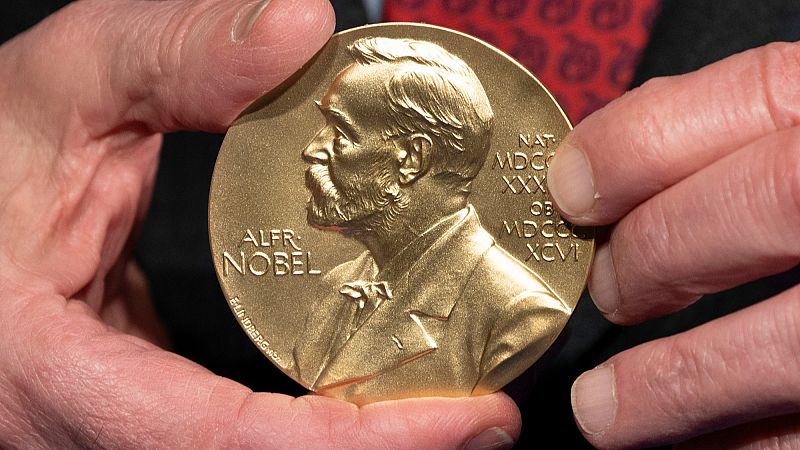
From 1901 to 2024, a total of 116 Nobel Prizes have been awarded in chemistry. Among these, eight of the 197 chemistry laureates have been women, including the iconic Marie Curie, who received the prize in 1911. This highlights the evolving landscape of scientific recognition over the years.
In the previous year, the chemistry award was shared between David Baker, a biochemist at the University of Washington in the United States, and Demis Hassabis and John Jumper from Google DeepMind. Hassabis and Jumper developed AI models capable of predicting protein structures, while Baker pioneered methods to design new proteins for use in medicines, vaccines, nanomaterials, and sensors.
Other Nobel Prizes in 2025
The rest of the 2025 Nobel Prizes, which recognize advancements in literature, economics, and peace, will be announced in the coming days. The awards for medicine and physics were announced earlier this week, showcasing the ongoing impact of scientific and cultural achievements worldwide.
The Nobel laureates will be honored at an awards ceremony in Sweden in December, where they will receive their well-deserved recognition for their contributions to science and society. Their work not only advances the field of chemistry but also offers practical solutions to some of the most pressing global challenges.