
The University of Arkansas’s campus police department, UAPD, remains vigilant and responsive to security incidents occurring nationwide, even when geographically distant. The recent shooting at Brown University, located approximately 1,500 miles away, prompted UAPD to heighten its awareness and review its own safety protocols.
National Incidents Prompt Campus Security Review
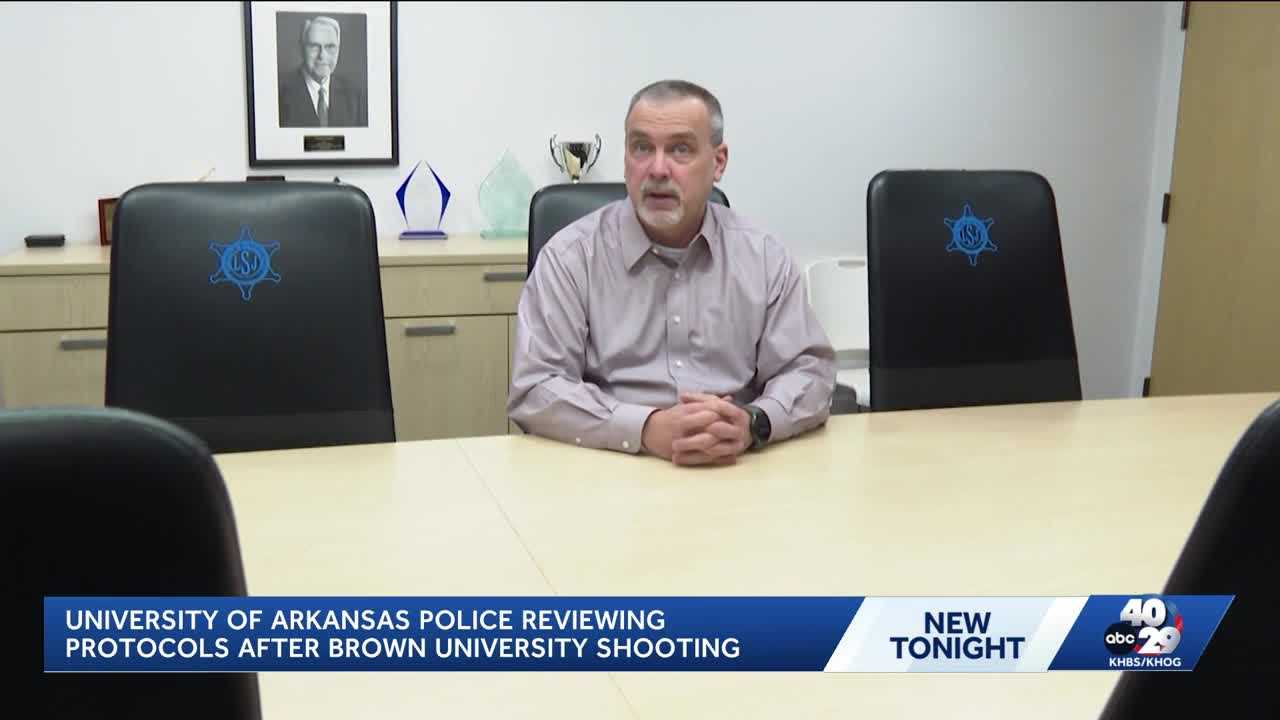
According to UAPD Assistant Chief Matt Mills, law enforcement leaders across the country maintain active communication channels, often utilizing group chats, to share information and coordinate responses as soon as major incidents are reported. “Just as soon as news breaks of an incident like the one at Brown,” Mills stated, “we’re talking about what sorts of precautions may need to be taken and if there are any local connections to the case.” This proactive approach ensures that campuses can quickly assess potential threats and implement necessary measures.

Stephanie Hood, a staff scientist in the biology department at the University of Arkansas and an alumna, expressed how the Brown University shooting resonated personally. Her sister attended nearby Johnson & Wales University in Providence, Rhode Island. “And, then I grew up in Massachusetts,” Hood shared. “So, when you hear Brown, and it’s such a prestigious, well-known university, you would think the security would be really high there. It’s just really disheartening.”
Mills confirmed that the Brown University shooting has been a significant point of discussion and concern for UAPD. “Absolutely,” he affirmed. “Any time you see something like that across the nation or across the world, it causes pause, and it causes us to look at our internal planning and see where we might shore up things. Where we could do things better or different.” This introspection is crucial for continuous improvement in campus safety strategies.
Learning from Past Incidents
UAPD actively monitors how both the public and law enforcement agencies respond to such events. This analysis helps refine their own potential response efforts. The university itself is acutely aware of the potential for disruptive incidents, having experienced a “swatting” call in August. This false report of an active shooter on campus led to widespread alarm and evacuation procedures for students and staff.
“We review that,” Mills said, referring to the August incident. “Still reviewing that from that incident in August. Increasing our education across campus with the Avoid, Deny, and Defend mentality. Making sure that everybody understands what this is, what it means, and how they can respond to a similar situation.” This educational initiative aims to equip the campus community with vital survival strategies in the face of an active threat.
The “Avoid, Deny, Defend” strategy is a widely recognized approach to active shooter situations:
- Avoid: This is the primary directive. If there is a safe escape path, evacuate the area immediately. This may involve breaking windows if necessary to create an exit.
- Deny: If avoidance is not possible, the next step is to deny access to the attacker. This involves securing doors, locking them, silencing cell phones, and then contacting emergency services (911).
- Defend: This is considered a last resort when confronted with an immediate threat. It involves using any available objects as improvised weapons to distract, disrupt, or incapacitate the attacker.
Hood acknowledged the inherent challenges in policing a large university campus. “It’s difficult to police the entire university,” she commented. “There’s thousands and thousands of individuals here every day, coming and going. So, it’s a hard job.”
The Complexity of Swatting Investigations
Regarding the ongoing investigation into the August swatting call, Assistant Chief Mills highlighted the intricate nature of such cases. He explained that these investigations can be lengthy and complex, often leading authorities down multiple investigative paths. “He says there can sometimes be local, state, and federal cases tied together, which can prolong an investigation.” The collaborative effort required across different jurisdictions underscores the challenges in bringing perpetrators of such hoaxes to justice.
The University of Arkansas is roughly 1,500 miles away from where the shooting happened at Brown University, but it still put campus police on alert.
UAPD assistant chief Matt Mills says law enforcement leaders typically start a group chat just as soon as news breaks of an incident like the one at Brown. Mills says they talk about what sorts of precautions may need to be taken and if there are any local connections to the case.
Stephanie Hood is a staff scientist in the biology department at the University of Arkansas. She’s also a U of A graduate. She says the recent shooting at Brown University hits close to home for her. Her sister went to nearby Johnson and Wales University, which is also in Providence, Rhode Island.
“And, then I grew up in Massachusetts,” Hood said. “So, when you hear Brown, and it’s such a prestigious, well-known university, you would think the security would be really high there. It’s just really disheartening.”
Mills says the Brown University shooting has certainly been on UAPD’s radar.
“Absolutely,” Mills said. “Any time you see something like that across the nation or across the world, it causes pause, and it causes us to look at our internal planning and see where we might shore up things. Where we could do things better or different.”
Mills says UAPD always watches to see how both the public and law enforcement respond to something like the shooting at Brown to help improve potential response efforts here.
Of course, the university is all too aware of what can potentially happen. Just this past August, the U of A was the victim of a swatting call. It sent students and staff scrambling for safety after a false report of an active shooter on-campus.
“We review that,” Mills said. “Still reviewing that from that incident in August. Increasing our education across campus with the Avoid, Deny, and Defend mentality. Making sure that everybody understands what this is, what it means, and how they can respond to a similar situation.”
Avoid means to leave the area immediately. If necessary, break windows to do so.
Deny means that if you cannot avoid it, you should lock your door. Then, silence your phone and call 911.
Defend is a last resort. Use any objects around you to distract or interrupt the actions of the attacker.
“It’s difficult to police the entire university,” Hood said. “There’s thousands and thousands of individuals here every day, coming and going. So, it’s a hard job.”
As for the swatting call investigation, Assistant Chief Mills says something like that can often take a long time because it can lead authorities down a number of different pathways. He says there can sometimes be local, state, and federal cases tied together, which can prolong an investigation.