
Governor Bago Cites Second-Term Ambitions as Hindrance to Dismissing Underperforming Appointees
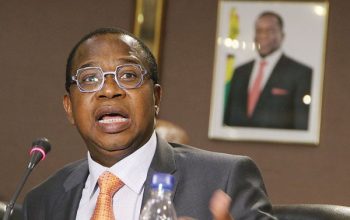
Niger State Governor, Mohammed Bago, has revealed that his aspirations for a second term in office are currently preventing him from making decisive personnel changes, specifically the dismissal of certain political appointees who he believes are not meeting performance expectations. The governor made these candid remarks on Friday during a ceremony marking the inauguration of new commissioners and the newly elected chairmen and vice-chairmen of local government areas within the state.
Governor Bago expressed a significant degree of frustration, lamenting that his focus on the upcoming election cycle has led to a reluctance to take necessary action. He articulated a strong belief that the current system, which allows for multiple terms, fosters complacency and inefficiency among those in political office.

A Case for Single-Term Governance to Combat Laziness
In an impassioned appeal, Governor Bago advocated for a shift towards a single-term tenure for both elected officials and political appointees. He posited that such a reform would serve as a powerful deterrent against laziness and would compel individuals to be more productive and impactful during their limited time in service.
“I am an advocate of a single term of governance,” Governor Bago stated. “Everything in Nigeria is now being tied to politics. It’s unfortunate. There are things I would have done today, but I am deferring them until after the election.”
He elaborated on the immediate consequences of this political calculus, explaining, “I want to sack some people who are not working, but I cannot because of the election. They have failed their exams several times and could not be promoted, yet they remain a burden on the system.” The governor’s sentiment underscores a perceived disconnect between the demands of effective governance and the political realities of seeking re-election.
The governor further emphasized his conviction that a single-term framework would foster greater decisiveness. “If I had a single term, I would have been more decisive than I am today. Some special advisers, board directors, and many others would have done their best because they would have just one shot in governance.” This perspective suggests a belief that the finite nature of a single term would create a sense of urgency and accountability.
Governor Bago concluded this line of reasoning with a poignant observation on the prevailing attitude towards progress: “Everybody is procrastinating about tomorrow, tomorrow, tomorrow. When is tomorrow? Our tomorrow is today.” This statement serves as a stark reminder of the need for immediate action and a departure from a culture of delay.
The Imperative for State and Community Policing
Beyond the internal dynamics of political appointments, Governor Bago also addressed critical issues of public safety. He voiced strong support for the establishment of state police forces and the implementation of community policing initiatives. He asserted that such decentralized policing structures would ultimately lead to a safer society compared to the current centralized policing model employed across the country.
“State Police is a reality,” Governor Bago declared. “We need to have community policing for social justice.” This call highlights a growing sentiment among some leaders for a more localized and responsive approach to law enforcement, one that is more deeply integrated with the communities it serves. The governor’s remarks suggest a desire for policing that is not only effective in crime prevention but also aligned with the principles of social justice and community well-being.