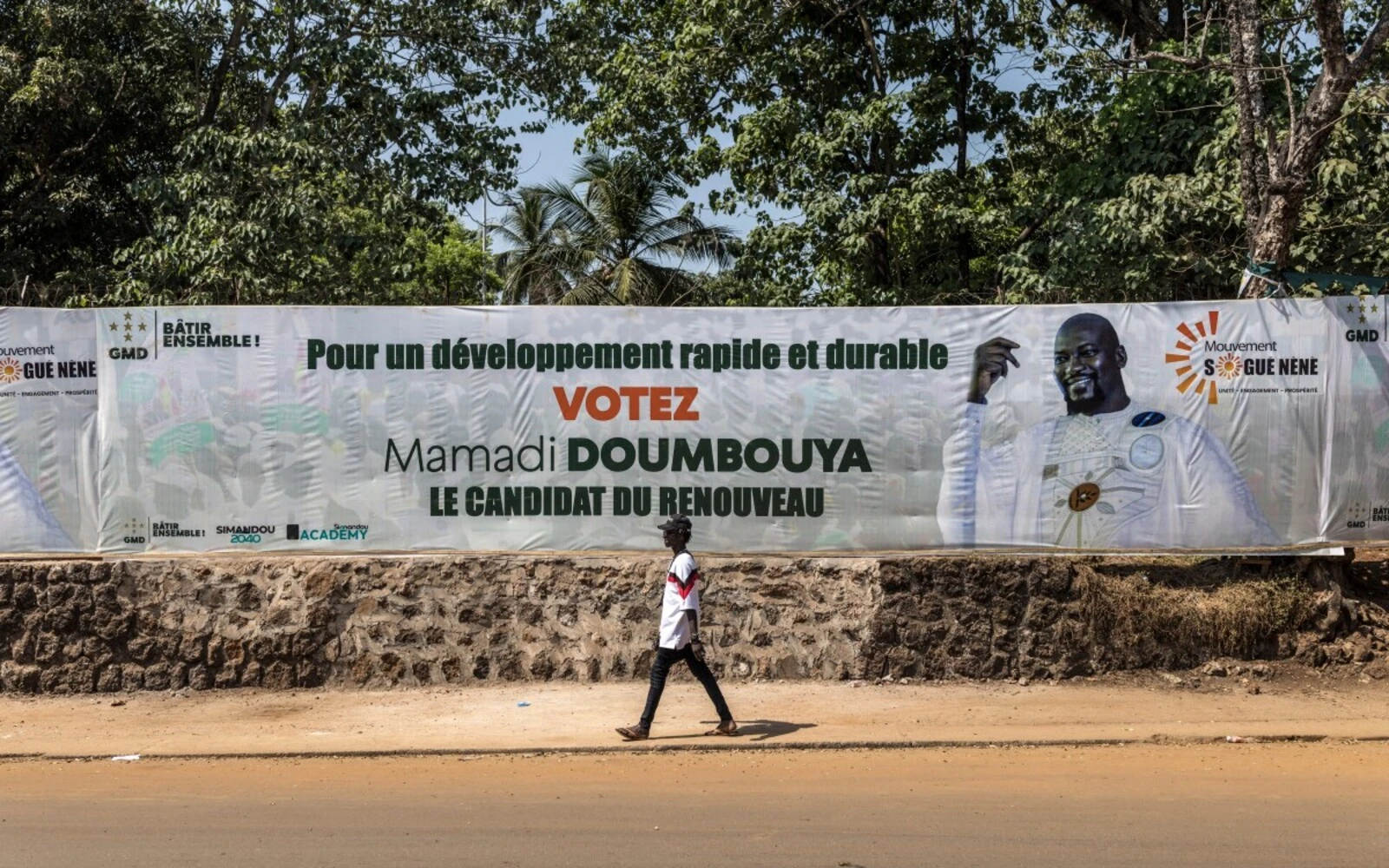

Guinea Heads to Polls: Military Leader Poised for Presidency Amid Resource Boom and Democratic Concerns
Guinea is holding a pivotal presidential election today, with interim leader Mamady Doumbouya widely anticipated to secure a seven-year mandate, signalling a transition back to civilian rule following his 2021 military coup. Doumbouya, a former special forces commander estimated to be in his early 40s, faces a field of eight other candidates, none of whom present a significant challenge to his established power. Notably, ousted president Alpha Condé and prominent opposition figure Cellou Dalein Diallo remain in exile, further shaping the political landscape.
The election takes place against a backdrop of immense economic potential for Guinea. The nation boasts the world’s largest bauxite reserves and holds the richest untapped iron ore deposit at Simandou, a project officially launched last month after years of protracted delays. Doumbouya has actively claimed credit for accelerating the Simandou initiative and ensuring that Guinea reaps substantial benefits from its mineral wealth. This proactive stance on resource nationalism, a trend also observed in neighbouring Mali, Burkina Faso, and Niger, has resonated positively with the Guinean populace.

Furthermore, Doumbouya’s government has taken decisive action in managing the country’s resources. Earlier this year, the license of EGA subsidiary Guinea Alumina Corporation was revoked following a refinery dispute, with its assets subsequently transferred to a state-owned enterprise. This move towards greater state control over vital industries has bolstered Doumbouya’s popularity, particularly among the youth in a country where the median age hovers around 19.
“For us young people, Doumbouya represents the opportunity to send the old political class into retirement,” commented Mohamed Kaba, a mechanic in Conakry. While acknowledging the current prevalence of corruption, Kaba expressed hope that these issues would be addressed under the new leadership.
Doumbouya’s Expected Consolidation of Power
Analysts suggest that an electoral victory for Doumbouya will likely serve as a platform to further solidify his authority and that of the military within Guinea’s governance structure. Benedict Manzin, lead Middle East and Africa analyst at risk consultancy Sibylline, noted, “In particular he is likely to position his allies and associates to benefit from the expected economic boom associated with the launch of production at Simandou.” This suggests a potential for patronage networks to emerge, linked to the lucrative mining ventures.
Navigating the Transition Charter and Constitutional Changes
A significant development preceding this election was the adoption of a transition charter in the wake of the coup, which initially barred junta members from participating in electoral contests. However, in September, Guinean citizens overwhelmingly endorsed a new constitution. This revised legal framework not only removed the disqualification clause for junta members but also extended presidential terms to seven years and established a Senate, fundamentally altering the country’s governance architecture. Provisional turnout figures indicated a high level of participation at 86.42%, though these numbers have been contested by opposition figures.
Restrictions on Opposition and Concerns Over Electoral Credibility
Despite the prospect of a return to civilian rule, the electoral campaign period has been marked by significant restrictions on political debate and opposition activity. Civil society organisations have voiced concerns over the government’s alleged suppression of protests, limitations on press freedom, and the curtailment of opposition movements.
Volker Turk, the UN High Commissioner for Human Rights, expressed his reservations on Friday, stating that the campaign period “has been severely restricted, marked by intimidation of opposition actors, apparently politically motivated enforced disappearances, and constraints on media freedom.” These conditions, he warned, “risk undermining the credibility of the electoral process.” The Guinean government has not yet responded to requests for comment regarding these allegations.
Doumbouya himself maintained a low profile throughout the campaign, delegating campaign duties to his surrogates. At a closing rally in Conakry on Thursday, he opted against delivering a speech, instead participating in a dance with his wife alongside Congolese star Koffi Olomide. He was seen wearing a white baseball cap and a track jacket bearing the insignia of his movement, “Generation for Modernity and Development.”
With approximately 6.7 million registered voters, provisional results are anticipated within 48 to 72 hours following the closure of polling stations. The outcome of this election will be closely watched, not only for its implications for Guinea’s political future but also for its potential impact on regional stability and the equitable distribution of wealth from the nation’s burgeoning resource sector.