
Opposition Legislators Raise Red Flags Over Mutapa Investment Fund’s Tax Exemption
Opposition members of Parliament have voiced strong objections to the inclusion of the Mutapa Investment Fund (MIF) within the Finance Bill, alleging a deliberate attempt to grant it an unwarranted income tax exemption. Critics argue that this move circumvents proper legislative scrutiny and operates under a veil of secrecy, hindering public accountability.
The Mutapa Investment Fund, Zimbabwe’s sovereign wealth fund, is tasked with driving strategic investments aimed at fostering national growth and economic prosperity. Originally established in 2014 as the Sovereign Wealth Fund of Zimbabwe, it underwent a rebranding to the Mutapa Investment Fund in September 2023 through Statutory Instrument 156 of 2023.

A significant point of contention is the MIF’s exemption from standard public procurement procedures, a status confirmed in General Notice 1546 of 2023. This exemption sets it apart from other state-owned enterprises, raising questions about transparency and fairness.
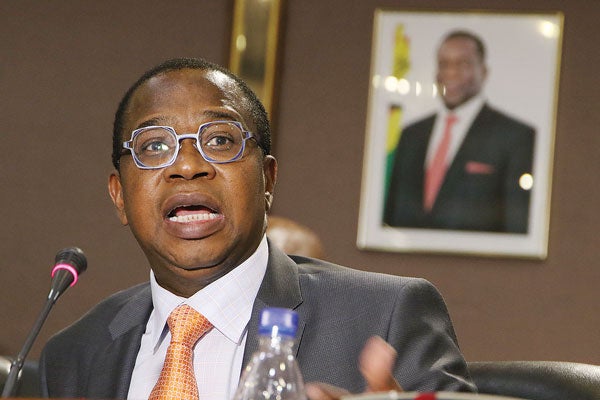
During a recent parliamentary session, opposition legislator Casten Matewu directly challenged Finance Minister Mthuli Ncube regarding the inclusion of the MIF in the Finance Bill. Matewu highlighted the fund’s existing exemption from certain operational activities, including procurement, and questioned the rationale behind further tax concessions.
“The Mutapa Investment Fund is already exempt from certain activities such as procurement,” Matewu stated. “The way they do business is totally different from any other parastatal in the government. Now, can the Honourable minister convince us why the Mutapa Investment Fund should not be paying income tax?”
Echoing these concerns, another opposition lawmaker, Corban Madzivanyika, proposed a conditional exemption. He suggested that if the MIF were to be exempted from income tax, Parliament should mandate the submission of quarterly or annual audited financial statements.
“What I wanted to add is, is it possible Honourable minister, that if we accept the Mutapa Investment Fund to exempt the income received by the Mutapa Investment Fund, can we put an additional clause to say, provided that the Mutapa Investment Fund shall send, every quarter, to Parliament, the audited financial statements, or every year, the audited financial statements?” Madzivanyika inquired.
He elaborated on his apprehension, stating, “It may sound better than to exempt an institution that you know does not declare any dividend: no financial statements, nothing, even on its own website. To me, it defies logic. It would be like putting money into the drain.”
Opposition legislator Edwin Mushoriwa also demanded clarity on the legislative process. He pointed out that amendments to the MIF, following its name change from the Sovereign Wealth Fund, had been incorporated into Finance Bills rather than being presented as standalone legislation.
“The other thing the Honourable minister needs to explain to this august House is that earlier, during the second reading, we were asking if you recall, since we changed the Sovereign Wealth Fund to the Mutapa Investment Fund, no Bill has come before this House, and we have been using the Finance Bills to make these amendments,” Mushoriwa observed.
He pressed further, asking, “So, the question that I need you to answer and explain to us is, what purpose is the clandestine way of bringing the Mutapa Investment Fund into the Finance Bill? What purpose does it serve in this Finance Bill?”
In his defence, Minister Ncube maintained that integrating amendments related to the Mutapa Investment Fund into the Finance Bill was a standard practice and not an attempt to conceal its operations.
“We have argued that we would not want to have it pay income tax if it is unnecessary, because the subsidiaries are already paying taxes,” Ncube explained. “They are not exempt as individual entities. It is just about the top-level fund, not all the entities under it.”
The Mutapa Investment Fund, named after a historical kingdom, has acquired a significant portfolio, taking over the shares of over 20 state-owned enterprises. Among its most valuable assets is Kuvimba Mining House, which reportedly manages approximately a dozen mining operations spanning gold, lithium, nickel, and platinum. The opacity surrounding the fund’s operations and the recent tax exemption have intensified calls for greater transparency and parliamentary oversight.