
Kenya Reflects on 62 Years of Republic Amidst Economic Realities and Regional Tensions
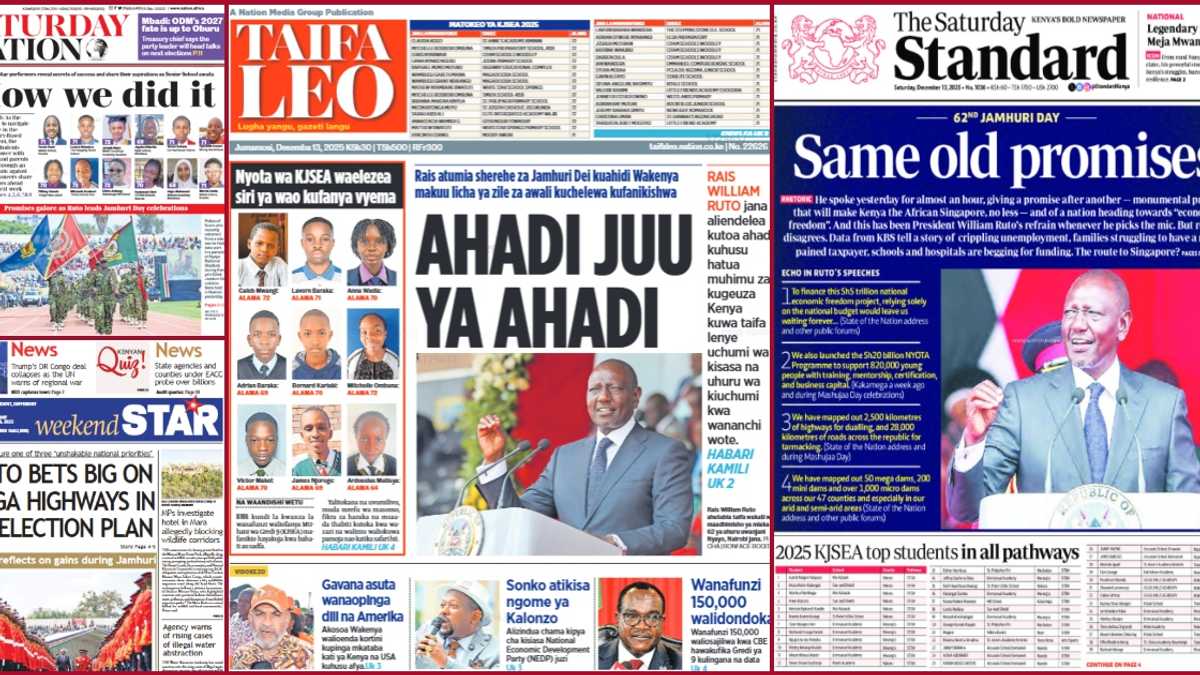
Kenya recently marked 62 years since becoming a republic, a significant milestone celebrated with national pride and reflection. Jamhuri Day, observed on December 13th, saw widespread coverage in local media, highlighting the pomp and ceremony, but also delving into the underlying economic challenges and political discourse. Beyond the national celebrations, attention was also drawn to the results of the 2025 Kenya Junior School Education Assessment, with analyses focusing on performance trends.
Presidential Address: A Vision of Transformation and the Echoes of Past Promises
President William Ruto’s address during the 62nd Jamhuri Day celebrations at Nyayo National Stadium, as reported by The Saturday Standard, invoked themes of unity, resilience, and economic transformation. While acknowledging Kenya’s journey since independence and paying tribute to prominent figures, including the late Raila Odinga, the speech has been met with scrutiny regarding the gap between its aspirational rhetoric and the prevailing realities on the ground.

President Ruto presented an ambitious blueprint for Kenya’s economic future, aiming to elevate the nation to a first-world status, drawing parallels with Singapore’s developmental trajectory. This vision is underpinned by a projected KSh5 trillion development plan, focusing on large-scale infrastructure projects, water resource management through irrigation dams, enhanced energy production, and innovative financing models. The administration also defended its Bottom-Up Economic Transformation Agenda, highlighting achievements such as farmer subsidies, the recruitment of 100,000 teachers, affordable housing initiatives, and the Hustler Fund as key accomplishments.
However, a more critical examination suggests that despite the optimistic tone of the presidential address, Kenya continues to face significant economic headwinds. Persistent high living costs and a youth unemployment rate estimated at 35% remain pressing concerns. Furthermore, the nation’s public debt has surpassed 70% of its Gross Domestic Product, presenting a considerable fiscal challenge.
East African Peace Accord Falters Amidst Renewed Conflict
The fragile peace that was intended to be cemented by the Washington Accord, brokered with the involvement of U.S. President Donald Trump’s administration, has reportedly unraveled, plunging eastern regions of the Democratic Republic of Congo (DRC) back into severe conflict. The Weekend Star detailed how, just a week after Presidents Félix Tshisekedi of the DRC and Paul Kagame of Rwanda finalized the agreement under U.S. mediation, with Kenyan President William Ruto serving as a guarantor, M23 rebels, allegedly backed by Rwanda, launched a significant offensive in South Kivu. This resurgence of violence has dashed hopes for a stable resolution.
Reports from the United Nations indicate a devastating escalation, with over 400 fatalities and more than 500,000 individuals displaced in a matter of days. This marks the most violent outbreak since the M23 rebels reappeared approximately three years ago. M23 fighters are reported to have captured the strategic town of Uvira, situated near the Burundi border, after advancing through several other locations, resulting in numerous casualties and forcing thousands of families to seek refuge.
The renewed hostilities have cast a long shadow over the credibility of the Washington Accord. The Trump administration had initially lauded the pact as a breakthrough in addressing Rwanda’s alleged support for armed groups. A critical observation is that the M23 was not a signatory to this particular agreement; instead, their involvement is linked to separate, U.S.-backed Doha talks. This structural disconnect, according to critics, significantly weakened the effectiveness of the accord.
Political Openness and the Legacy of a National Icon
Gachagua Advocates for Transparency in Political Dealings
Democracy for the Citizens Party (DCP) leader Rigathi Gachagua has publicly addressed criticisms regarding his outspokenness on political strategy, particularly before agreements are finalized. Saturday Nation reported that Gachagua maintains his commitment to open and honest politics, asserting his right to inform his supporters about his positions and plans. He dismissed suggestions that he divulges sensitive information, emphasizing that transparency is paramount and that his supporters deserve to be fully informed about decisions made on their behalf.
Gachagua articulated that leaders should openly declare their intentions to allow voters to make informed judgments. He stated, “I have heard people say that I should not give out my strategy or my secrets… there are no secrets. I’m an open book. I speak for the people who support me, and they have every right to know what I’m planning for them. I’m not the one to agree in secret. I will come out and declare to my supporters so that they know the kind of deal I am entering them into.”
Furthermore, Gachagua criticized the Kenya Kwanza administration, led by President William Ruto, suggesting that a lack of transparency in political dealings has been a significant failing of the current government. He argued that voters were not adequately informed about agreements reached during the 2022 campaign period and expressed his resolve not to repeat this approach.
The DCP leader also addressed a controversy surrounding remarks he made about a potential political arrangement with Wiper leader Kalonzo Musyoka, which had drawn criticism from within the opposition. Gachagua clarified that the agreement he referenced was a personal understanding between himself and Musyoka, not an exclusive pact that would disadvantage any particular party or community. He refuted claims that he suggested Nairobi parliamentary seats should be reserved for the Agikuyu community, stating that his words were misinterpreted. His intention, he explained, was to acknowledge Musyoka’s influence in Nairobi’s political landscape and the existing cooperation among opposition figures. Gachagua reiterated that the agreement is in place, and Musyoka has also confirmed plans for the two leaders to collaborate to enhance their political prospects in Nairobi.
Raila Odinga’s Enduring Influence Dominates Jamhuri Day Observances
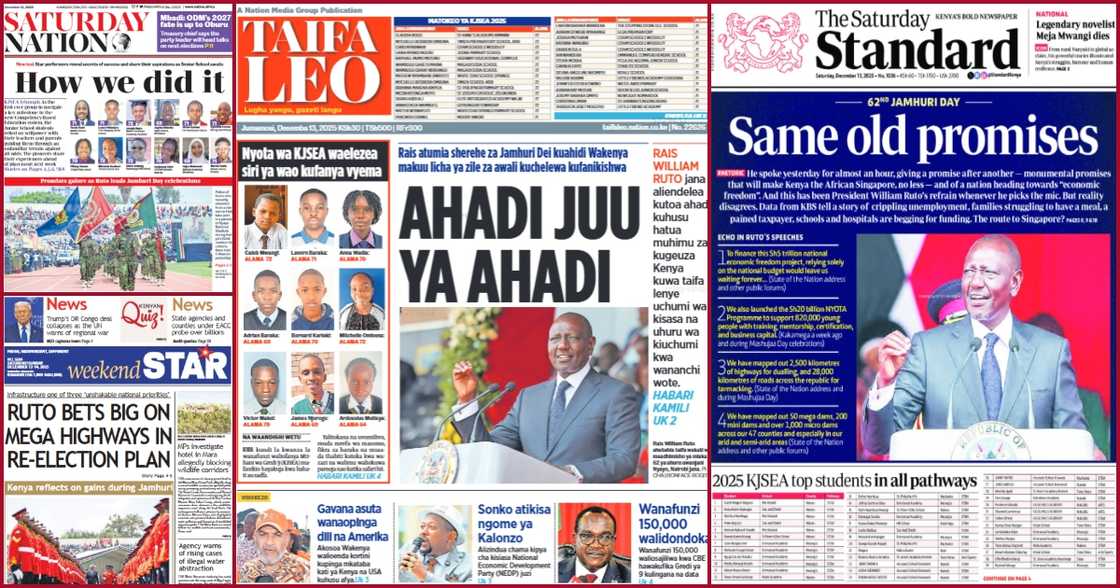
Despite his absence from the official dais at Nyayo National Stadium, the presence and influence of former Prime Minister Raila Odinga were palpable throughout Kenya’s 62nd Jamhuri Day celebrations, as reported by Taifa Leo. Every mention of his name elicited enthusiastic chants of “jowi” from the crowd, underscoring the deep emotional connection many Kenyans maintain with the veteran opposition leader.
Throughout the ceremony, Odinga’s legacy as a key figure in the struggle for freedom and democracy was consistently acknowledged by attendees, performers, and political leaders alike. For many present, the celebrations felt both incomplete without him and deeply symbolic of his enduring impact. Some individuals expressed that they attended not only to commemorate the nation’s republic status but also to honor a man whose political activism has significantly shaped their civic awareness.
President Ruto led the nation in a moment of silence, recognizing Raila Odinga as a cornerstone of Kenya’s democratic evolution. He highlighted Odinga’s courage and his unwavering belief in the power of the people, which he stated were instrumental in defining crucial periods of the nation’s history. Ruto praised Odinga’s lifelong advocacy for freedom, justice, and peaceful coexistence, urging Kenyans to let his spirit continue to guide the country’s progress.
The tributes extended beyond Kenya’s borders, with foreign dignitaries, including Ghanaian President John Mahama, conveying their condolences and recognizing Odinga as a distinguished African statesman. Locally, Nairobi Governor Johnson Sakaja proposed that President Ruto honor Odinga’s legacy by naming the nearly completed Talanta Stadium in his name. President Ruto appeared receptive to this suggestion, indicating that the venue could potentially be named the Raila Amolo Odinga International Stadium upon its completion.