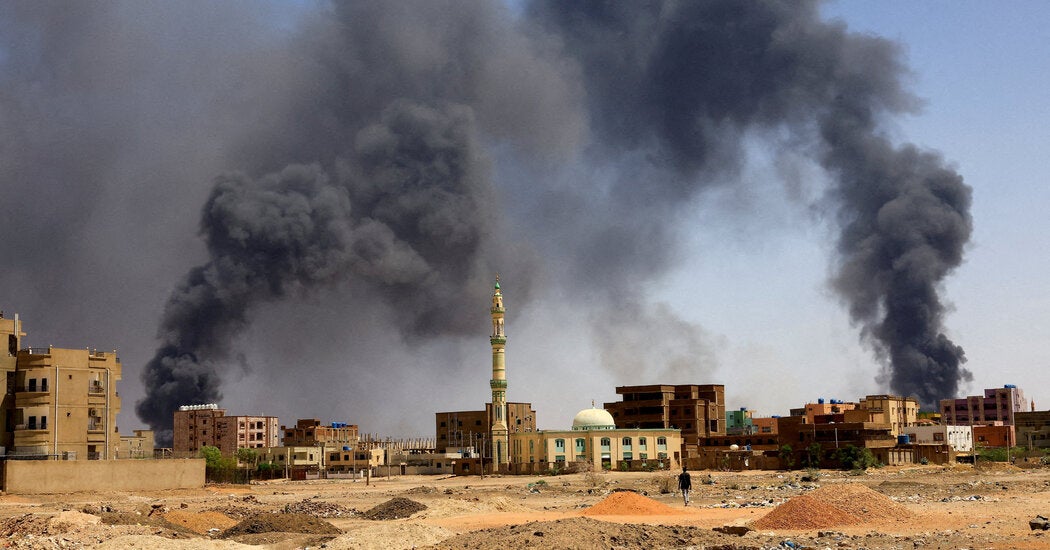

Congressional Scrutiny Mounts Over UAE’s Alleged Role in Fueling Sudan Conflict
Washington D.C. – A significant bipartisan chorus of criticism emerged on Capitol Hill this week, with United States lawmakers directly accusing the United Arab Emirates (UAE) of actively contributing to the devastating war in Sudan. During a pivotal hearing, members of the House Foreign Affairs Africa Subcommittee called for decisive action, urging the current administration to suspend arms sales to Abu Dhabi until it ceases alleged support for the paramilitary Rapid Support Forces (RSF).
The hearing, aptly titled “Stopping the Bloodshed,” saw Chairman Chris Smith and other representatives explicitly name the UAE, alongside Russia and Iran, as external actors exacerbating the conflict that has plunged Sudan into a humanitarian crisis since April 2023.

Allegations of Arms Flows and Illicit Gold Trade
Chairman Smith, in his opening remarks, did not mince words, stating, “We cannot turn a blind eye to the UAE’s role in supplying weapons that kill innocent Sudanese civilians.” He went on to allege a direct correlation between the “illicit flow of Sudanese gold” smuggled through the UAE and the funding of the RSF’s “war machine.” This assertion highlights a growing concern within Congress regarding the flow of foreign weaponry into Sudan, a situation made more egregious by an existing U.S. arms embargo specifically targeting the Darfur region.
Smith made a direct appeal for presidential intervention, suggesting that President Trump should personally contact UAE leadership to demand an immediate cessation of support. “Delay is denial. More people will die tomorrow,” he warned, underscoring the urgency of the situation. Furthermore, he advocated for the designation of the RSF as a Foreign Terrorist Organization (FTO), a move that would impose severe sanctions and further isolate the group.
Criticisms of Administration’s Arms Deal Approvals
Ranking Member Sarah Jacobs echoed the strong condemnation, expressing dismay at the administration’s decision to bypass a congressional hold in May, which subsequently approved a substantial $1.4 billion arms sale to the UAE. This sale reportedly included crucial components for helicopters and F-16 fighter jets.
“The UAE… is the main backer of the RSF and has made it possible for its genocide to take place,” Jacobs declared. Her argument centered on the perceived contradiction of the U.S. continuing to supply military equipment to Abu Dhabi while ostensibly seeking to de-escalate the violence. She contended that instead of leveraging its position to halt the bloodshed, the U.S. has, in effect, facilitated the ongoing conflict.
UAE’s Firm Denial and Counterarguments
In response to the mounting accusations, the UAE Embassy in Washington released a firm statement prior to the hearing, categorically denying any involvement in supporting the RSF or other warring factions in Sudan. The embassy asserted that there is “no substantiated evidence” to back the claims and characterized such allegations as attempts to “misrepresent the facts and distract from the urgent need for a ceasefire and for accountability among those perpetrating violence on the ground.”
The statement further emphasized the UAE’s consistent advocacy for a comprehensive arms embargo across Sudan. To support their position, the embassy referenced a United Nations Panel of Experts report from April 2025, which they claim provides evidence that the Emirates have not supplied military aid to the combatants.
Diplomatic Leverage and Human Rights Concerns
Despite the UAE’s denials, State Department Deputy Assistant Secretary Vincent Spera faced persistent questioning during the hearing regarding the U.S. administration’s strategy for utilizing its influence to curb alleged foreign interference. Spera maintained that diplomatic channels are being actively employed, stating that the U.S. is “exerting all the pressure we can.”
However, witnesses from human rights organizations offered a more stark assessment. Nicole Widdersheim, Deputy Washington Director at Human Rights Watch, described the UAE’s alleged involvement as the “worst-kept diplomatic secret.” She cautioned that even if U.S. weapons are not directly found in Sudan, arms sales to the UAE could enable the Gulf nation to divert older stockpiles to the conflict zone.
“The number one thing you must do is you must cut off the resources for the people who are committing the mass atrocities,” Widdersheim urged the committee, highlighting the critical need to sever financial and material support for those responsible for widespread human rights abuses.
Broader Geopolitical Landscape of the Sudan Conflict
The congressional hearing also cast a spotlight on other foreign actors implicated in the Sudanese crisis. Chairman Smith drew attention to recent actions by the U.S. Treasury Department, which announced sanctions targeting a Colombian-led network of mercenaries fighting for the RSF. He also highlighted the “malign influence” of Russia, noting its strategic interest in establishing a naval base at Port Sudan. Furthermore, reports of Iranian drones bolstering the Sudanese Armed Forces (SAF) were also brought to the committee’s attention.
Concluding his remarks, Smith painted a grim picture of Sudan’s current predicament: “Sudan has become a playground for foreign powers while the people serve as collateral damage.” This sentiment underscores the complex geopolitical dynamics at play and the profound human cost borne by the Sudanese population amidst this protracted conflict.