
Navigating Unlawful Orders: Military Commanders’ Dilemma and Emerging Guidance
The question of how a military commander should respond when faced with a potentially unlawful order is a complex and increasingly relevant one. Recent discussions among top military legal advisors suggest a nuanced approach, emphasizing consultation and, in some circumstances, a path toward separation from service rather than direct confrontation.
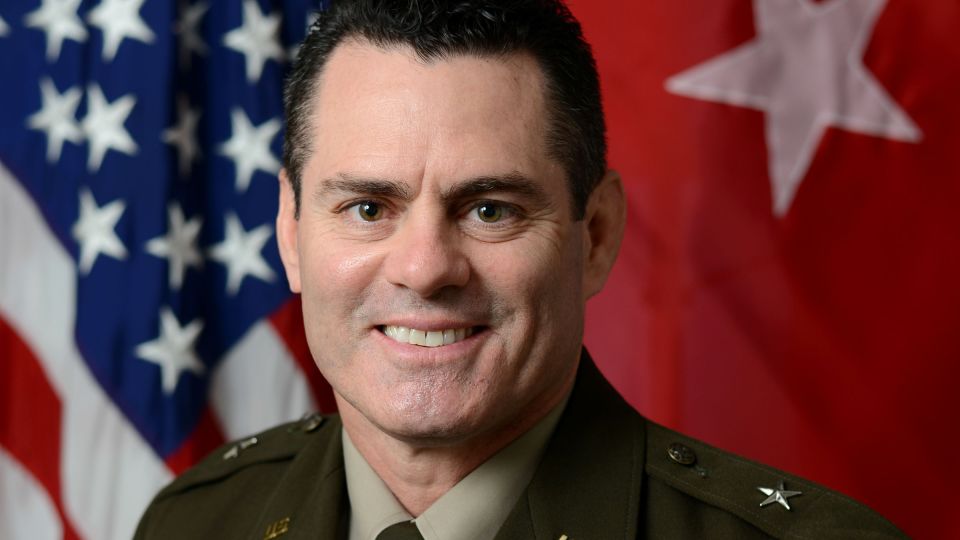
This guidance, previously undisclosed, was reportedly shared by Brig. Gen. Eric Widmar, the senior legal counsel for the Joint Chiefs of Staff, with Joint Chiefs Chairman Gen. Dan Caine in November. The impetus for this discussion stemmed from a video featuring six Democratic lawmakers publicly advocating for U.S. troops to disobey illegal orders. General Caine, seeking clarity on the criteria for identifying unlawful orders and the appropriate response, inquired about the latest directives.

Sources familiar with the exchange indicate that General Widmar advised commanders to consult their legal advisors if they harbored any doubts about an order’s legality. However, if a commander ultimately determined an order to be unlawful, the recommended course of action was to consider requesting retirement.
The Shadow of Doubt: Counternarcotics Operations Under Scrutiny
This guidance arrives at a critical juncture, as the legality of U.S. military counternarcotics operations in the Caribbean and Pacific Oceans has come under intense scrutiny. Specifically, a “double-tap” strike on September 2, which reportedly targeted survivors of an initial attack, has raised significant questions about adherence to international law and rules of engagement.
While General Caine does not hold a direct command position in the operational chain, his role as Chairman of the Joint Chiefs of Staff places him at the forefront of presenting military options to the President, often to a greater extent than the Secretary of Defense. The Joint Staff declined to comment on this matter.
The early retirements of several senior officers who had reportedly voiced concerns about these boat strikes, including former U.S. Southern Command commander Adm. Alvin Holsey and Lt. Gen. Joe McGee, former director for Strategy, Plans, and Policy on the Joint Staff, have added to the ongoing discourse surrounding accountability and dissent within the military.
A Divided Landscape: Retirement vs. Dissent
General Widmar’s advice was intended to equip General Caine for discussions with senior military officials, especially in light of the public attention generated by the lawmakers’ video and the ensuing national debate.
A separate official with knowledge of military legal advice noted that it is not uncommon for legal counsel to suggest service members consider leaving the military if they are uncomfortable with a directive, though this is typically handled on a case-by-case basis.
However, other current and former U.S. officials, including those who served as military lawyers in the Judge Advocate General (JAG) corps, argue that broadly encouraging service members to retire quietly, rather than voicing objections to potentially illegal orders, risks fostering a culture of silence and undermining accountability.
“A commissioned officer has every right to say, ‘this is wrong,’ and shouldn’t be expected to quietly and silently walk away just because they’re given a free pass to do so,” stated a former senior defense official.
The current administration has seen an unusually high rate of senior officer turnover, with over a dozen having been fired or retired early since the current administration took office. In a September speech, the Secretary of Defense directed officers to “do the honorable thing and resign” if they disagreed with his vision for the department.
Legal experts distinguish between disagreeing with military policy and perceiving an order as illegal. Dan Maurer, a retired Army lieutenant colonel and former JAG lawyer, believes the guidance, as described, misinterprets a service member’s duty. He asserts that the proper protocol for an unlawful order is to disobey it, if confident in its illegality, after attempting to persuade the order-giver to modify or halt it, and then reporting the incident through the chain of command.
Maurer emphasized that if the guidance does not explicitly inform service members of their duty to disobey unlawful orders, it deviates from established professional military ethics and law.
Defining “Patently Illegal”: The My Lai Precedent
General Widmar reportedly defined a “patently illegal” order as one that is so obvious in its illegality that an ordinary person would instinctively recognize it as a violation of domestic or international law. The My Lai massacre in Vietnam serves as a frequently cited example of such a scenario. However, the guidance provided, according to sources, focused on retirement as a response to an unlawful order, without explicitly mentioning the duty to disobey.
“It’s a very safe recommendation in this current political environment,” commented the former senior defense official. “But that doesn’t make it the right or ethical one.”
Experts in civil-military relations have acknowledged retirement as a viable option for officers with policy objections, while also noting its inherent costs. In a recent article, Peter Feaver, a political science professor at Duke University, and Heidi Urben, a former Army intelligence officer, suggested that opting for retirement, or “quiet quitting,” allows officers with professionally grounded objections to depart without directly challenging civilian control.
Feaver and Urben also argued that while officers should avoid resigning in protest or initiating confrontations, they should “speak up” and exhibit “moral courage” when military values are threatened, even if it means facing dismissal. They warned that “complete silence can be corrosive to good order and discipline and signal to the force that the military’s professional values and norms are expendable.”
Maurer further elaborated that the advice to retire can effectively silence individuals permanently, as retirees remain subject to the Uniform Code of Military Justice, which restricts speech and conduct that would be constitutionally protected for civilians.
Constitutional Authority and Executive Opinions
These constraints have been evident in the Pentagon’s investigation into Sen. Mark Kelly, a retired Navy captain and one of the lawmakers featured in the video. This investigation was reportedly a catalyst for General Caine seeking legal advice.
Amidst ongoing questions about the legality of the boat strike campaign, General Widmar also reportedly advised General Caine that Article II of the Constitution grants the President authority to authorize lethal force for national defense, unless hostilities escalate to full-blown war, which would necessitate Congressional approval.
Regarding the legality of presidential orders themselves, General Widmar indicated that such determinations fall under the purview of the Justice Department’s Office of Legal Counsel. This is due to an executive order that designates the President’s and Attorney General’s legal opinions as controlling for all executive branch employees, including U.S. troops.
The Office of Legal Counsel previously determined that the President could legally order strikes on suspected drug boats posing an imminent threat to the United States.
Since September 2, the U.S. military has conducted numerous strikes in the Caribbean and eastern Pacific, resulting in the deaths of at least 99 individuals. The administration has characterized these targets as “narcoterrorists” posing a direct threat to the U.S. However, public evidence of narcotics on the targeted vessels or their affiliation with drug cartels has not been provided.
Members of Congress have been informed in private briefings that Pentagon officials may not always know the identities of all individuals on board a vessel before a strike. Instead, military officials reportedly only need to confirm an affiliation with a cartel or criminal organization to authorize a target.
Critics, including members of Congress, legal experts, and human rights organizations, argue that individuals engaged in drug trafficking should be apprehended rather than summarily killed, a practice consistently carried out by the Coast Guard when encountering suspected drug-trafficking vessels.