


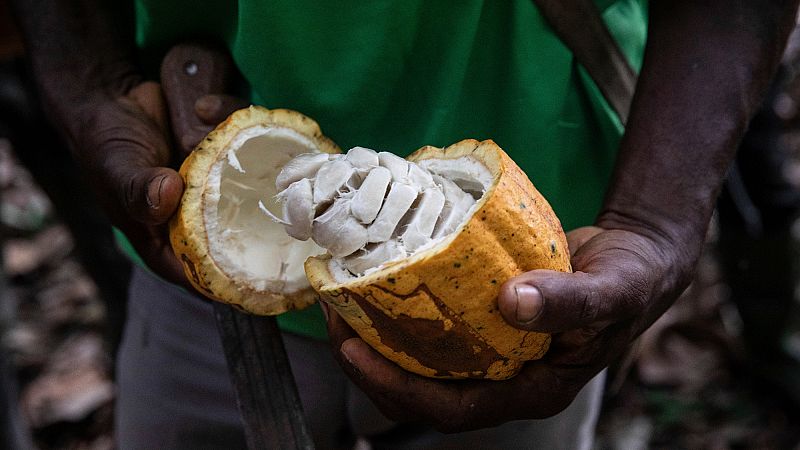

The Environmental Impact of Cocoa Production
Cocoa production has a significant impact on the environment, particularly in regions where tropical forests are cleared to make way for new plantations. This deforestation leads to severe environmental damage, including loss of biodiversity and disruption of local ecosystems. A recent investigation by The Initiatives for Community Development and Forest (IDEF) Conservation Association, an Ivorian nonprofit organization, highlights the extent of this issue in Liberia.
The report underscores the urgent need for action from the European Union, which is the world’s largest importer of cocoa. The EU’s role in the cocoa industry makes it a key player in addressing the environmental consequences of deforestation linked to cocoa production.

Why Producers Are Turning to Liberia
The Ivory Coast is the leading exporter of cacao beans globally. However, decades of reliance on the cocoa industry have caused environmental degradation. Deforestation and the use of chemical fertilizers have weakened the soil, prompting producers to seek alternative locations for their plantations. One such location is Liberia, which has become a hotspot for new cocoa farming activities.
Despite the fact that deforestation is illegal under Liberian law, the establishment of new cocoa plantations continues. The IDEF report reveals that over 38,000 people have been registered in the Grand Gedeh region, which borders the Ivory Coast. According to Global Forest Watch, Liberia lost 162,000 hectares of natural forest in 2024 alone.
The Scale of Deforestation in Liberia
The IDEF report found “massive” levels of deforestation in Liberia due to cocoa production. In the Grand Gedeh region, nearly 500,000 hectares of primary forest were cleared and converted into cocoa plantations since 2020. This represents a significant increase compared to previous reports.
Bakary Traoré, the Executive Director of IDEF, emphasized the severity of the situation. “The scale of deforestation is colossal,” he stated in a press release. “In the localities we visited, all the families had ceded forest plots ranging from 50 to 300 hectares, compared to 8 or 10 hectares in our previous report last year.”
Additional Concerns: Human Trafficking and Child Labour
The report not only highlights environmental harm but also points to the growing trend of human trafficking, exploitation, and child labor in the cocoa industry. Many younger individuals are being brought to work on cocoa production and land clearing, raising serious ethical concerns.
Europe’s Role in the Industry
As the world’s largest importer of cocoa, the European Union plays a crucial role in the global cocoa supply chain. The EU is also a major producer of finished chocolate products. In 2023, the EU introduced a new deforestation regulation (EUDR) aimed at curbing deforestation by prohibiting the marketing of products that contribute to deforestation.
This regulation targets several commodities, including coffee, cocoa, rubber, palm oil, soy, beef, and timber. If effectively implemented, the EUDR could help reduce deforestation linked to cocoa production. However, the implementation of the regulation has been delayed until December 2026, which the report’s authors describe as “extremely worrying.”
Traoré criticized the EU’s delay, stating, “Even though Europe could play a key role in saving these forests and helping these communities thanks to its regulations on deforestation, it is failing to do so because of its constant procrastination.” He warned that while Europe hesitates, there will be no forests left in Liberia, and it will be too late.
Conclusion
The findings of the IDEF report highlight the urgent need for action to address the environmental and social impacts of cocoa production in Liberia. As the EU continues to grapple with the implementation of its deforestation regulations, the situation on the ground remains critical. The international community must work together to ensure sustainable practices that protect both the environment and the rights of local communities.

