



Political Turmoil in Japan
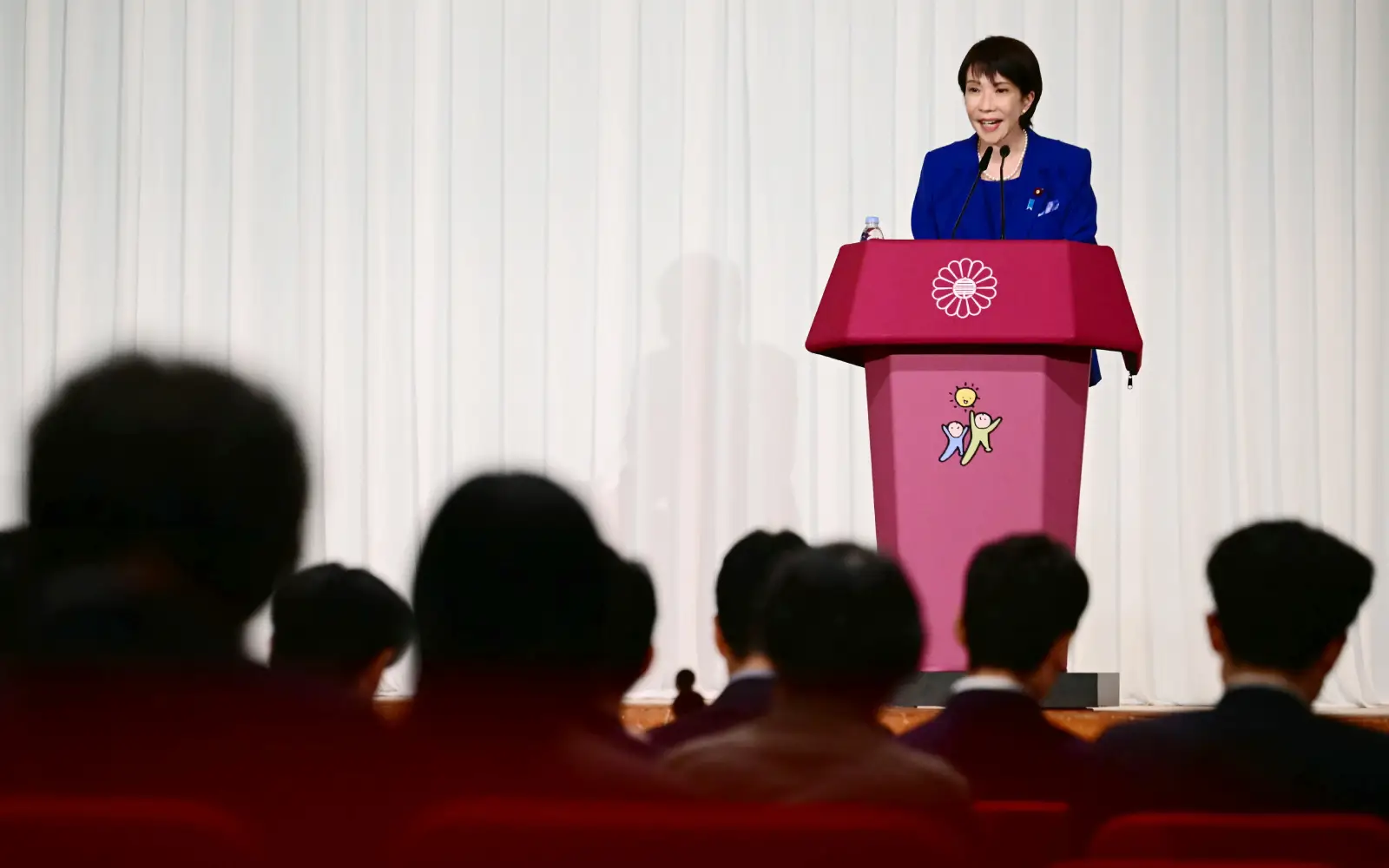
Tokyo has witnessed a significant political shift as Japan’s ruling coalition faced a major crisis. The junior partner, Komeito, decided to withdraw from the alliance, which had been governing the country for over two and a half decades. This move has cast doubt on Sanae Takaichi’s aspirations to become the first woman prime minister of Japan.
Takaichi recently assumed the leadership of the Liberal Democratic Party (LDP) just days before this development. She was anticipated to be confirmed by parliament as the new premier this month. However, Komeito’s decision to end the long-standing alliance has plunged Japan into a new phase of political uncertainty.

The yen experienced a decline against the dollar following the announcement, and the Nikkei index closed down by 1%. Komeito party chief Tetsuo Saito expressed his stance during a press conference, stating that the LDP-Komeito coalition needs to revisit its strategies and reconsider their relationship. He emphasized that without clear and concrete cooperation from the LDP regarding their demands, it would be impossible for Komeito to support Takaichi’s nomination.
Saito also highlighted concerns about Takaichi’s responses to the LDP’s recent slush fund scandal, as reported by the media. Despite this, he mentioned that Komeito would continue to back budget plans and other legislative initiatives that both parties have prepared together.
A New Political Era?
Takaichi was expected to take over from Shigeru Ishiba, who led the coalition last year. However, Ishiba’s coalition lost its majority in both houses of parliament due to voter dissatisfaction with inflation and the LDP’s slush fund scandal. Komeito reportedly felt uneasy about Takaichi’s more conservative policies, including her regular visits to the Yasukuni shrine, which honors Japan’s war dead, including war criminals.
The last visit by a serving prime minister to the Yasukuni shrine was made by the late Shinzo Abe in 2013, which caused significant backlash from China and South Korea, as well as concern from Washington. Recent reports suggest that Takaichi might avoid visiting the shrine during the upcoming autumn festival, scheduled from October 17 to 19.
At 64 years old, Takaichi, who admires Margaret Thatcher, spoke about a “new era” after becoming the head of the LDP. She won a runoff leadership contest against Shinjiro Koizumi, who was seen as a more socially progressive candidate. Koizumi, at 44, could have been Japan’s youngest prime minister in modern times, representing a potential generational shift within the LDP.
Challenges Ahead
The LDP is currently losing support, with growing backing for smaller parties like the anti-immigration Sanseito. If Takaichi becomes the premier, she will face numerous complex challenges, including an aging population, geopolitical changes, a struggling economy, and increasing concerns about immigration.
One of Takaichi’s initial duties as the new leader will involve welcoming US President Donald Trump, who is expected to make a stopover in Japan in late October. This event highlights the importance of maintaining strong international relations, especially with the United States.

