


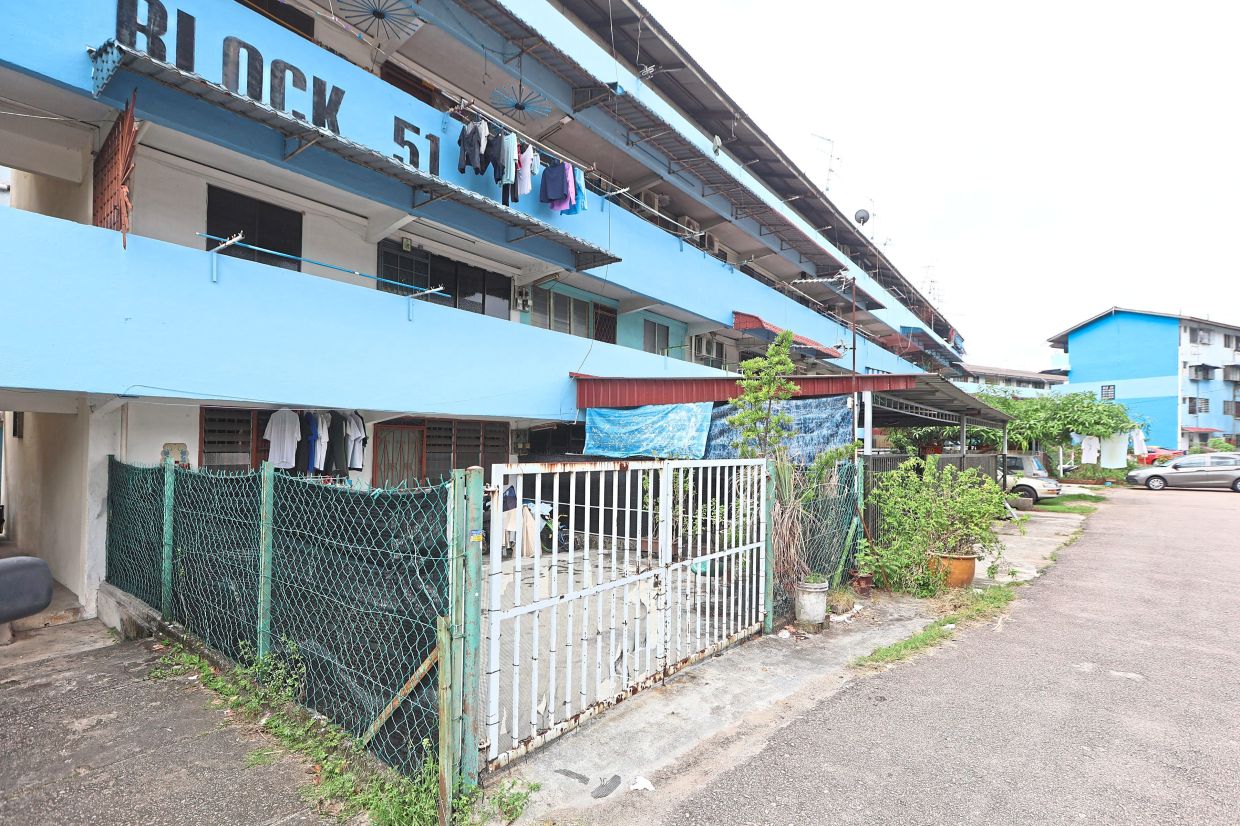

The Dangers of Unauthorized Modifications in Low-Cost Flats
Unauthorized modifications in low-cost flats have become a growing concern among property experts and local authorities. These changes not only violate strata laws but also pose serious safety risks, potentially compromising the structural integrity of aging buildings.
Assoc Prof Dr Muhammad Najib Razali, an expert in property economics and finance at Universiti Teknologi Malaysia (UTM), highlighted that many residents make alterations without professional guidance, leading to hidden structural dangers. He explained that these flats were originally designed with specific load limits and drainage systems in mind. When residents add concrete slabs, iron fencing, or rooftop extensions without consulting engineers, it can significantly alter the building’s load distribution.


“The additional weight from such modifications can cause cracks and water seepage over time, especially in older flats that may already be in poor condition,” he said. “Even if the structure appears stable now, long-term pressure on beams and columns can lead to serious damage.”
He warned that once water starts seeping into the building, the cost of repairs can skyrocket. Moreover, by that point, there may be no one willing to take responsibility for the damage.
Muhammad Najib pointed out that many occupants are unaware that strata ownership means shared ownership. “People often believe that because they own their unit, they can do anything they want with it,” he said. “However, any alteration that affects the building’s exterior or common property requires written approval from the management corporation or joint management body (JMB). Otherwise, it is considered an offense.”
He emphasized that enforcement alone is not enough; improving residents’ awareness is crucial. “The goal is not to punish but to protect lives,” he said. “Education helps residents understand the risks their actions pose to others.”
This issue becomes even more critical as Johor Baru moves towards its smart city vision. Illegal extensions can disrupt urban planning, digital mapping, and infrastructure systems. “Unapproved modifications interfere with digital utility mapping and safety sensors, undermining sustainability and public safety goals,” he added.
Muhammad Najib suggested that future housing policies should include legal and flexible renovation systems. This could involve digital permit applications or modular layouts that meet residents’ needs while ensuring safety.

Meanwhile, Datuk Mohd Jafni Md Shukor, chairman of the Johor housing and local government committee, clarified that local councils often delay enforcement due to a lack of formal complaints from JMBs or management committees. “Once a report is lodged, the council will act under the Street, Drainage and Building Act 1974, which allows stop-work or demolition orders,” he said. “A special Commissioner of Buildings task force could also be formed to monitor recurring issues.”
Mohd Jafni stressed that extensions or renovations at low-cost flats are strictly prohibited. “These flats are built on common property jointly owned under strata law,” he said. “Corridors, air wells, and open areas are shared spaces. Any added structures, such as kitchens, storerooms, or gates constructed in these areas, are illegal.”
He reminded residents that these rules exist to protect lives and the long-term safety of their homes and occupants. “It is essential for everyone to understand and respect these regulations to ensure a safe living environment for all.”

