
Governor’s Fiery Confrontation Dominates Parliamentary Session
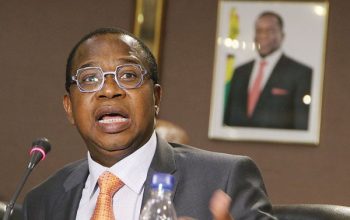
A first-term governor, already facing intense scrutiny over alleged administrative scandals, recently created a significant stir within a parliamentary committee. The governor, visibly agitated, openly confronted the officers accompanying him, levelling accusations of providing him with misleading information regarding county financial matters. He reportedly threatened to dismiss them upon their return to office. The committee chairperson intervened to de-escalate the volatile situation, attempting to calm the visibly emotional governor whose temper had flared considerably throughout the proceedings.
Following the incident, Members of Parliament (MPs) voiced strong criticism regarding the governor’s conduct. They cited concerns about alleged poor coordination, a perceived disconnect with his own team, and an excessive delegation of critical responsibilities. These issues, MPs warned, could exacerbate existing governance challenges within the county. The governor’s outburst has cast a further shadow over an administration already grappling with reputational damage.

Political Tensions Escalate Over County Official’s Fate
In a separate but equally charged parliamentary development, two lawmakers found themselves on the brink of a physical altercation stemming from a recent decision concerning a high-ranking county official. One MP, resolute in his demand for the official’s removal, directly confronted his colleague. The accuser alleged that his counterpart was engaged in collusion with political interests to shield the official from accountability. Furthermore, the MP levelled serious accusations, claiming that some parliamentarians had accepted bribes to sway the parliamentary verdict.
The colleague, however, vehemently refuted these claims. He countered by asserting that the accuser was himself collaborating with “dark forces” in a concerted effort to oust the official. This, he suggested, was part of a broader, politically motivated scheme specifically targeting the upcoming 2027 General Election. The heated exchange highlighted deep divisions and underlying political manoeuvring within the legislative body, raising concerns about the integrity of decision-making processes.
Underlying Governance Concerns Emerge
The incidents involving both the governor and the lawmakers underscore a worrying trend of potential governance weaknesses and escalating political infighting.
Accountability and Transparency: The governor’s alleged lack of awareness regarding county finances, coupled with his confrontational response, raises questions about the effectiveness of oversight mechanisms and the transparency of financial management within his administration. The accusations of misleading information suggest a breakdown in communication and accountability channels.
Leadership and Delegation: MPs’ comments about the governor’s poor coordination and excessive delegation point to potential leadership deficiencies. Effective governance requires a clear understanding of responsibilities and robust oversight, rather than the abdication of critical duties. This can lead to a disconnect between leadership intentions and on-the-ground execution.
Political Interference and Corruption: The near-physical altercation between MPs over a county official’s fate, including allegations of bribery and politically motivated schemes, points to the pervasive influence of political interests. Such interference can undermine the merit-based appointment and retention of competent officials, prioritising political expediency over administrative efficiency.
Electoral Politics and Governance: The suggestion that the dispute over the county official is linked to the 2027 General Election highlights the dangerous intersection of electoral ambitions and day-to-day governance. When policy decisions and personnel appointments are driven by future electoral gains rather than current needs, the quality of public service inevitably suffers.
These events serve as stark reminders of the constant vigilance required to uphold principles of good governance. The focus on personal disputes and alleged corruption distracts from the fundamental task of serving the public effectively and ensuring the responsible stewardship of public resources. The integrity of democratic institutions relies on the ability of their members to engage in constructive dialogue, uphold ethical standards, and prioritise the well-being of the citizenry above partisan interests. The current climate suggests a pressing need for introspection and reform to ensure that the pursuit of political power does not come at the expense of sound governance and public trust.